In the world of industrial automation, robotics, and smart devices, the ability to detect the presence or absence of an object without physical contact is fundamental. Among the various technologies enabling this capability, Hall Effect proximity sensors stand out for their reliability, durability, and versatility. Unlike optical or capacitive sensors, they operate based on a fundamental principle of physics, offering unique advantages in challenging environments.
The core principle behind a Hall Effect sensor is the Hall Effect, discovered by Edwin Hall in 1879. It describes the generation of a voltage difference—the Hall voltage—across an electrical conductor when a magnetic field is applied perpendicular to the current flow. In a practical Hall Effect proximity sensor, a semiconductor element (the Hall element) is integrated into a circuit. When a permanent magnet or an electromagnet approaches the sensor, the magnetic field disturbs the flow of electrons within the semiconductor. This disturbance is measured as a change in output voltage. The sensor's electronics then process this signal, typically triggering a digital switch (ON/OFF) or providing an analog output proportional to the magnetic field strength. This allows for the detection of the magnet's proximity without any tactile interaction.
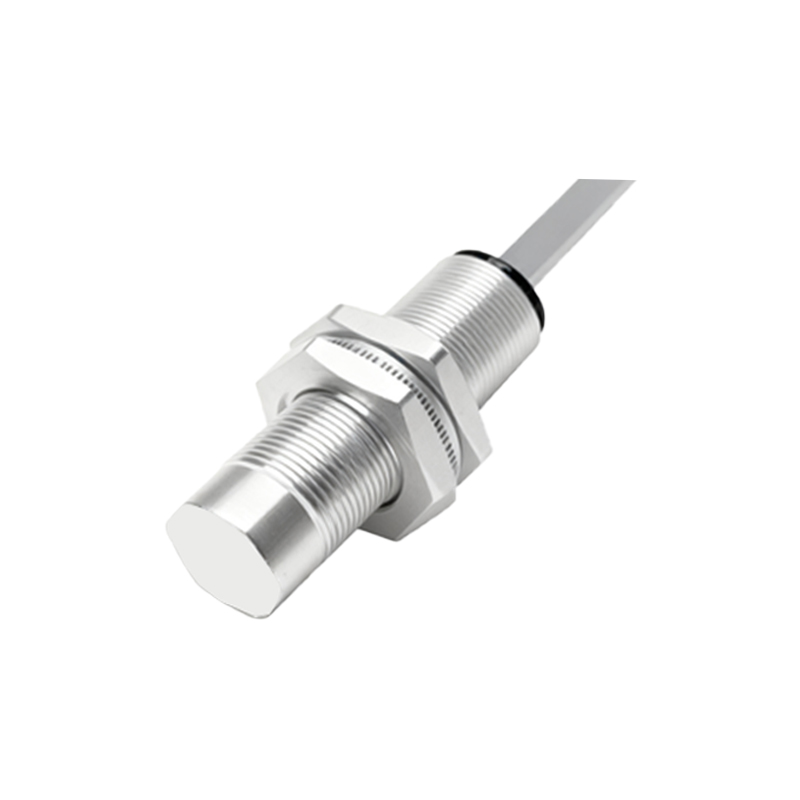
This operating principle grants Hall Effect sensors several distinct benefits. They are inherently solid-state devices with no moving parts, leading to exceptionally long operational life and high resistance to mechanical wear and tear. They are immune to common environmental contaminants such as dust, oil, fog, or moisture that often plague optical sensors. Furthermore, they can operate reliably across a wide temperature range and are not affected by ambient light conditions. Their response speed is extremely fast, making them suitable for high-speed counting or position detection applications. The non-contact nature also means there is no physical force applied to either the sensor or the target object, preventing damage.
The applications of Hall Effect proximity sensors are vast and span numerous industries. In the automotive sector, they are ubiquitous, used for detecting wheel speed for anti-lock braking systems (ABS), monitoring crankshaft and camshaft position, and sensing seatbelt engagement or door ajar status. In industrial manufacturing, they are employed for precise end-of-travel detection on linear actuators, rotary speed measurement on conveyor shafts, and part positioning on assembly lines. Consumer electronics utilize miniature Hall Effect sensors as lid or cover open/close detectors in laptops and flip phones. In the realm of robotics, they provide critical feedback for joint angle limitation and precise motor commutation in brushless DC motors. Even everyday devices like bicycle speedometers and electric toothbrush chargers rely on this technology.
Selecting the right Hall Effect sensor for a specific application requires careful consideration of several key parameters. First, the sensing distance, which defines how far the magnet must be to activate the sensor. This is influenced by the strength of the magnet used and the sensor's own sensitivity. Second, the output type: digital (switch) sensors are simpler and used for presence detection, while analog (linear) sensors provide a continuous output for measuring position or field strength. The electrical characteristics, such as operating voltage, output current, and whether the output is sinking (NPN) or sourcing (PNP), must match the control system's requirements. The physical package is also crucial; sensors come in tubular, rectangular, or surface-mount forms, with varying degrees of ingress protection (IP ratings) for use in harsh conditions. Finally, the magnetic field orientation—whether the sensor detects a magnetic pole approaching head-on (axial) or from the side (lateral)—must align with the mechanical design.
When integrating these sensors, proper mounting and magnet selection are paramount. The sensor should be securely fixed to prevent vibration-induced errors. The magnet, typically a rare-earth type like neodymium for stronger fields, must be oriented correctly relative to the sensor's sensitive axis. Shielding from stray magnetic fields from motors or other equipment may be necessary to prevent false triggering. For linear position sensing, careful calibration of the magnet's travel path relative to the sensor's analog output curve is essential for accuracy.
In conclusion, Hall Effect proximity sensors represent a mature, robust, and highly adaptable sensing solution. Their operation based on magnetic field interaction makes them ideal for dirty, wet, or demanding applications where other sensor types might fail. From ensuring automotive safety to enabling precise industrial automation and enhancing consumer product functionality, these sensors play a silent yet critical role in modern technology. Understanding their principles, advantages, and selection criteria empowers engineers and designers to implement effective and reliable non-contact detection systems, forming the invisible backbone of countless automated processes and intelligent devices.