In the realm of industrial automation and electronic control systems, proximity sensors and proximity switches are fundamental components. They enable contactless detection of objects, enhancing efficiency, reliability, and safety in countless applications. Understanding their working principle is key to selecting and implementing the right technology for a specific task.
At its core, a proximity sensor is a device that detects the presence or absence of an object within a specified range without any physical contact. It does this by emitting a field or beam of electromagnetic radiation or by using an electrostatic field. The sensor then monitors for changes in the return signal or field. A proximity switch is essentially a proximity sensor with a built-in switching mechanism that provides a discrete output signal, typically used to trigger an action in a control circuit, such as turning a machine on or off.
The principle of operation varies significantly depending on the technology employed. The most common types are inductive, capacitive, ultrasonic, and photoelectric.
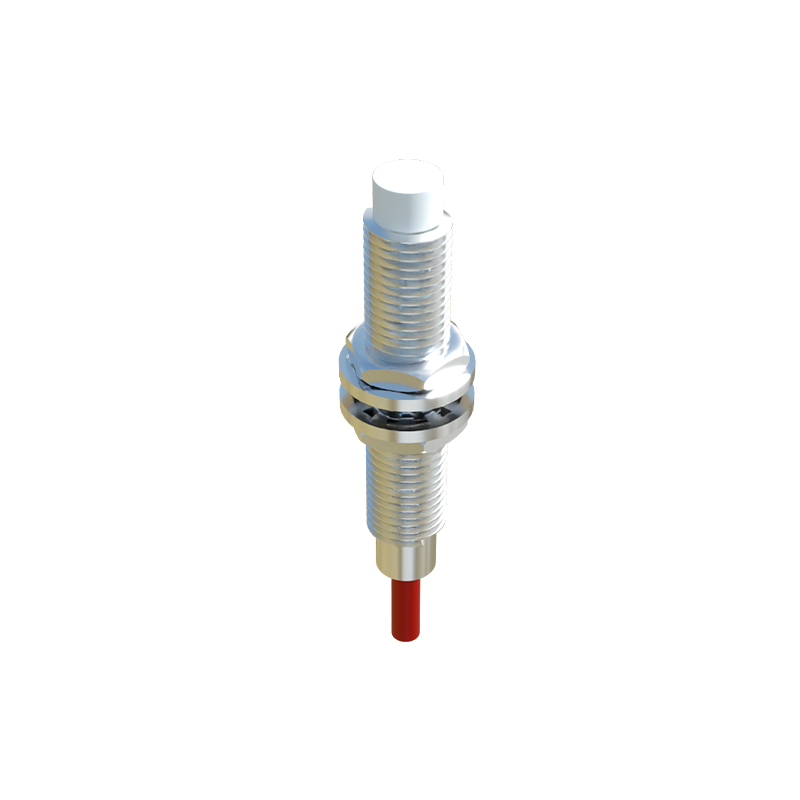
Inductive proximity sensors are widely used for detecting metallic objects. Their operation is based on the principle of electromagnetic induction. The sensor contains a coil that is part of an oscillator circuit, generating a high-frequency electromagnetic field at its active face. When a metallic object enters this field, eddy currents are induced on the surface of the object. These currents draw energy from the oscillator, causing a change in its amplitude. This change is detected by the sensor's evaluation circuit, which then triggers the output switch. Inductive sensors are robust, precise for metals, and unaffected by non-conductive materials like dirt or oil.
Capacitive proximity sensors, on the other hand, can detect both metallic and non-metallic materials, including liquids, powders, and plastics. They operate by generating an electrostatic field. The sensor acts as one plate of a capacitor, with the target object acting as the other plate. As an object approaches the sensor, the capacitance between the sensor and the object increases. When this capacitance reaches a preset threshold, the internal oscillator starts, or its amplitude changes, which is detected to activate the output. These sensors are ideal for level detection or sensing through non-metallic container walls.
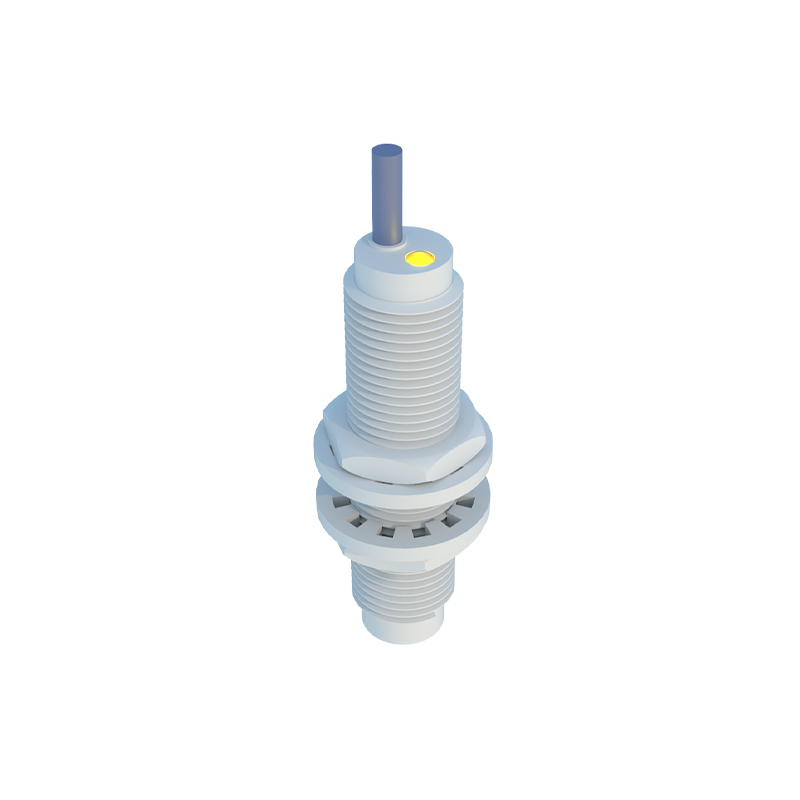
Ultrasonic proximity sensors use sound waves beyond the human hearing range. They emit high-frequency ultrasonic pulses and measure the time it takes for the echo to return after bouncing off an object. The time-of-flight is directly proportional to the distance of the object. This principle allows for precise distance measurement and detection of objects regardless of their material, color, or transparency. They are commonly used in challenging environments with dust, smoke, or varying light conditions.
Photoelectric sensors utilize light, typically infrared or laser, to detect objects. The basic principle involves an emitter that sends out a light beam and a receiver that detects it. There are three main configurations: through-beam (opposed), retro-reflective, and diffuse (proximity mode). In the diffuse mode, which functions as a true proximity sensor, the emitter and receiver are housed in the same unit. The sensor detects light reflected directly from the target object. The output switches when the received light intensity exceeds a set level. These sensors offer long sensing ranges and can detect small objects.
The output from a proximity switch is usually a solid-state transistor (PNP or NPN for DC) or a relay contact. This output provides a clean, bounce-free signal to programmable logic controllers (PLCs), motor starters, or other control devices. Key performance parameters include sensing distance, repeat accuracy, response frequency, and environmental ratings like IP protection for dust and water.
Selection of the correct sensor depends on the application requirements: the material of the target object, required sensing distance, environmental conditions, electrical output needs, and physical size constraints. For instance, an inductive sensor is perfect for counting metal gears on a production line, while a capacitive sensor is better suited for monitoring the fill level of a liquid soap tank.
In summary, proximity sensors and switches are versatile tools based on distinct physical principles—induction, capacitance, ultrasound, and light. Their common goal is to provide reliable, non-contact detection, forming the invisible sensory network that drives modern automated systems, from factory assembly robots to consumer electronics and automotive safety features. A clear grasp of these principles ensures optimal integration and performance in any control system design.