In the realm of industrial automation, consumer electronics, and safety systems, the ability to detect the presence or absence of an object without physical contact is paramount. Among the various non-contact sensing technologies, electrostatic proximity sensors stand out for their unique operating principle, versatility, and cost-effectiveness. Unlike inductive or capacitive sensors that often require specific target materials, electrostatic sensors respond to changes in electrostatic fields, making them sensitive to a wide array of objects, including non-metallic materials and even human skin.
The fundamental principle behind an electrostatic proximity sensor is based on electrostatic induction or the detection of changes in an electric field. A typical sensor consists of an electrode that generates a weak, oscillating electrostatic field into the surrounding space. When an object enters this field, it disturbs the field lines, causing a change in the charge distribution on the sensor electrode. This perturbation alters a measurable electrical parameter, such as capacitance or the amplitude of an oscillation, which is then processed by integrated circuitry to trigger an output signal. This mechanism allows for the detection of any object that can interact with an electrostatic field, which includes almost all materials, as even insulators can become polarized.
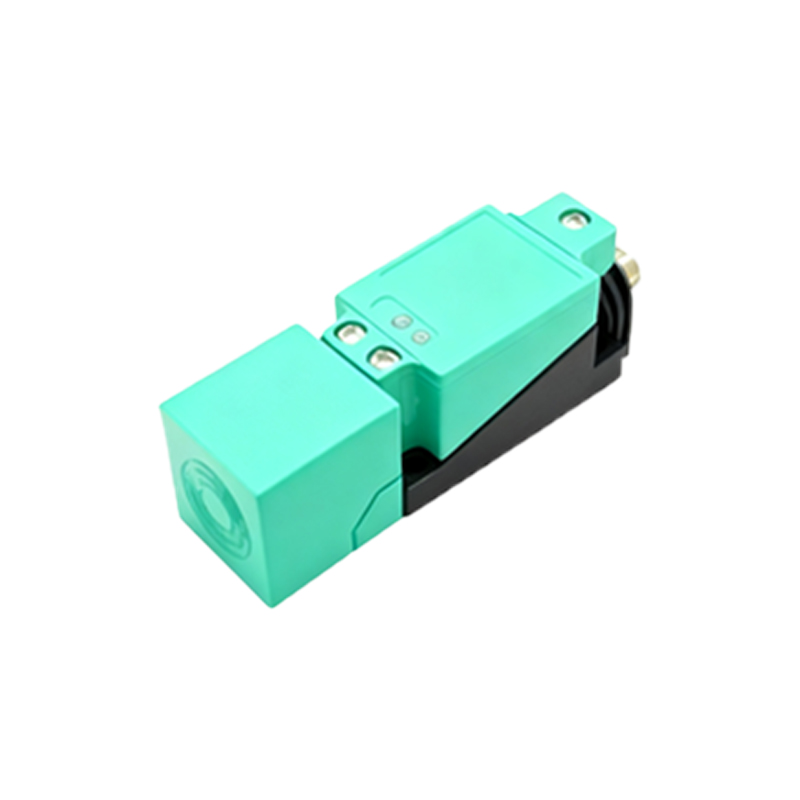
One of the most significant advantages of electrostatic sensors is their material-agnostic nature. They can reliably detect plastics, wood, glass, liquids, and human bodies with similar efficacy. This makes them exceptionally useful in applications where the target material is variable or non-conductive. For instance, in packaging lines handling cardboard boxes or plastic bottles, electrostatic sensors ensure accurate counting and positioning. In the consumer electronics domain, they are the enabling technology for touchless gesture control interfaces, where a simple hand wave near a device can execute a command, enhancing hygiene and user experience.
Another critical application area is in safety and presence detection. Electrostatic sensors can be integrated into machinery to create safety zones, stopping equipment if a person gets too close to a hazardous area. Their sensitivity to the human body, due to its inherent electrical properties, makes them suitable for such life-saving interventions. Furthermore, in automotive interiors, they are being explored for occupant detection systems and touchless control panels, reducing driver distraction.
The design and implementation of these sensors involve careful consideration of several factors. Sensitivity and range are primary design parameters. The sensitivity must be tuned to avoid false triggers from environmental noise, such as humidity changes or electrical interference, while maintaining adequate range for the application. Modern sensors often incorporate sophisticated algorithms and shielding techniques to enhance stability and noise immunity. The output is typically a clean, digital signal (e.g., PNP/NPN) or an analog voltage/current proportional to distance, easily interfaced with programmable logic controllers (PLCs) or microcontrollers.
Looking toward the future, the evolution of electrostatic sensing is closely tied to advancements in materials science and integrated circuit design. The development of flexible, printed electrodes could allow sensors to be integrated into curved surfaces or wearable devices. Enhanced signal processing powered by artificial intelligence and machine learning could enable more complex functions, such as material identification or precise gesture recognition beyond simple proximity. The drive towards the Internet of Things (IoT) and smart environments will further fuel demand for low-power, versatile sensors that can monitor presence and activity discreetly and efficiently.
Despite their advantages, challenges remain. Environmental factors like extreme humidity or conductive dust can affect performance. Calibration for specific applications is often necessary to optimize the trade-off between range and immunity to interference. However, ongoing research and development continue to broaden their operational envelope and reliability.
In conclusion, electrostatic proximity sensors represent a robust and flexible solution in the sensor technology portfolio. Their ability to detect virtually any object, coupled with their non-contact nature and evolving capabilities, ensures their continued relevance across diverse sectors—from factory floors and automotive systems to next-generation smart devices and interactive installations. As technology progresses, these sensors will undoubtedly become more intelligent, integrated, and indispensable in our increasingly automated world.