Proximity sensors are fundamental components in modern automation, robotics, and countless consumer electronics. Unlike tactile switches, they detect the presence or absence of an object without physical contact. This non-contact operation grants them high reliability, long operational life, and the ability to function in harsh environments. The core principle behind all proximity sensors is the conversion of information about the presence, distance, or position of a target object into an electrical signal. This process varies significantly depending on the underlying technology. The most prevalent types include inductive, capacitive, photoelectric, and ultrasonic sensors, each with distinct operating principles and ideal applications.
Inductive proximity sensors are the workhorses of industrial automation for detecting metallic objects. Their operation is based on the principle of electromagnetic induction. The sensor contains a coil wound around a ferrite core, which is part of an oscillator circuit. When an alternating current flows through the coil, it generates an oscillating electromagnetic field at the sensor's active face. When a conductive metal object enters this field, eddy currents are induced on the surface of the object. These eddy currents draw energy from the sensor's oscillating circuit, causing a reduction in the amplitude of oscillation. An internal monitoring circuit detects this amplitude change and triggers a solid-state switch, changing the sensor's output state. The sensing distance depends on the type of metal; ferrous metals like iron and steel are detected at greater distances than non-ferrous metals like aluminum or copper due to their higher permeability. These sensors are robust, immune to dust and dirt, and excel in detecting metal parts on assembly lines, monitoring valve positions, or as limit switches.
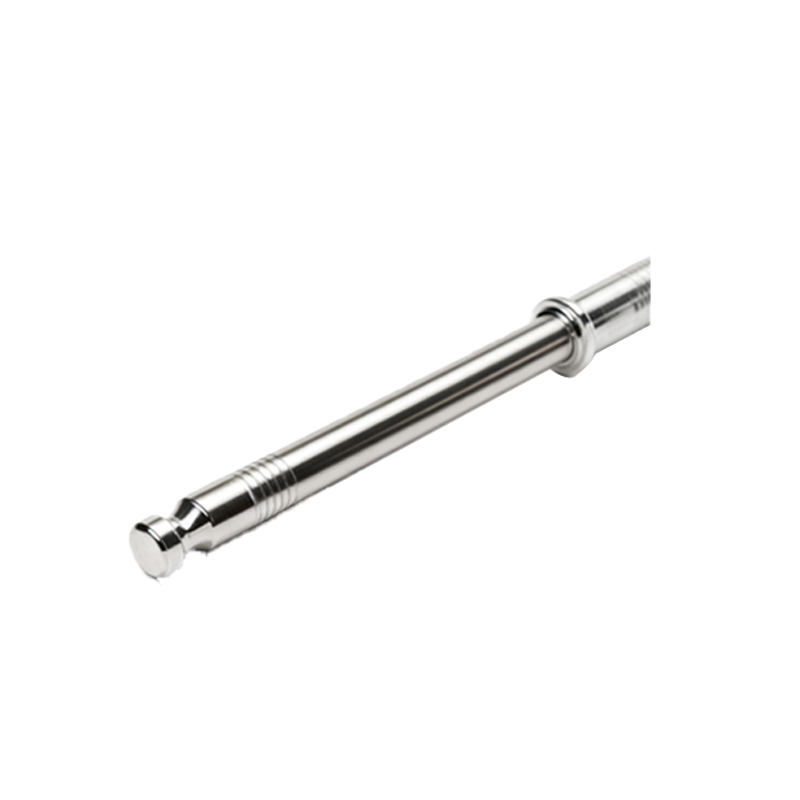
Capacitive proximity sensors, on the other hand, can detect both metallic and non-metallic materials, including liquids, plastics, wood, and granular substances. They function by measuring changes in capacitance. The sensor's active face acts as one plate of a capacitor, with the target object acting as the other plate, and the air gap as the dielectric. The sensor generates an electrostatic field. When a material with a different dielectric constant than air enters this field, it alters the capacitance of the system. The sensor's internal circuit is tuned to a specific threshold. The change in capacitance alters the oscillation amplitude or frequency in the circuit, which is then evaluated to trigger an output switch. Their ability to sense through non-metallic containers makes them perfect for liquid level detection, material presence sensing in hoppers, or detecting wood or glass panels. Sensitivity is often adjustable to ignore certain materials or container walls.
Photoelectric sensors operate on an entirely different principle: light. They consist of a light emitter (usually an LED producing visible red, infrared, or laser light) and a receiver (a phototransistor or photodiode). There are three main configurations. The through-beam (or opposed) type has separate emitter and receiver units placed opposite each other. Detection occurs when the target object interrupts the light beam. This type offers the longest sensing range and high reliability. The retro-reflective type combines the emitter and receiver in one housing and uses a reflector. The object is detected when it breaks the beam to and from the reflector. The diffuse (or proximity) type also has a single housing, but it detects the light reflected directly off the target object itself. The receiver detects the intensity of the reflected light, and when it surpasses a set threshold (indicating an object is close enough), the output is activated. Photoelectric sensors are versatile for long-range detection, color differentiation, and sensing small or transparent objects.
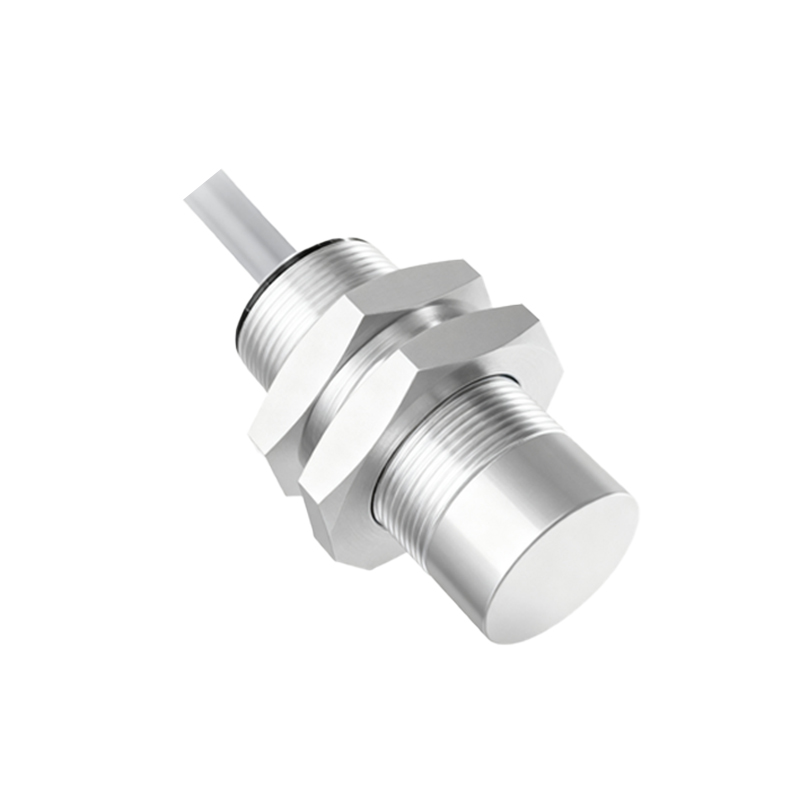
Ultrasonic sensors use sound waves beyond the human hearing range (typically 40-200 kHz). They contain a transducer that acts as both a transmitter and a receiver. The sensor emits a short burst of ultrasonic pulses. These pulses travel through the air, hit an object, and reflect back to the sensor. An internal timer measures the time interval between the emission and the reception of the echo. Using the known speed of sound in air, the sensor's control electronics calculate the distance to the object. This time-of-flight principle allows for precise distance measurement, not just presence detection. They are excellent for detecting objects regardless of color, transparency, or material, and are widely used in level measurement of bulk solids or liquids, parking assist systems, and robotic obstacle avoidance.
The output from these sensors is typically a discrete on/off signal (PNP or NMP transistor) or an analog signal (4-20 mA, 0-10V) proportional to distance. Selection depends on the target material, required sensing distance, environmental conditions (dust, moisture, temperature), response speed, and electrical interface. Understanding these core principles—electromagnetic induction, capacitance change, light beam interruption/reflection, and sound wave echo timing—is essential for effectively integrating proximity sensors into any system, enabling smarter and more responsive automation across all industries.