In the world of industrial automation and smart electronics, the demand for reliable, space-saving components is ever-growing. Among these, the small square proximity sensor stands out as a critical device for non-contact object detection. Its compact, square form factor is not merely an aesthetic choice but a functional design that allows for efficient integration into tight spaces on PCBs, machinery, and consumer devices where traditional cylindrical sensors might not fit.
The fundamental principle behind these sensors is the generation of an electromagnetic field or a beam of light from the sensor's face. When an object enters this field, it causes a change in the oscillation amplitude or reflects the light back to the receiver. This change is detected by the sensor's internal circuitry, which then triggers a switching signal. The square housing typically encloses this sophisticated electronics in a robust package, often made from materials like PBT plastic or nickel-plated brass, providing resistance to environmental factors such as dust, moisture, and mechanical impact.
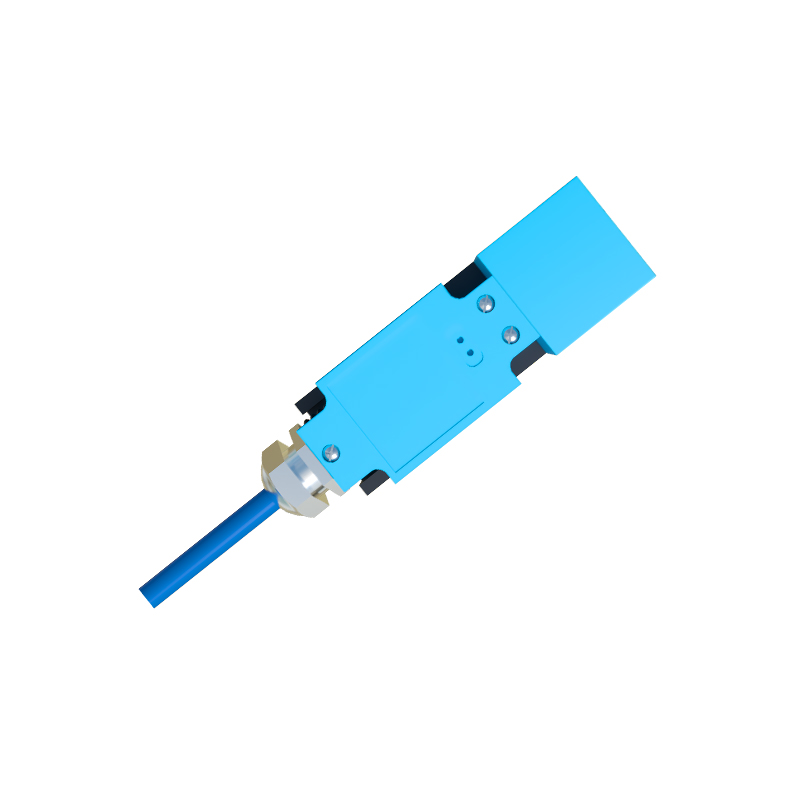
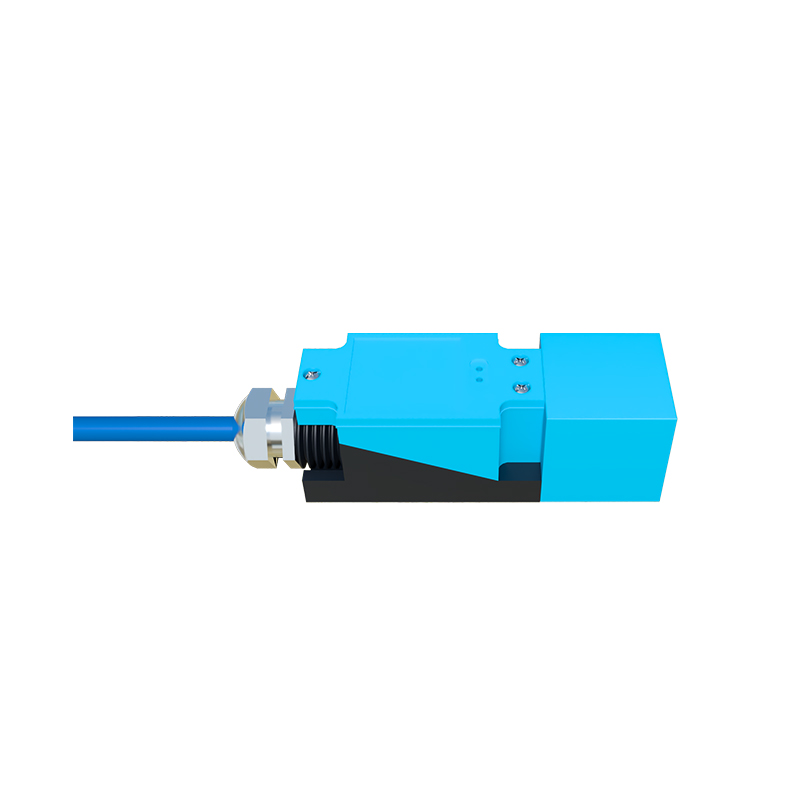
One of the primary advantages of the square design is its mounting versatility. The flat sides and often symmetrical layout facilitate easy and secure installation on flat surfaces, using standard brackets or direct mounting holes. This design minimizes the risk of rotation after installation, ensuring consistent detection performance. Furthermore, the flat face allows for a more uniform sensing field, which can be crucial for detecting objects with flat surfaces at precise distances.
There are several key types of small square proximity sensors, categorized by their sensing technology. Inductive sensors are the most common for metallic object detection. They generate an oscillating electromagnetic field and are ideal for detecting ferrous and non-ferrous metals in manufacturing lines. Capacitive sensors, on the other hand, can detect both metallic and non-metallic materials (like plastic, wood, or liquids) by measuring changes in capacitance. Photoelectric sensors, which use a light beam, are excellent for long-range detection and can sense virtually any material that interrupts or reflects the beam. Ultrasonic sensors use sound waves and are effective for distance measurement and detecting objects regardless of color or material transparency.
The applications for these compact sensors are vast and varied. In automated assembly lines, they are used for part presence verification, counting, and position control of robotic arms. In the packaging industry, they ensure correct product placement and fill-level monitoring. Consumer electronics, such as printers and appliances, utilize them for paper detection, door closure sensing, or touchless control interfaces. The automotive sector relies on them for safety systems and precision manufacturing. Their small size is particularly beneficial in modern, miniaturized equipment and IoT devices where every millimeter counts.
When selecting a small square proximity sensor, several technical specifications must be considered. The sensing distance, typically ranging from a few millimeters to several centimeters, is paramount. The mounting style (flush or non-flush) affects the sensing range and potential interference from surrounding metal. Output configuration (NPN or PNP, normally open or normally closed) must match the control system's requirements. Environmental ratings, such as IP67 for dust and water ingress protection, are essential for harsh industrial environments. Additionally, factors like switching frequency, response time, and supply voltage compatibility are critical for high-speed or sensitive applications.
Installation and maintenance are relatively straightforward but require attention to detail. Ensuring a clean sensing face free from obstructions like metal shavings, oil, or adhesive labels is crucial for reliable operation. Proper alignment with the target object and maintaining the specified gap are necessary to achieve the rated sensing distance. Electrical wiring should follow the manufacturer's guidelines to prevent damage from incorrect polarity or overvoltage. While these sensors are designed for longevity, periodic checks for physical damage and performance verification are recommended as part of a preventive maintenance routine.
The evolution of small square proximity sensors continues, driven by trends towards Industry 4.0 and the Internet of Things (IoT). Modern variants now incorporate IO-Link communication, enabling digital parameter setting, real-time diagnostics, and seamless integration into smart factory networks. This digital capability allows for predictive maintenance, where the sensor can report its health status before a failure occurs, minimizing downtime. Advances in materials and chip design also lead to sensors that are even smaller, more energy-efficient, and capable of operating in extreme temperatures.
In conclusion, the small square proximity sensor is a testament to engineering efficiency. Its unassuming shape houses sophisticated technology that performs a vital function across countless industries. By offering a reliable, compact, and versatile solution for non-contact detection, it enables the precision, safety, and automation that define modern manufacturing and technology. As devices continue to shrink and systems grow smarter, the role of these robust little squares will only become more fundamental.