In modern industrial automation and robotics, the ability to accurately measure angles is critical for tasks ranging from robotic arm positioning to rotational speed monitoring. While traditional methods like encoders or potentiometers have been widely used, proximity sensors have emerged as a versatile and reliable alternative for angle measurement in specific applications. This article explores the principles, methods, and practical considerations of using proximity sensors for angular measurement.
Proximity sensors, including inductive, capacitive, and magnetic types, detect the presence or absence of an object without physical contact. When adapted for angle measurement, they typically monitor the movement or position of a rotating target, such as a gear, cam, or specially shaped disc attached to a shaft. The core idea is to convert angular displacement into a measurable change in the sensor's output signal—be it voltage, current, or frequency.
One common approach involves a toothed wheel or a slotted disc rotating past the sensor. As each tooth or slot passes, it triggers a pulse in the sensor. By counting these pulses over time, the rotational speed can be calculated. To determine the absolute angle, a reference point is established—often using an additional sensor or a unique marker on the wheel, like a missing tooth or a wider slot. The system counts pulses from this reference to ascertain the shaft's angular position relative to a known zero point.
Another method utilizes analog proximity sensors that output a continuous signal proportional to the distance between the sensor and a specially contoured target. For instance, a cam with a gradually varying radius rotates in front of the sensor. As the cam turns, the distance changes, causing the sensor's output to vary smoothly. This analog voltage or current can be directly correlated to the angular position through calibration. This technique is particularly useful for measuring limited angular ranges, such as 0 to 90 degrees, with high resolution.
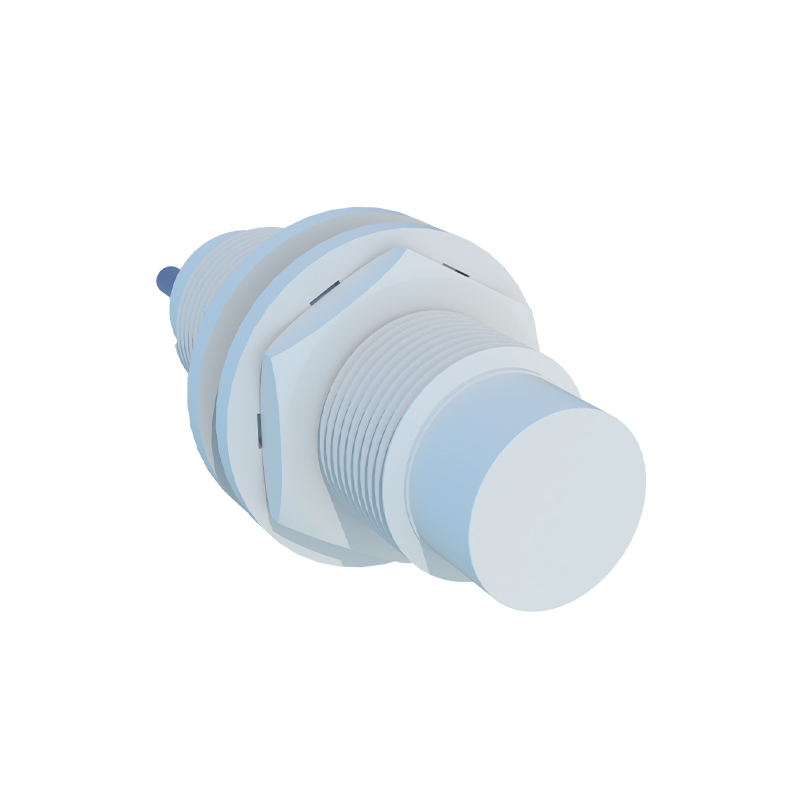
Magnetic proximity sensors, including Hall-effect sensors, are especially popular in angle-sensing applications. They detect changes in magnetic field strength as a magnet rotates relative to the sensor. By using multiple sensors or a magnet with a specific pole arrangement, precise angular data can be extracted. Some advanced systems employ magnetoresistive sensors that offer excellent accuracy and robustness in harsh environments.
The advantages of using proximity sensors for angle measurement are notable. They are non-contact, eliminating mechanical wear and allowing for high-speed operation. Many proximity sensors are inherently rugged, resisting dust, moisture, and vibration, making them suitable for industrial settings. Additionally, they can be more compact and cost-effective than traditional rotary encoders for certain applications.
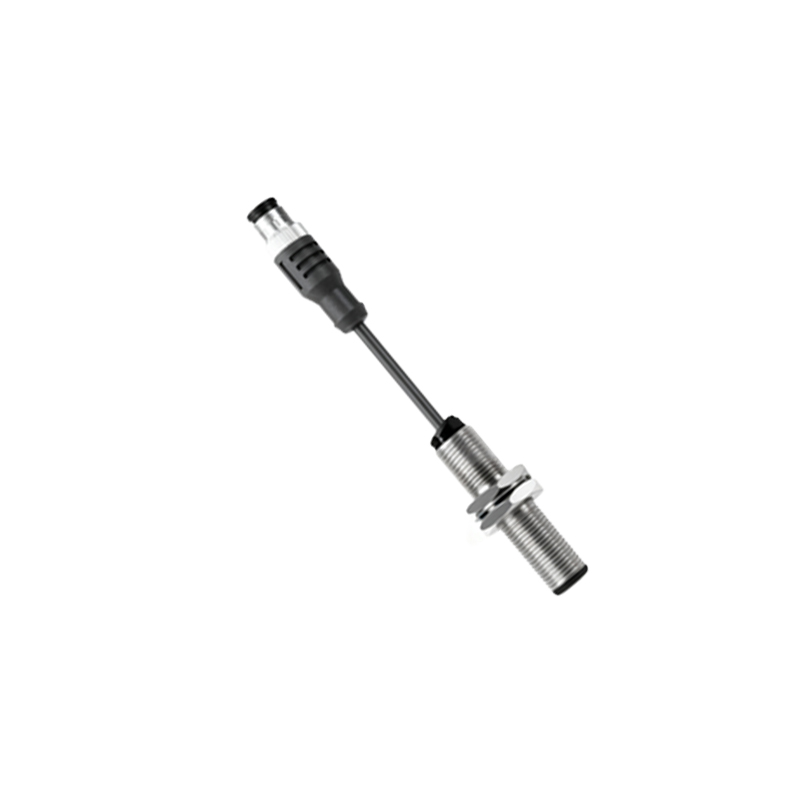
However, challenges exist. Accuracy can be influenced by factors like target material, temperature fluctuations, and electromagnetic interference. Proper installation is crucial—misalignment between the sensor and target can lead to measurement errors. For absolute angle measurement over multiple rotations, additional encoding schemes or battery-backed systems may be required to track position without loss after power cycles.
In practice, implementing a proximity sensor-based angle measurement system involves careful selection. The choice between inductive, capacitive, or magnetic sensors depends on the target material and environmental conditions. The resolution needed dictates the number of teeth on a wheel or the steepness of a cam's profile. Signal conditioning electronics, such as Schmitt triggers for pulse shaping or analog-to-digital converters, are often necessary to interface the sensor with a microcontroller or PLC.
Calibration is a critical step. The system must be calibrated to map the sensor output to actual angular units. This might involve rotating the shaft to known angles and recording the corresponding sensor readings to create a lookup table or mathematical relationship. Regular maintenance checks ensure that calibration remains valid over time.
Applications abound across industries. In automotive systems, proximity sensors monitor throttle valve angles or steering wheel position. In manufacturing, they control the tilt of conveyor segments or the angular position of indexing tables. Robotics utilizes them for joint angle feedback in lightweight or cost-sensitive designs.
Looking ahead, advancements in sensor technology and signal processing continue to enhance the capabilities of proximity sensors in angle measurement. Integrated smart sensors with built-in diagnostics and digital communication protocols like IO-Link are simplifying integration and improving reliability. As the demand for precise, durable, and compact sensing solutions grows, proximity sensors will likely play an increasingly important role in angular measurement tasks.
In summary, proximity sensors offer a flexible and effective means to measure angles by translating rotational motion into detectable signals. Through methods like pulse counting or analog distance variation, they provide reliable data for control and monitoring. While considerations around accuracy and installation are important, their non-contact nature and durability make them a valuable tool in the engineer's toolkit for many angular sensing challenges.