Proximity switches, often referred to as proximity sensors, are fundamental components in modern industrial automation and countless electronic devices. Their core function is to detect the presence or absence of an object within a specific range without any physical contact. This non-contact operation is their defining advantage, leading to high reliability, long operational life, and minimal maintenance. Understanding the principles behind these sensors is key to selecting and applying them effectively.
The operational principle of a proximity switch hinges on the disturbance of an electromagnetic field or the emission and reception of a signal. The most common types are inductive, capacitive, and photoelectric.
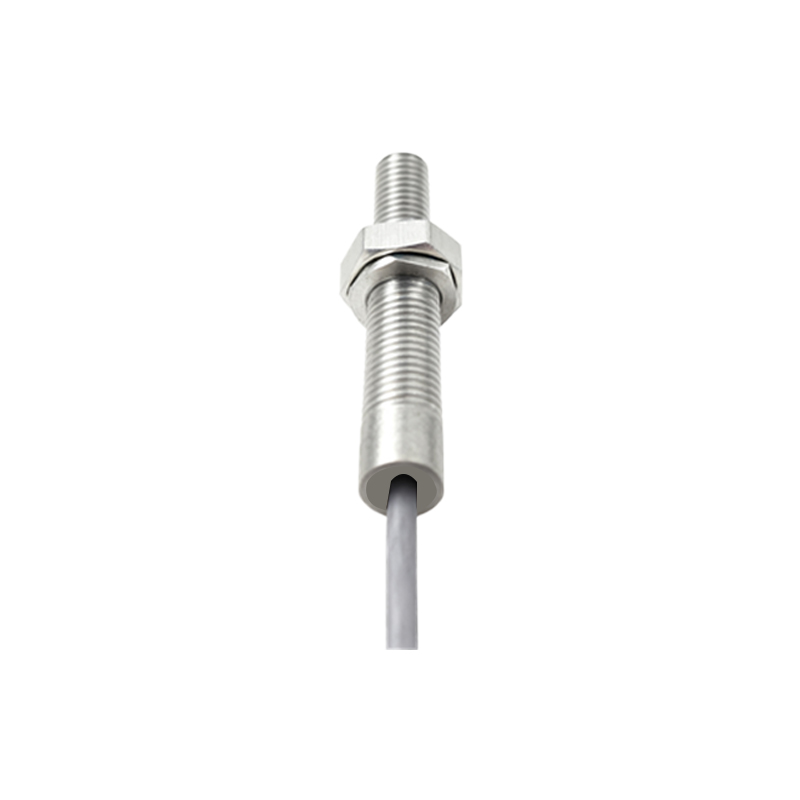
Inductive proximity sensors are the workhorses for detecting metallic objects. They contain a coil wound around a ferrite core, an oscillator, a signal evaluator, and an output switching circuit. The oscillator generates a high-frequency alternating electromagnetic field that radiates from the sensor's active face. When a conductive metal object enters this field, eddy currents are induced on the surface of the object. These eddy currents draw energy from the oscillator, causing its amplitude to decrease. The sensor's detection circuit monitors this amplitude change. Once the drop reaches a predetermined threshold, it triggers the sensor's solid-state output (typically NPN or PNP) to switch states, signaling the object's presence. The sensing distance depends on the metal's properties; ferrous metals like iron and steel are detected at greater distances than non-ferrous metals like aluminum or copper.
Capacitive proximity sensors, in contrast, can detect both metallic and non-metallic materials such as plastics, wood, glass, liquids, and granular substances. Their operation is based on capacitance change. The sensor face acts as one plate of a capacitor, with the target object acting as the other plate, and the air gap as the dielectric. An internal oscillator is tuned so that it only oscillates when the capacitance exceeds a certain level. As a target object approaches, the capacitance between the sensor and the object increases. When it reaches the trigger threshold, it causes the oscillator to begin oscillating. This change is processed, leading to an output switch. These sensors are ideal for level detection in tanks, material handling, and detecting non-metallic objects on conveyor lines.
Photoelectric proximity sensors operate on a different principle entirely: light. They consist of a light emitter (usually an LED producing visible red, infrared, or laser light) and a receiver (a phototransistor or photodiode). There are three main configurations. The through-beam type has separate emitter and receiver units; detection occurs when the target object interrupts the light beam. The retro-reflective type uses a single housing with both emitter and receiver, and a reflector; the object is detected when it breaks the reflected light beam. The diffuse or proximity type also has a single housing, but it detects the target by receiving the light scattered back from the object itself. Photoelectric sensors offer very long sensing ranges and can detect virtually any material.
Beyond these, other types include ultrasonic proximity sensors, which use sound waves, and magnetic proximity sensors (reed switches), which are activated by a permanent magnet.
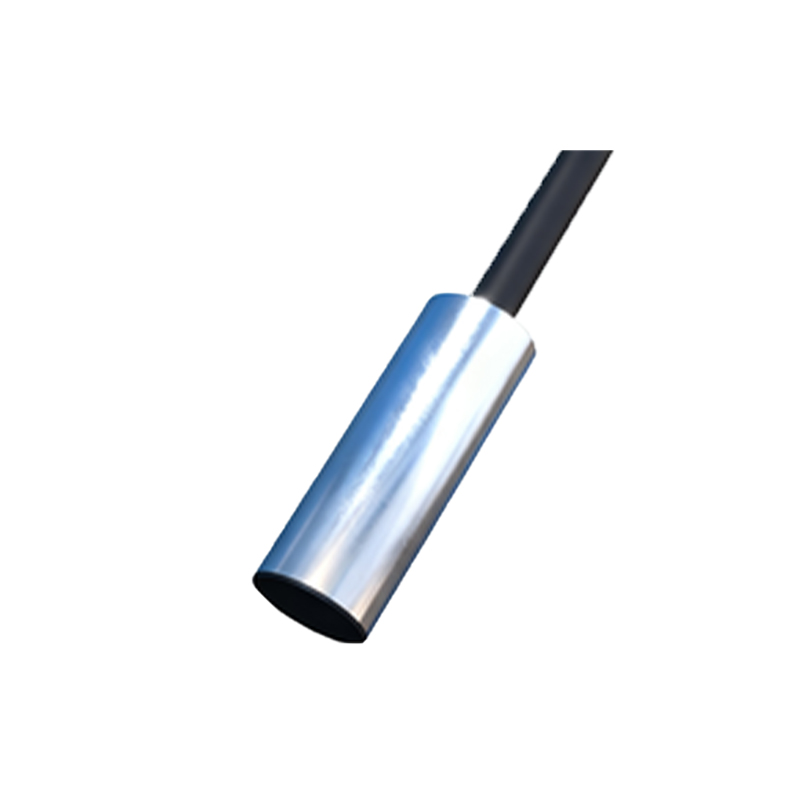
The output of a proximity sensor is a critical specification. Most modern sensors provide solid-state DC outputs. A 3-wire DC sensor will have wires for power supply positive, power supply negative (common), and a switched output line. The output can be NPN (sinking, common in Asia and Europe) or PNP (sourcing, common in North America), describing how the internal switching transistor is configured. Some sensors also provide analog outputs (4-20 mA or 0-10V) proportional to the distance, or digital communication via IO-Link for advanced diagnostics and parameter setting.
Key selection parameters include the nominal sensing distance (Sn), which is defined under standard conditions. A practical operating distance is typically 70-80% of Sn to account for temperature fluctuations and supply voltage variations. Other factors are the target material and size, switching frequency, housing style (cylindrical, rectangular), ingress protection (IP) rating, and the required output type.
Applications are vast. In manufacturing, they are used for part positioning, counting, jam detection, and end-of-travel limits on robotic arms. In automotive assembly, inductive sensors verify the presence of metal components. Capacitive sensors control liquid levels in bottling plants. Photoelectric sensors ensure correct packaging alignment. In everyday life, they are found in touchless faucets (capacitive), smartphone screens that turn off during a call (photoelectric), and elevator door safety systems.
In summary, the principle of a proximity switch is elegantly simple: generate a field or beam, monitor its state, and act upon its disturbance. This non-contact detection capability makes them indispensable for creating efficient, reliable, and intelligent automated systems across all industries. Choosing the right technology—inductive, capacitive, or photoelectric—based on the target material