Proximity sensors are fundamental components in modern automation, robotics, and countless industrial applications. Their primary function is to detect the presence or absence of an object within a specified range without physical contact. A critical aspect of their operation and integration is understanding the type of electrical signal they output. This signal is the language the sensor uses to communicate with controllers like PLCs (Programmable Logic Controllers), microcontrollers, or other interfacing circuits. The signal type dictates wiring, compatibility, and the required input module on the receiving device. Broadly, proximity sensor outputs can be categorized into two main types: Digital (Discrete) and Analog, with several sub-variations under each.
Digital (Discrete/ Switching) Output Signals
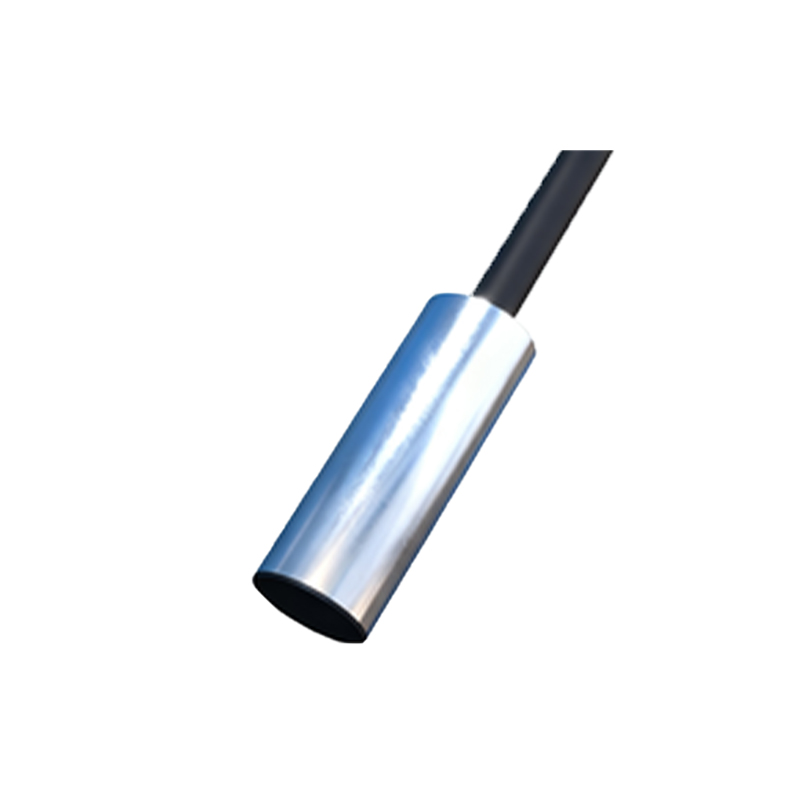
Digital output sensors provide a simple on/off, yes/no signal. They act like a switch that toggles when an object enters the detection field. The two most common digital signal standards are:
1. NPN (Sinking) Output: This is a very common configuration, particularly in European and Asian markets. In an NPN sensor, the output transistor is an NPN type. When the sensor is activated (detects an object), the output terminal connects to the negative voltage supply (0V or ground). Essentially, it sinks current from the load (e.g., a PLC input) to ground. The load must be connected between the positive supply voltage and the sensor's output wire. Think of it as the sensor providing a path to ground.
2. PNP (Sourcing) Output: Predominant in North America, a PNP sensor uses a PNP output transistor. When activated, it connects the output terminal to the positive supply voltage. It sources current from the sensor to the load. The load, in this case, is connected between the output wire and ground. Think of it as the sensor providing the positive voltage.
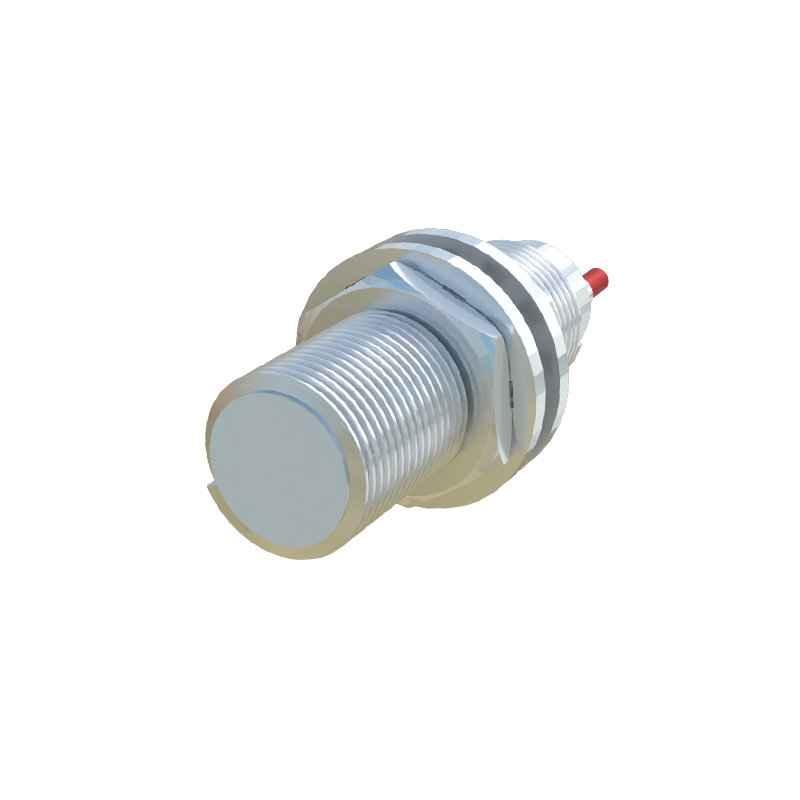
It is crucial to match the sensor's output type (NPN or PNP) with the PLC input module's expected configuration. Mismatching can prevent the system from working and may risk damage. Many modern PLC input cards are designed to be universal, accepting both types by configuring the common terminal.
3. NO (Normally Open) and NC (Normally Closed): This concept applies to both NPN and PNP outputs. A Normally Open (NO) sensor's output circuit is open (off) when no target is present and closes (on) when a target is detected. A Normally Closed (NC) sensor is the opposite: the circuit is closed (on) in its idle state and opens (off) upon detection. The choice depends on the safety and logic requirements of the application (e.g., fail-safe designs often use NC).
Analog Output Signals
Unlike digital sensors, analog output proximity sensors provide a continuous signal that varies proportionally with the distance to the target. This allows for precise position monitoring, not just detection. The analog signal is typically a voltage or current that changes within a defined range as the object moves within the sensor's sensing range.
1. Voltage Output (e.g., 0-10V): The sensor outputs a voltage that scales with distance. A common standard is 0-10V DC. For instance, at the minimum sensing distance, the output might be 10V, and at the maximum, it might be 0V (or vice versa, depending on programming). These are susceptible to voltage drop over long wire runs and electrical noise interference.
2. Current Output (e.g., 4-20 mA): This is the most robust and common industrial analog standard. The sensor modulates a current loop, typically between 4 mA (representing the far limit or zero condition) and 20 mA (representing the near limit or full-scale condition). The 4 mA "live zero" is key because it allows the control system to distinguish between a valid low signal (4 mA) and a broken wire or sensor fault (0 mA). Current signals are highly resistant to electrical noise and voltage drop, making them ideal for long-distance transmission in harsh industrial environments.
Other Specialized Signal Types
Push-Pull (Complementary) Output: This output combines both NPN and PNP transistors in one sensor. It can both sink and source current, offering greater flexibility for connecting to different load types without worrying about polarity mismatch. It simplifies inventory and wiring.
Namur Output: This is a specialized, intrinsically safe output used primarily in hazardous environments (like oil & gas, chemical plants). A Namur sensor outputs a very small, non-energizing current signal (typically switching between ~1 mA and ~2.5 mA) that must be interpreted by a separate isolating amplifier/barrier. This design prevents the sensor