In the rapidly evolving landscape of automotive technology, one component stands out as a critical enabler for the future of mobility: the Light Detection and Ranging (LiDAR) sensor. Far more than just another piece of hardware, automotive LiDAR is fundamentally reshaping how vehicles perceive and interact with their environment, paving the way for true autonomous driving and unprecedented levels of safety.
Unlike traditional cameras or radar, LiDAR operates by emitting pulsed laser light and measuring the time it takes for each pulse to reflect off surrounding objects and return to the sensor. This process, performed millions of times per second, generates a precise, three-dimensional point cloud map of the vehicle's surroundings. This high-fidelity map includes detailed information about the shape, distance, and even the velocity of objects, from other vehicles and pedestrians to road curbs and lane markings, regardless of lighting conditions. This capability to "see" in a detailed 3D format, especially in low-light or adverse weather where cameras may struggle, is what sets LiDAR apart.
The core value of LiDAR lies in its role as a complementary sensor within a vehicle's broader perception suite, a concept known as sensor fusion. While cameras provide rich visual data and radar excels at measuring speed and distance through poor weather, LiDAR fills a crucial gap with its accurate, direct depth perception. An autonomous driving system or advanced driver-assistance system (ADAS) fuses data from all these sources—LiDAR, radar, cameras, and ultrasonic sensors—to create a robust, redundant, and highly accurate model of the world. This redundancy is not a luxury but a necessity for safety-critical applications; if one sensor type is compromised, the others can compensate, ensuring the system maintains a reliable understanding of its environment.
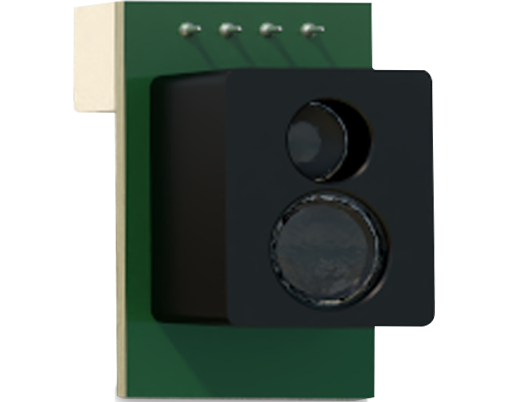
Modern automotive LiDAR systems have undergone significant miniaturization and cost reduction, moving from bulky, rotating mechanical units on roof racks to sleek, solid-state or hybrid solid-state designs integrated into headlights, grilles, and windshields. These newer systems have no moving parts, leading to greater reliability, longer lifespan, and lower production costs—a key factor for mass-market adoption. Major automotive suppliers and tech companies are now producing LiDAR sensors with ranges exceeding 200 meters and a field of view wide enough to cover blind spots, making them practical for highway driving and complex urban scenarios.
The applications are vast and transformative. For autonomous vehicles (AVs), LiDAR is often considered the cornerstone sensor for building the detailed environmental models required for safe navigation without human intervention. In today's consumer vehicles, LiDAR is already enhancing advanced ADAS features like adaptive cruise control, automatic emergency braking, and lane-keeping assistance, making them more reliable and effective. Furthermore, LiDAR data is invaluable for creating and updating high-definition maps, which are essential for autonomous vehicle routing and localization.
However, the path forward is not without challenges. Engineers continue to work on improving performance in heavy rain, fog, and snow, where laser scattering can occur. Standardization of data formats and interfaces across different manufacturers is also an ongoing effort to ensure interoperability. Despite these hurdles, the trajectory is clear. As costs continue to fall and performance rises, LiDAR integration is expected to move from premium vehicles to become a standard safety feature, much like airbags and anti-lock braking systems once did.

In conclusion, the automotive LiDAR sensor is much more than a technological novelty. It is a pivotal perception tool that provides the detailed, three-dimensional environmental awareness necessary for the next leap in vehicle automation and safety. By delivering precise depth data under a wide range of conditions and acting as a key pillar in sensor fusion, LiDAR is solidifying its position as an indispensable component in the journey toward safer, smarter, and self-driving vehicles. The road ahead is being charted, one laser pulse at a time.
