In the realm of modern automotive engineering and industrial automation, the accurate measurement of rotational speed is a fundamental requirement for control, safety, and efficiency. Among the various technologies employed for this purpose, the proximity wheel speed sensor stands out as a robust, reliable, and widely adopted solution. Unlike traditional contact-based sensors, this device operates on a non-contact principle, offering distinct advantages in durability and performance.
At its core, a proximity wheel speed sensor is a type of inductive sensor designed to detect the presence or absence of a metallic target, typically a gear tooth or a dedicated tone ring, without physical contact. The fundamental operating principle is based on electromagnetic induction. The sensor itself contains a permanent magnet surrounded by a coil of wire. When a ferromagnetic target, such as a steel gear tooth on a vehicle's axle or wheel hub, moves into close proximity to the sensor's active face, it disturbs the magnetic field. This disturbance causes a change in the magnetic flux through the coil, which in turn induces a small alternating current (AC) voltage within the coil. As the target moves away, the magnetic field returns to its original state, and the voltage changes again. The result is a continuous analog voltage signal whose frequency is directly proportional to the speed of the rotating target—the faster the rotation, the higher the frequency of the signal output.
The primary application domain for these sensors is undoubtedly the automotive industry, where they are integral to Anti-lock Braking Systems (ABS), Traction Control Systems (TCS), and Electronic Stability Programs (ESP). In an ABS, for instance, a proximity sensor is mounted near a toothed ring on each wheel. By continuously monitoring the rotational speed of each individual wheel, the vehicle's electronic control unit (ECU) can detect when a wheel is about to lock up during braking. It then modulates brake pressure to that wheel, preventing skidding and maintaining steering control. This non-contact nature is crucial here, as it eliminates wear and tear, ensuring consistent performance over the vehicle's lifetime despite exposure to harsh environmental conditions like dirt, water, and extreme temperatures.
Beyond passenger vehicles, proximity wheel speed sensors are extensively used in commercial trucks, railway systems for measuring axle speed, and in various industrial machinery. In manufacturing, they monitor the speed of conveyor belts, rollers, and rotating shafts, providing essential feedback for process control and synchronization. Their simplicity and reliability make them suitable for environments where maintenance access is difficult or where contamination from wear debris (a problem with contact sensors) must be avoided.
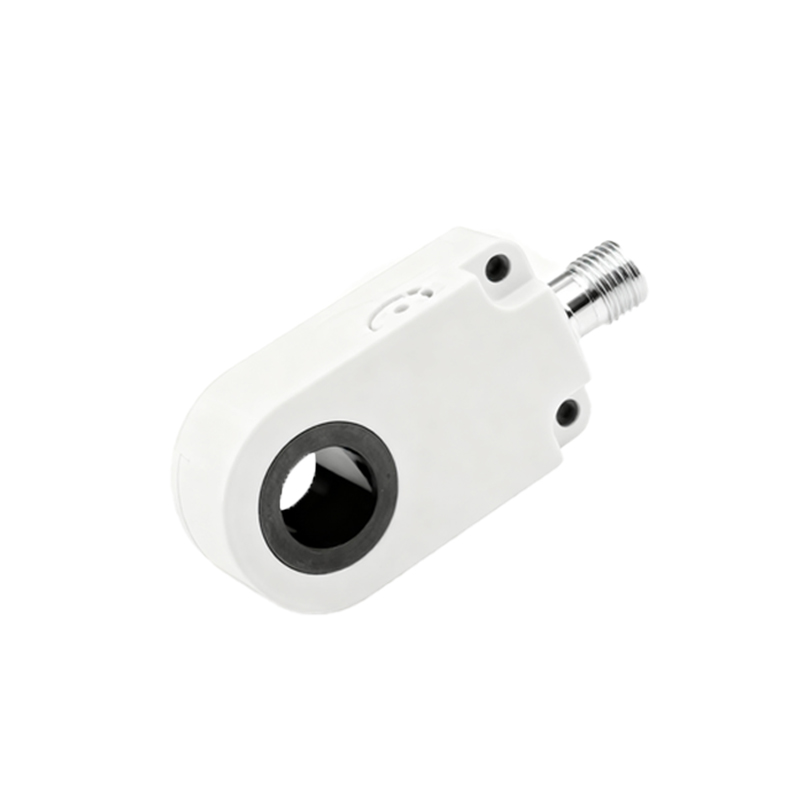
The advantages of proximity wheel speed sensors are significant. Their non-contact operation is perhaps the most critical benefit, leading to virtually infinite theoretical lifespan as there are no moving parts to wear out. They are highly resistant to contamination; sealed units can perform reliably even when covered in grime or snow, a common scenario in automotive underbody applications. They generally offer good resolution and accuracy, especially at medium to high speeds, and are relatively inexpensive to manufacture and install. Furthermore, they are self-generating in their basic form—the AC voltage is produced by the motion itself, requiring no external power source for operation, which enhances simplicity and reliability.
However, certain limitations exist. The sensor requires a ferromagnetic target and has an effective operating range, or "air gap," which must be precisely set during installation—typically a few millimeters. If this gap becomes too large due to vibration or improper mounting, the signal strength can drop below a usable threshold. The output signal amplitude also tends to increase with speed; at very low rotational speeds, the generated voltage can be very weak, potentially making low-speed detection challenging without signal conditioning. Modern active sensors with integrated electronics often overcome this limitation.
In comparison to other technologies like Hall-effect sensors or optical encoders, inductive proximity sensors offer a compelling balance of cost, ruggedness, and performance for harsh environments. Hall-effect sensors, while also non-contact, require a power supply and can detect both magnetic and non-magnetic metals, but may be more sensitive to electromagnetic interference. Optical encoders provide extremely high resolution but are susceptible to blockage and degradation from dust and oil.
In summary, the proximity wheel speed sensor remains a cornerstone technology for rotational speed measurement. Its elegant simplicity, based on fundamental electromagnetic principles, translates into exceptional durability and reliability in demanding applications. From enabling life-saving automotive safety systems to ensuring the smooth operation of industrial equipment, this sensor's role is both critical and pervasive. As systems demand more precise data, the core inductive principle continues to be refined and integrated with advanced electronics, ensuring its relevance in an increasingly automated world.