Proximity sensor switches, often simply called proximity switches or sensors, are a fundamental component in modern industrial automation and countless electronic devices. Their core function is to detect the presence or absence of an object within a specified range without any physical contact. This non-contact operation is their key advantage, leading to high reliability, long service life, and the ability to function in harsh environments. Understanding their working principle is essential for proper selection and application.
The fundamental principle behind all proximity sensors is based on the disturbance of an electromagnetic field, acoustic field, or optical beam. The most common types are inductive, capacitive, and photoelectric. Each operates on a distinct physical principle suited to different target materials and conditions.
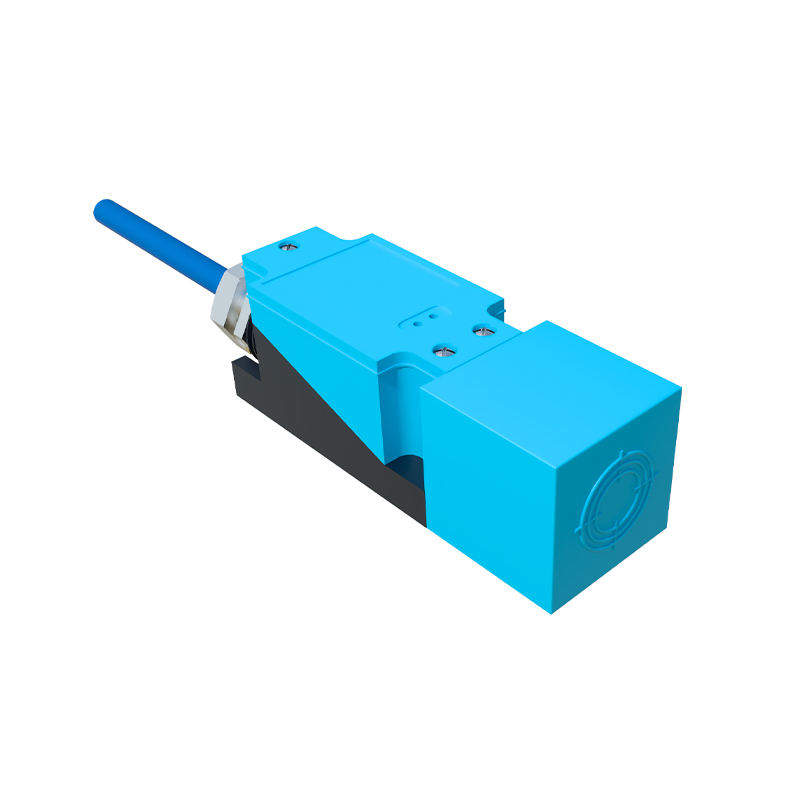
Inductive Proximity Sensors are the workhorses of metal detection. Their core component is a coil wound around a ferrite core, which forms part of an oscillator circuit. When an alternating current passes through this coil, it generates a high-frequency oscillating electromagnetic field at the active sensing face. When a metallic object (the target) enters this field, eddy currents are induced on the surface of the metal. These eddy currents draw energy from the oscillator, causing a drop in the oscillation amplitude. An evaluation circuit monitors this amplitude change. Once the amplitude reduction reaches a pre-set threshold (the sensing point), the circuit triggers a solid-state switch, changing the output state. This switch typically controls a relay or provides a signal to a PLC (Programmable Logic Controller). Inductive sensors are ideal for detecting ferrous and non-ferrous metals, with sensing ranges varying from a few millimeters to about 60 millimeters. They are insensitive to non-metallic materials like plastic, wood, or liquids.
Capacitive Proximity Sensors can detect both metallic and non-metallic materials, including liquids, powders, plastics, and wood. They operate by generating an electrostatic field. The sensor face acts as one plate of a capacitor, and the target object acts as the other plate, with the air gap as the dielectric. As a target approaches the sensing face, the capacitance of this system increases. An internal oscillator is designed to start oscillating only when this capacitance exceeds a certain level. The change in oscillation is detected by the evaluation circuit, which then switches the output state. The sensitivity of capacitive sensors is often adjustable, allowing them to "see through" certain non-metallic containers to detect material levels inside. This makes them perfect for level detection of liquids, granules, or powders in tanks and hoppers.
Photoelectric Sensors use light to detect objects. They consist of a light emitter (usually an LED producing visible red, infrared, or laser light) and a receiver. There are three main operational modes. The through-beam type has separate emitter and receiver units; detection occurs when the target object interrupts the light beam. This mode offers the longest sensing range. The retro-reflective type uses a single unit housing both emitter and receiver, along with a reflector. The emitted light bounces off the reflector back to the receiver. A target is detected when it blocks this reflected beam. The diffuse (or proximity) type also has a single unit, but it detects light reflected directly off the target object itself. The sensitivity is adjusted for the specific reflectivity of the target. Photoelectric sensors are highly versatile for detecting objects of almost any material, color, or surface finish, at ranges from centimeters to tens of meters.
The output from these sensors is typically a switched DC signal. Common configurations include NPN (sinking) and PNP (sourcing) transistor outputs for DC sensors, and relay or solid-state AC outputs. The choice depends on the control system's input requirements. Key selection parameters beyond the sensing principle include the nominal sensing distance, repeat accuracy, response frequency, housing material (metal or plastic), and environmental ratings like IP (Ingress Protection) for dust and water resistance.
Applications are ubiquitous. In manufacturing, they are used for part counting, position verification on assembly lines, end-of-travel detection on machinery, and robotic guidance. Inductive sensors monitor spindle position in machine tools. Capacitive sensors control fill levels in packaging machines. Photoelectric sensors ensure correct label placement on bottles. Beyond industry, they are found in everyday life: the automatic faucet in a restroom (capacitive), the screen that turns off when a phone is held to your ear (photoelectric), and the ground proximity warning in aircraft (often ultrasonic, another variant).
In summary, proximity sensor switches are elegantly simple in concept yet sophisticated in execution. By leveraging electromagnetic or optical field disturbances, they provide a crucial interface between the physical and control worlds, enabling precise, reliable, and wear-free automation across every sector of technology.