In the realm of industrial automation and precision measurement, laser photoelectric sensors stand as a cornerstone technology. These devices utilize laser light as a medium to detect the presence, absence, or position of an object without physical contact. Their operation is fundamentally based on the principles of photoelectric effect, where light energy is converted into an electrical signal. A typical sensor consists of a laser emitter, a receiver, and associated control circuitry. The emitter projects a highly focused, coherent beam of light. When this beam is interrupted or reflected by a target object, the change in light intensity or time-of-flight is captured by the receiver. This signal is then processed to trigger a specific output, such as switching a relay or sending data to a programmable logic controller (PLC).
The advantages of using laser light, as opposed to standard LED light sources, are significant. Lasers provide a highly collimated beam with a small, precise spot size. This allows for the detection of very small objects or precise edges at considerable distances. Furthermore, the coherent nature of laser light minimizes dispersion, enabling stable operation even in environments with ambient light interference. The monochromatic wavelength also allows for the use of optical filters on the receiver, enhancing signal-to-noise ratio.

Several primary types of laser photoelectric sensors are deployed based on their sensing method. The through-beam type, also known as the opposed mode, employs separate emitter and receiver units placed opposite each other. Detection occurs when the target object breaks the beam. This method offers the longest sensing range and highest reliability. The retro-reflective type uses a single housing containing both emitter and receiver, along with a specialized reflector. The sensor detects an object when it blocks the beam reflected back from the reflector. It provides a good balance of range and ease of installation. Finally, the diffuse-reflective type, or proximity mode, relies on light reflected directly from the target object itself. The emitter and receiver are in the same unit. While its range is shorter and can be affected by the object's color and surface texture, it requires only a single wiring point and no separate reflector, simplifying setup for many applications. A more advanced variant is the background suppression diffuse sensor, which uses triangulation to detect objects only within a specific distance, ignoring the background.
The applications for laser photoelectric sensors are vast and critical across modern industry. In packaging and material handling, they are used for precise object counting, bottle cap inspection, and label detection on high-speed production lines. Their accuracy ensures correct packaging and minimizes waste. In the automotive sector, these sensors guide robots for welding, verify part placement on assembly lines, and inspect component dimensions with micron-level precision. Within the electronics industry, they are indispensable for wafer handling, PCB positioning, and verifying the presence of tiny surface-mount components. Logistics and warehouse automation rely on them for parcel dimensioning, barcode reading in sortation systems, and palletizing guidance. Furthermore, their role in safety systems, such as light curtains for machine guarding, underscores their importance in protecting personnel.
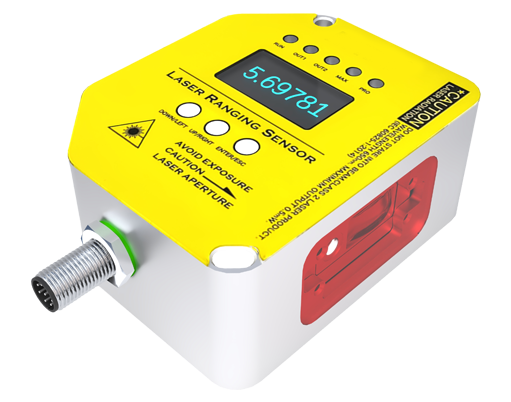
Selecting the appropriate laser sensor requires careful consideration of several parameters. The sensing range must be suitable for the application, with a sufficient margin for operational variances. The size and reflectivity of the target object directly influence the choice of sensor type and laser power. Environmental factors like dust, fog, vibration, and extreme temperatures necessitate sensors with appropriate ingress protection (IP) ratings and robust housings. The required response time is crucial for high-speed processes; laser sensors typically offer very fast switching speeds. Output configuration—whether digital (PNP/NPN) or analog—must be compatible with the host control system. Finally, features like programmable sensing windows, teach-in functionality, and IO-Link communication for Industry 4.0 integration add layers of intelligence and flexibility.
In conclusion, laser photoelectric sensors are a transformative technology enabling high-speed, non-contact detection with exceptional accuracy and reliability. From ensuring the quality of consumer goods to safeguarding complex robotic workcells, their role is integral to the efficiency and intelligence of contemporary manufacturing and beyond. As industries continue to demand higher precision and smarter data, the evolution of these sensors will undoubtedly continue, incorporating advancements in laser diodes, signal processing algorithms, and networked industrial communication.
