Laser sensor technology has evolved from a niche scientific tool into a cornerstone of modern industry and innovation. These devices, which use laser light to detect, measure, or profile objects with exceptional precision, are now embedded in systems ranging from autonomous vehicles and smart factories to medical diagnostics and consumer electronics. The working principle, based on measuring the reflection or scattering of coherent light, enables non-contact, high-speed, and highly accurate data acquisition—capabilities that are increasingly critical in a data-driven world.
The current industrial landscape is being reshaped by several key trends that directly fuel the demand for advanced laser sensors. The rise of Industry 4.0 and smart manufacturing is perhaps the most significant driver. On factory floors, laser sensors are indispensable for robotic guidance, quality control, and predictive maintenance. They perform tasks like precise dimensional gauging, surface defect detection, and real-time component tracking with a reliability that mechanical or visual systems cannot match. This shift towards automation and interconnected systems ensures a steady and growing need for sensor integration specialists, application engineers, and maintenance technicians.
Simultaneously, the rapid development of autonomous systems is creating another major frontier. Self-driving cars, drones, and automated mobile robots (AMRs) rely heavily on LiDAR (Light Detection and Ranging) and other laser-based sensing technologies to perceive their environment in three dimensions. This sector demands professionals skilled in sensor fusion, data interpretation, and the development of perception algorithms. As regulatory frameworks evolve and technology costs decrease, the deployment of these autonomous systems is expected to scale dramatically, opening numerous roles in R&D, testing, and systems engineering.
Beyond manufacturing and autonomy, emerging fields are presenting novel applications. In healthcare, laser sensors enable non-invasive diagnostic tools and are integral to advanced imaging systems and surgical robots. Environmental monitoring utilizes them for measuring atmospheric composition or tracking geological changes. Even the consumer space, with products like smartphones featuring LiDAR for augmented reality, contributes to market expansion. This diversification means career paths are no longer confined to traditional engineering firms but extend into biotech, environmental science, and consumer product design.
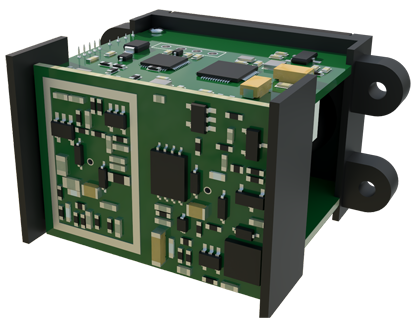
The career outlook for individuals in this field is robust and multifaceted. Core technical roles include:
* Sensor Design and Development Engineers: These professionals work on the hardware and underlying physics, improving range, accuracy, power efficiency, and miniaturization.
* Applications and Systems Engineers: They focus on integrating laser sensors into larger systems, solving client-specific problems, and ensuring optimal performance in real-world conditions.
* Software and Algorithm Developers: With raw sensor data being voluminous, experts are needed to write software for signal processing, object recognition, and data fusion with other sensors like cameras and radars.
* Field Service and Technical Sales Engineers: These roles provide critical support, offering installation, calibration, and troubleshooting services, or translating technical capabilities into business solutions for clients.
Success in this domain requires a strong foundation in optics, photonics, electronics, and software. However, interdisciplinary knowledge is becoming just as valuable. Understanding the specific challenges of robotics, automotive safety standards, or manufacturing logistics can differentiate a candidate. Continuous learning is essential, as the technology itself is advancing—with trends like the move towards solid-state LiDAR, increased use of AI for data analysis, and the development of cheaper, more robust sensor modules.
In conclusion, the working future for laser sensor technology is not merely promising; it is actively unfolding across global industries. The convergence of automation, digitalization, and intelligent systems has positioned laser sensing as a critical enabling technology. For engineers, technicians, and developers, this translates into a dynamic career landscape with opportunities for specialization, innovation, and impact. The ability to work with these precise "eyes" of machines will remain a highly sought-after skill, driving progress in how we build, navigate, diagnose, and interact with the world.