In the intricate world of industrial automation and smart systems, the ability to detect the presence or absence of an object without physical contact is fundamental. This is the core function of proximity sensors, and Heimer has established itself as a significant name in this field, offering reliable solutions that bridge the gap between mechanical processes and electronic control. Unlike basic switches, Heimer proximity sensors operate on various principles, primarily inductive, capacitive, and sometimes magnetic, to provide non-contact, wear-free detection, which is critical for enhancing system longevity and reducing maintenance costs.
The operational principle of an inductive Heimer proximity sensor, one of the most common types, is elegant in its simplicity. The sensor generates an oscillating electromagnetic field from its active face. When a metallic object enters this field, eddy currents are induced within the object, causing a change in the oscillation amplitude. The sensor's internal circuitry detects this change and triggers a solid-state switch, sending a clear signal to the connected controller, such as a PLC (Programmable Logic Controller). This entire process happens in milliseconds, enabling high-speed counting, positioning, and end-limit detection in machinery. A key advantage here is that only metallic targets, typically ferrous metals like steel and iron for standard models, will actuate the sensor, making them immune to dust, oil, and most non-metallic contaminants prevalent in industrial environments.

For applications requiring detection of non-metallic materials—such as wood, plastic, glass, or liquids—Heimer's capacitive proximity sensors are the tool of choice. These sensors function by generating an electrostatic field. Any object with a dielectric constant different from air (which is nearly all materials) will alter the capacitance of this field when it approaches. This change is measured, and the sensor switches accordingly. This makes them ideal for level detection in tanks (e.g., monitoring fluid or granulate levels), material handling, and detecting filled containers on production lines. Their sensitivity is often adjustable, allowing engineers to fine-tune them to ignore certain materials or container walls, focusing only on the target substance.
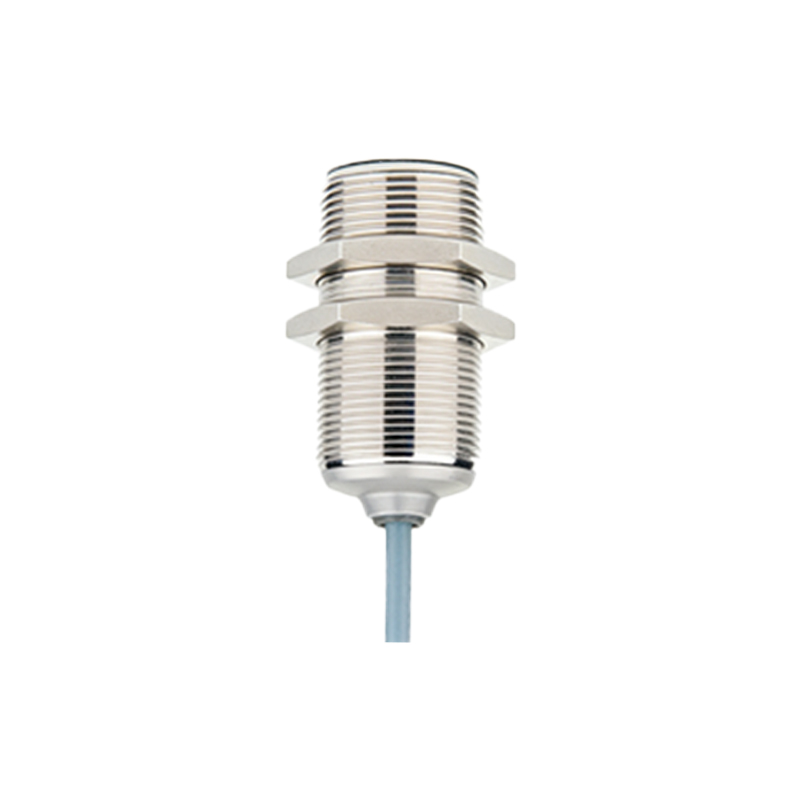
The design and construction of Heimer sensors emphasize robustness. Housed in durable materials like nickel-plated brass or stainless steel, they are built to withstand harsh conditions, including exposure to coolants, cutting fluids, and mechanical vibration. Many models feature IP67 or higher ingress protection ratings, meaning they are completely protected against dust and can withstand temporary immersion in water. This ruggedness ensures reliable operation in demanding settings such as automotive manufacturing, packaging machinery, material handling systems, and CNC machine tools.
Integration into modern control systems is straightforward. Heimer sensors typically offer multiple output configurations, including NPN (sinking), PNP (sourcing), and analog outputs. The two-wire DC or three-wire DC models are industry standards, easily connecting to a vast array of controllers. Furthermore, many feature LED status indicators for quick visual confirmation of operation and switching state, a simple yet invaluable feature for troubleshooting and setup. The choice of sensing distance, form factor (barrel-shaped, rectangular, or ring-shaped), and connection type (pre-wired cable or quick-disconnect) allows for precise selection to fit the mechanical and electrical constraints of any application.
Beyond basic detection, the application scope of Heimer proximity sensors is vast. They are the unseen guardians on assembly lines, ensuring components are in place before a robotic weld or a stamping press cycle begins. They provide precise position feedback for automated guided vehicles (AGVs) and elevator systems. In safety systems, they can act as non-contact interlock switches to ensure guards are closed before machinery starts. Their reliability and speed are essential for maintaining high throughput and quality control in continuous production processes.
Selecting the right Heimer sensor requires careful consideration of several factors: the material of the target object (metal, plastic, liquid), the required sensing distance (nominal range), the operating environment (temperature, presence of chemicals), the electrical requirements (voltage, output type), and the physical space available for installation. Consulting technical datasheets is crucial to match the sensor's specifications with the application's demands, ensuring optimal performance and avoiding false triggers or missed detections.
In conclusion, Heimer proximity sensors represent a critical component in the automation ecosystem. By providing accurate, non-contact detection across a wide spectrum of materials and in challenging environments, they enable smarter, faster, and more reliable machine operation. Their role in translating physical presence into actionable electronic data is a cornerstone of modern industrial efficiency, from simple conveyor systems to complex robotic cells. As automation continues to evolve, the precision and durability offered by sensors like those from Heimer will remain indispensable for innovation and operational excellence.