In the realm of automation and smart technology, proximity sensors are the silent sentinels, enabling devices to perceive and react to the presence or absence of nearby objects without any physical contact. This encyclopedia delves into the core of these ubiquitous components, exploring their various types, fundamental operating principles, and vast applications across industries.
At its essence, a proximity sensor is a device that detects the presence or absence of an object within a specified range. The key distinction from other sensors is its non-contact nature. It emits a field or a beam of electromagnetic radiation, such as infrared light, laser, or an electromagnetic field, and looks for changes in the field or the return signal. This capability makes it ideal for applications where physical contact is undesirable due to factors like contamination, wear and tear, or the need for high-speed operation.
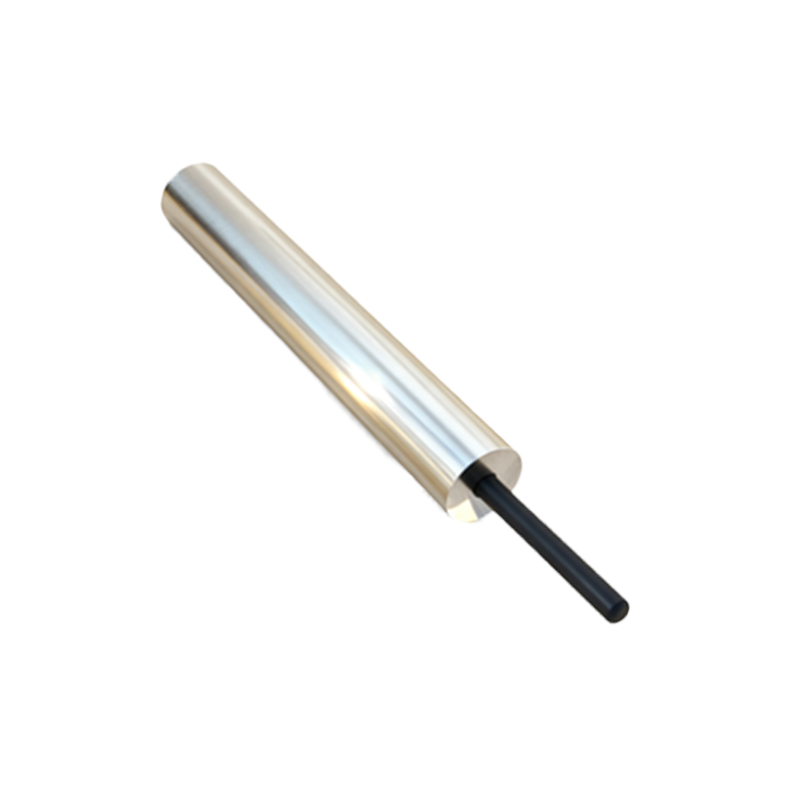
The world of proximity sensors is diverse, categorized primarily by their detection technology. The most common types include:
1. Inductive Proximity Sensors: These sensors detect metallic objects, primarily ferrous metals like iron and steel. They operate by generating an oscillating electromagnetic field from a coil. When a metallic object enters this field, it induces eddy currents within the object, which in turn dampens the oscillation of the sensor's coil. The sensor's circuitry detects this change and triggers an output signal. They are robust, reliable, and widely used in industrial automation for tasks like counting metal parts, detecting position in machinery, and as safety limit switches.
2. Capacitive Proximity Sensors: These sensors can detect both metallic and non-metallic objects, including liquids, powders, plastics, and wood. They function by generating an electrostatic field. When any object with a dielectric constant different from air enters this field, it changes the sensor's capacitance. This change is measured, and the sensor switches its output state. This makes them versatile for applications like liquid level detection, material handling, and touch-sensitive interfaces.
3. Photoelectric Sensors: Often used for proximity sensing, these sensors use light, typically infrared or laser. They consist of an emitter and a receiver. In the most common "diffuse" or "reflective" mode for proximity, the emitter and receiver are housed together. The sensor detects an object when the light beam from the emitter is reflected off the object back to the receiver. They offer longer sensing ranges and can detect virtually any material, making them perfect for packaging, conveyor systems, and object counting.
4. Ultrasonic Proximity Sensors: These sensors use sound waves beyond the human hearing range. They emit ultrasonic pulses and measure the time it takes for the echo to return after bouncing off an object. By calculating this time-of-flight, they can determine the object's distance. They are excellent for detecting objects regardless of color, transparency, or material, and are used in level measurement, collision avoidance in vehicles, and presence detection for bulky items.
5. Magnetic Proximity Sensors (Reed Switches): These simple sensors detect the presence of a magnetic field, typically from a permanent magnet. They contain two ferromagnetic reeds sealed in a glass tube. When a magnet approaches, the reeds are magnetized and attract each other, closing the electrical circuit. They are used in low-power, low-speed applications like door/window security sensors and position sensing in clean environments.
The working principle across these types follows a common sequence: generation of a field or signal, interaction with a target object, measurement of the resultant change, and conversion of that measurement into a usable electrical output signal, typically a simple ON/OFF switch or an analog value proportional to distance.
Applications for proximity sensors are virtually limitless. In manufacturing, they enable precise positioning, robotic guidance, and automated assembly. In consumer electronics, they deactivate smartphone touchscreens during calls to prevent accidental touches and enable features like automatic display wake-up. In the automotive sector, they are crucial for parking assistance systems, blind-spot detection, and automated braking. They also play vital roles in aerospace, food and beverage processing, and pharmaceutical packaging, ensuring efficiency, safety, and quality control.
Selecting the right proximity sensor depends on several factors: the material of the target object, the required sensing distance, environmental conditions (like dust, moisture, or temperature), response speed, and output type needed. Understanding these parameters is key to implementing an effective and reliable sensing solution.
As technology advances, proximity sensors continue to evolve, becoming smaller, more energy-efficient, and smarter with integrated diagnostics and communication capabilities like IO-Link. They remain fundamental building blocks in the journey toward fully automated and intelligent systems, providing the essential sense of "touch at a distance" that modern machinery and devices rely upon.