In the world of industrial automation and smart devices, the ability to detect the presence or absence of an object without physical contact is fundamental. This capability is provided by proximity sensors, with standard models forming the backbone of countless applications. A standard proximity sensor is a non-contact electronic device designed to detect the presence of a target object within a specified sensing range. Unlike their specialized counterparts, standard variants offer a balance of reliability, cost-effectiveness, and versatility, making them suitable for a wide array of common tasks.
The core principle behind most standard proximity sensors is electromagnetic induction or capacitive sensing. Inductive proximity sensors are the most prevalent standard type. They generate an oscillating electromagnetic field from a coil in the sensing face. When a metallic object, typically ferrous metals like iron or steel, enters this field, it induces eddy currents within the target. This causes a change in the oscillation amplitude, which the sensor's internal circuitry detects and converts into a digital output signal, switching the sensor state from "off" to "on." These sensors are robust, immune to environmental factors like dust or oil (provided they are properly housed), and excel in detecting metals. Their standard sensing ranges vary but are typically from a few millimeters up to about 60 millimeters.
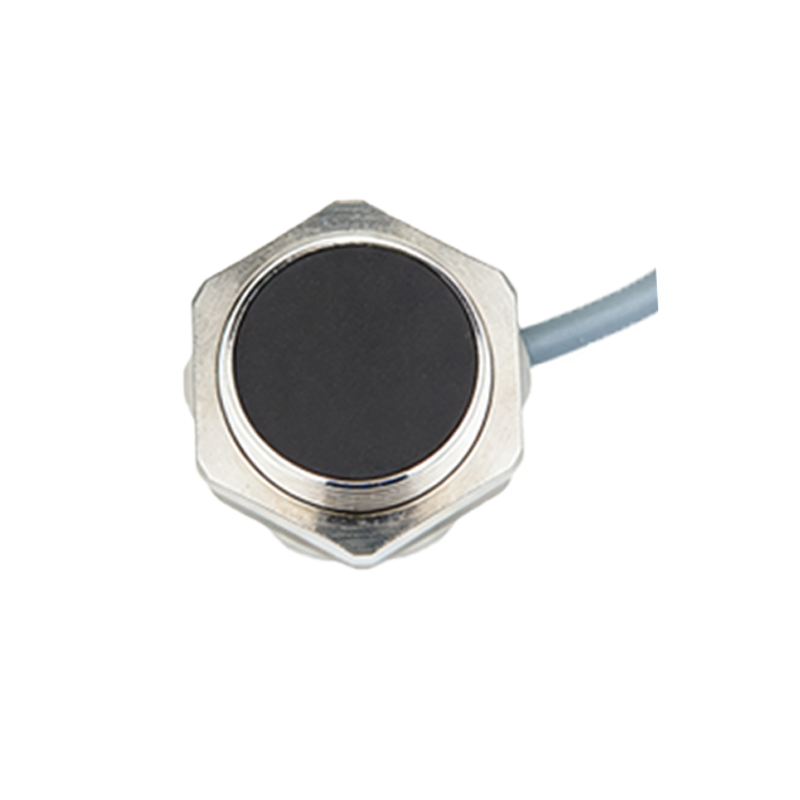
Another common standard type is the capacitive proximity sensor. These sensors can detect both metallic and non-metallic objects, including liquids, powders, plastics, and wood. They operate by generating an electrostatic field. When any material with a dielectric constant different from air enters this field, it changes the sensor's capacitance, triggering an output. This makes them highly versatile for level detection of materials inside non-metallic containers or for detecting materials through thin barriers. Standard capacitive sensors are ideal for applications involving non-metallic targets where inductive sensors would fail.
The output of a standard proximity sensor is typically a simple switching signal. Common configurations include DC 3-wire types with NPN (sinking) or PNP (sourcing) transistor outputs, which are the industry standard for connecting to Programmable Logic Controllers (PLCs) and other control systems. Two-wire AC/DC models also exist, simplifying wiring but with some limitations on load current. The choice between NPN and PNP depends entirely on the control system's input card configuration.
Selecting the right standard proximity sensor requires careful consideration of several key parameters. The sensing distance, or nominal range, is critical and must account for installation tolerances and target material. For inductive sensors, the reduction factor for different metals must be considered; stainless steel, for instance, reduces the effective sensing range. The housing material and shape (cylindrical, rectangular, or block-style) are chosen based on mounting constraints and environmental conditions. Standard IP (Ingress Protection) ratings like IP67 are common, indicating protection against dust and temporary immersion, suitable for most industrial environments. Other factors include switching frequency (how fast the sensor can detect objects), output current capacity, and voltage supply range (commonly 10-30V DC for inductive models).
Applications for standard proximity sensors are ubiquitous. On automated assembly lines, they detect the position of parts on conveyors, confirm the presence of components, and count objects. In machine tools, they serve as end-of-travel limit switches for cylinders and slides, providing precise positional feedback without mechanical wear. They are integral to packaging machinery for detecting fill levels, and in the automotive industry for robotic positioning and safety interlocks. Their reliability ensures smooth, uninterrupted operation, reducing downtime and maintenance costs.
When integrating a standard proximity sensor, proper installation is paramount. Ensuring the correct mounting distance and avoiding mutual interference between multiple sensors (by maintaining adequate spacing) is essential. The target object's size, shape, and approach direction relative to the sensing face can affect performance. For consistent detection, the target should be at least as large as the sensor's sensing face. Regular maintenance, though minimal, involves keeping the sensing face clean from buildup of metallic swarf, oil, or other contaminants that could cause false triggering or reduced range.
In summary, standard proximity sensors are indispensable, workhorse components in modern automation. Their non-contact operation, durability, and straightforward interface make them a first-choice solution for object detection tasks. Understanding their operating principles, types, and key selection criteria empowers engineers and technicians to implement reliable and efficient sensing solutions, forming the silent, intelligent foundation upon which automated systems reliably function.