In the realm of modern technology, laser camera sensors represent a significant leap forward, merging the principles of optics, photonics, and digital imaging to create systems capable of unprecedented accuracy and detail. Unlike traditional passive cameras that rely on ambient light, these active sensing devices project their own controlled laser light to illuminate and measure the world around them. This fundamental shift enables capabilities far beyond simple two-dimensional photography, opening doors to precise three-dimensional mapping, high-speed motion tracking, and detection in complete darkness.
The core technology behind most laser camera sensors is Light Detection and Ranging, or LiDAR. A LiDAR sensor emits rapid pulses of laser light—often invisible to the human eye—and measures the time it takes for each pulse to bounce back after hitting an object. By calculating this "time of flight" with extreme precision and combining millions of such measurements, the sensor can construct a detailed, real-time 3D point cloud of its environment. This point cloud is a digital representation where every data point has precise X, Y, and Z coordinates, creating a depth map of remarkable fidelity. This process happens thousands or even millions of times per second, allowing for the capture of dynamic scenes.
The applications for this technology are vast and transformative. In the automotive industry, laser camera sensors are the eyes of autonomous vehicles. They provide a 360-degree, high-resolution understanding of the vehicle's surroundings, accurately identifying other cars, pedestrians, cyclists, and road features in all weather and lighting conditions. This data is crucial for making split-second navigation and safety decisions. Beyond self-driving cars, advanced driver-assistance systems (ADAS) in modern vehicles use scaled-down versions of this technology for adaptive cruise control, automatic emergency braking, and lane-keeping assistance.
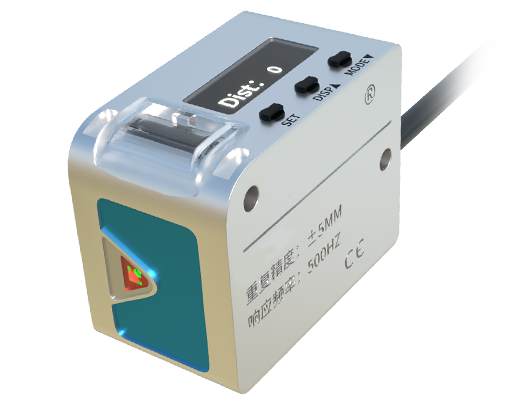
Another major field of application is robotics and industrial automation. Robots equipped with laser vision can navigate complex factory floors, identify and pick specific items from bins (a task known as "bin picking"), and perform precise quality inspections. They can measure parts to micrometer-level accuracy, ensuring manufacturing consistency. In logistics, these sensors enable automated guided vehicles (AGVs) to move goods safely and efficiently within warehouses.

The influence of laser camera sensors extends to environmental monitoring, archaeology, and construction. Scientists use airborne LiDAR to map forest canopies and terrain, revealing hidden geological features or archaeological sites beneath vegetation. In construction, these sensors are used for surveying land, monitoring structural integrity, and creating "as-built" models of structures with high precision, a process integral to Building Information Modeling (BIM).
Furthermore, consumer electronics are beginning to integrate this technology. Some modern smartphones and tablets incorporate miniature laser sensors for facial recognition, improving both security and speed. They also enhance augmented reality (AR) experiences by accurately mapping the physical space around the user, allowing virtual objects to interact more realistically with the real world.
The advantages of laser camera sensors are clear: high precision, long range, operational capability in darkness, and the ability to generate rich 3D data. However, challenges remain. Traditional mechanical spinning LiDAR systems can be bulky and expensive, though solid-state LiDAR—which has no moving parts—is emerging as a more compact and cost-effective solution. Performance can also be degraded by heavy rain, fog, or snow, as laser pulses scatter when interacting with airborne particles. Researchers are continuously working on signal processing algorithms and multi-wavelength systems to mitigate these effects.

Looking ahead, the future of laser camera sensors is tied to miniaturization, cost reduction, and increased integration. The goal is to make high-performance, solid-state LiDAR units small and affordable enough to become ubiquitous, not just in premium cars but in all manner of smart devices and IoT applications. Fusion with other sensor types, like radar and traditional cameras, will create even more robust perception systems, leveraging the strengths of each technology.
In conclusion, laser camera sensors are far more than just advanced cameras. They are active measurement tools that are fundamentally changing how machines perceive and interact with the physical world. From enabling autonomous mobility to revolutionizing industrial processes and enriching consumer technology, these sensors are a cornerstone of the ongoing digital and automation revolution, providing the detailed, dimensional data that intelligent systems require to operate effectively and safely.