In today's interconnected world, the silent, unseen work of sensors forms the backbone of automation, safety, and convenience. Among these, the human proximity sensor stands out for its ability to detect the presence or absence of a person within a specific range without any physical contact. While technical specifications are crucial, examining human proximity sensor images offers a unique and intuitive window into their design, functionality, and diverse applications. These visuals bridge the gap between complex electronic principles and real-world implementation.
A cursory glance at various human proximity sensor images reveals a surprising diversity in form factor. Some appear as compact, rectangular black boxes, often no larger than a matchbook, with a distinctive lens or sensing window. This is typical of passive infrared (PIR) sensors, commonly found in security lights and automatic doors. The lens, often made of faceted plastic, is designed to focus infrared radiation from moving heat sources onto the internal pyroelectric element. Other images showcase cylindrical, barrel-shaped sensors with a threaded metal body. These are frequently inductive or capacitive proximity sensors used in industrial settings. Their robust construction is immediately apparent, designed to withstand harsh environments. More modern images might display sleek, minimalist discs or modules designed for seamless integration into consumer electronics, smart home hubs, or architectural elements, highlighting the trend toward aesthetic invisibility.
Beyond external housing, detailed technical diagrams and internal component images are invaluable. Cutaway views or labeled illustrations show the core components: the oscillator, sensing coil (for inductive types), infrared receiver (for PIR), or the emitting and receiving elements for ultrasonic sensors. An image of a PIR sensor's internal chip and the segmented Fresnel lens array clearly explains how it creates detection zones. Similarly, a diagram showing the electromagnetic field emitted by an inductive sensor illustrates its precise, short-range detection capability for metallic objects, while a capacitive sensor image might illustrate the fringing electric field that detects a human body's dielectric properties. These images demystify how "presence" is translated into an electrical signal.
Perhaps the most instructive images are those showing human proximity sensors in situ. A photograph of an automatic sliding door system highlights the strategic placement of sensors above or beside the doorframe. In an industrial setting, an image might show a array of cylindrical sensors on a robotic assembly line, ensuring worker safety by halting machinery when a hand enters a danger zone. Smart home application photos demonstrate tiny sensors embedded in bathroom mirrors (to turn on lights), under desks (for occupancy-based energy saving), or in conference room ceilings for space utilization analytics. Another powerful set of images comes from public health, showing sensors integrated into faucets, soap dispensers, and hand dryers to enable touch-free operation—a concept whose importance was magnified globally in recent years.
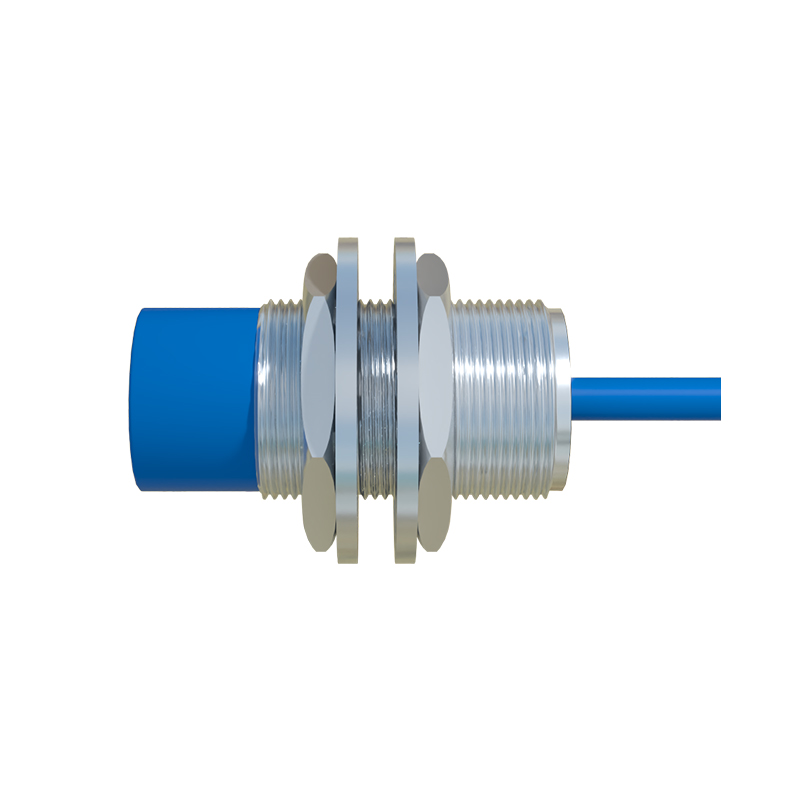
Comparing images of different technologies side-by-side is an excellent learning tool. Placing a PIR sensor image next to an ultrasonic sensor image immediately shows physical differences. Annotated images can further contrast their detection patterns: a PIR sensor typically has a conical or curtain-like detection zone sensitive to movement, whereas an ultrasonic sensor emits a broader, volumetric sound wave pattern capable of detecting static presence. Thermal imaging overlays can visually represent the heat signature detection of a PIR sensor, while a simple graphic can show the electromagnetic field distortion detected by a capacitive sensor when a person approaches.
For engineers and installers, wiring diagrams and output signal waveform images are essential. These pictures show connection terminals for power, ground, and the output signal (often digital ON/OFF or analog 4-20mA). An oscilloscope trace image accompanying a sensor datasheet visually defines parameters like response time, sensing distance hysteresis, and output behavior, which is far more intuitive than text alone.
In conclusion, human proximity sensor images serve as a universal language, translating technical data sheets into understandable concepts. From the robust industrial barrel sensor to the discreet smart home module, these pictures tell a story of innovation aimed at interaction, efficiency, and safety. They allow students, hobbyists, engineers, and business decision-makers to quickly grasp form, function, and application potential. As sensor technology continues to evolve toward greater miniaturization and intelligence, the images documenting this progress will remain a critical tool for education, design, and implementation in our increasingly automated world.