In the world of industrial automation, robotics, and smart devices, proximity sensors are the silent workhorses that enable machines to "sense" their surroundings without physical contact. These devices detect the presence or absence of an object within a specified range, triggering a response in a control system. But with various technologies available, a common question arises: how many types of proximity sensors are there? The answer isn't a single number, as they are categorized based on their underlying detection principle. This guide provides a detailed breakdown of the primary types, their working mechanisms, and typical applications.
The most fundamental classification is based on the method of detection. The main categories include inductive, capacitive, photoelectric, ultrasonic, and magnetic proximity sensors. Each type has distinct characteristics that make it suitable for specific environments and materials.
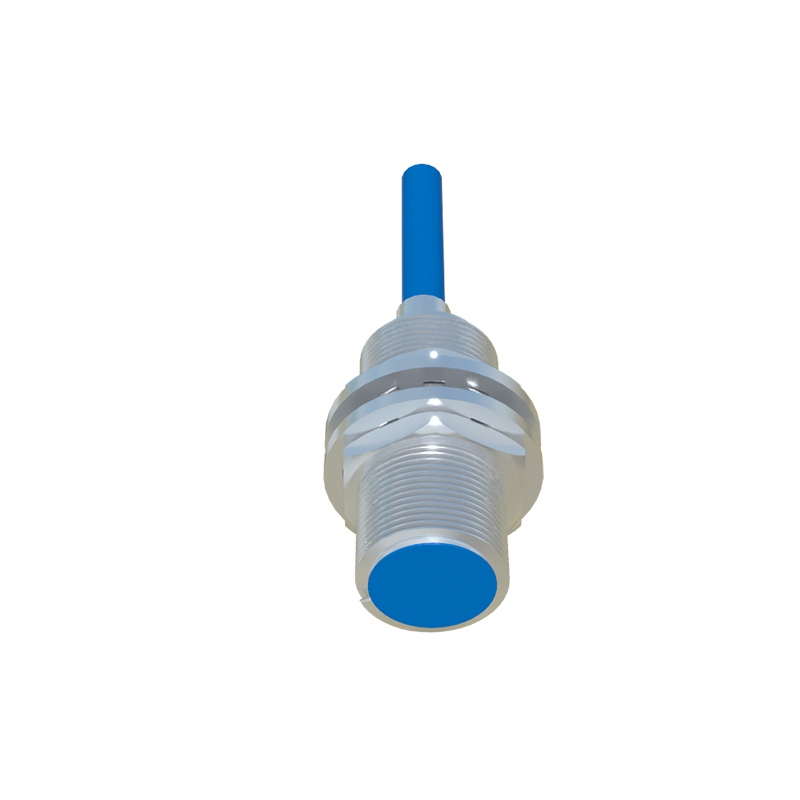
Inductive Proximity Sensors are among the most common, especially in manufacturing. They generate an electromagnetic field and detect eddy currents induced in a metallic target. When a metal object enters this field, it causes a change in the oscillation amplitude, which the sensor circuit detects. A key feature is that they only detect metallic objects, primarily ferrous metals like steel and iron, though some specialized versions can detect non-ferrous metals. They are highly reliable, resistant to environmental factors like dust and oil, and have no moving parts. You'll find them in applications like machine tooling, metal detection on conveyor belts, and position sensing in automotive assembly lines.
Capacitive Proximity Sensors operate by generating an electrostatic field. They can detect both metallic and non-metallic objects—liquids, plastics, wood, glass, and granular materials. The sensor and the target act as two plates of a capacitor. When an object enters the sensing field, it changes the capacitance, triggering the switch. These sensors are ideal for level detection in tanks (for liquids or powders), material handling for non-metallic products, and touch-sensitive interfaces. They can also detect objects through certain non-metallic barriers, adding to their versatility.
Photoelectric Sensors use light to detect objects. They consist of a light emitter (usually an LED) and a receiver. They are further divided into three main sub-types based on their setup. Through-beam sensors have separate emitter and receiver units placed opposite each other. An object is detected when it breaks the light beam. They offer the longest sensing ranges and high reliability. Retro-reflective sensors house the emitter and receiver together, using a reflector to bounce the light back. Detection occurs when the beam is interrupted. Diffuse reflective sensors have the emitter and receiver in one housing and detect light reflected directly off the target object. Photoelectric sensors are excellent for long-range detection, color differentiation, and detecting small or transparent objects. Applications include packaging lines, object counting, and safety curtains.
Ultrasonic Proximity Sensors work on the principle of sound waves. They emit high-frequency ultrasonic pulses and measure the time it takes for the echo to return after bouncing off a target. This time-of-flight measurement allows them to calculate distance, making them effective for both presence detection and precise distance measurement. They can detect almost any material, regardless of color, transparency, or surface texture, and are unaffected by dust, smoke, or light conditions. Common uses include liquid level sensing, pallet detection in warehouses, and collision avoidance in automated guided vehicles (AGVs).
Magnetic Proximity Sensors are designed specifically to detect permanent magnets. They often use a reed switch or a Hall-effect semiconductor. When a magnet approaches, the reed switch contacts close, or the Hall-effect chip generates a voltage change. These sensors are simple, cost-effective, and can operate in harsh environments where other sensors might fail due to dirt, moisture, or extreme temperatures. They are widely used for detecting the position of cylinder pistons, door/window closure in security systems, and in automotive applications like sensing wheel speed.
Beyond these five primary types, other specialized variants exist, such as Eddy-current sensors for high-precision displacement measurement of metals, and Radar sensors for long-range outdoor applications. The choice depends on critical factors: the target material, required sensing distance, environmental conditions (temperature, contaminants), response speed, and installation constraints.
In summary, while we can list five core types—inductive, capacitive, photoelectric, ultrasonic, and magnetic—the landscape includes important sub-categories and specialized sensors. Understanding the strengths and limitations of each technology is crucial for selecting the right sensor. This ensures optimal performance, reliability, and efficiency in systems ranging from a simple vending machine to a complex robotic assembly cell. The evolution of sensor technology continues, with trends leaning towards miniaturization, increased intelligence (IO-Link), and enhanced robustness for Industry 4.0 applications.