In the realm of industrial automation and quality control, precision is paramount. Laser displacement sensors have emerged as indispensable tools, offering non-contact, high-accuracy measurement solutions for a vast array of applications. These devices operate on the principle of triangulation or time-of-flight, projecting a focused laser beam onto a target surface and analyzing the reflected light to determine distance or displacement with micron-level resolution.
The core technology behind most laser displacement sensors is optical triangulation. A laser diode emits a concentrated beam that strikes the target. The reflected light is focused onto a position-sensitive detector, such as a CCD or PSD array. As the target's distance changes, the position of the light spot on the detector shifts. This movement is precisely calculated by the sensor's internal processor to output a corresponding displacement value. This method excels in high-speed, high-precision measurements over short to medium ranges. For longer ranges, time-of-flight sensors measure the phase shift or the direct time delay of a pulsed laser beam, providing robust performance in challenging environments.
The advantages of using laser displacement sensors are numerous. Their non-contact nature eliminates the risk of damaging delicate surfaces or influencing the measurement through physical force. They provide exceptionally fast response times, enabling real-time monitoring on high-speed production lines, such as in automotive assembly or electronics manufacturing. Furthermore, they are capable of measuring a wide variety of materials, including metals, plastics, glass, and even liquids, provided the surface can reflect sufficient laser light.
Typical industrial applications are diverse. In automotive manufacturing, these sensors measure body panel gaps, tire tread depth, and engine component thickness. In the electronics industry, they verify the coplanarity of chip leads, inspect solder paste height on PCBs, and measure wafer warpage. They are also crucial in roll diameter monitoring in paper and steel mills, vibration analysis in machinery, and thickness profiling of extruded plastics and metals. The ability to provide continuous, reliable data makes them vital for process optimization and preventive maintenance.
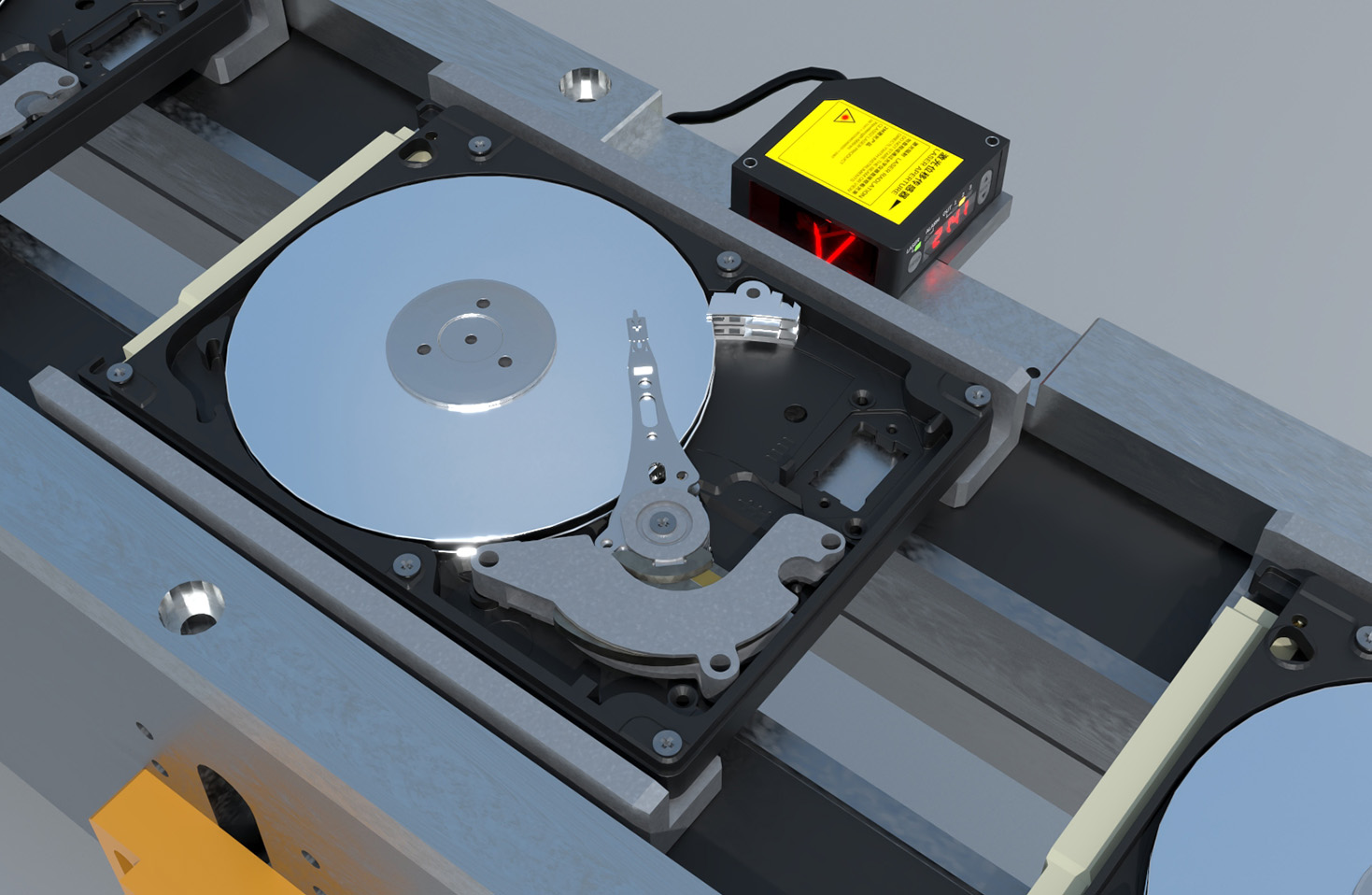
Selecting the right laser displacement sensor requires careful consideration of several key specifications. Measurement range, stand-off distance, and spot size determine the sensor's physical setup and the area being measured. Resolution and linearity define its accuracy. Sampling speed must match the dynamics of the target movement. Environmental factors like ambient light, temperature fluctuations, and the target's surface characteristics (color, texture, reflectivity) can significantly impact performance. Many modern sensors incorporate advanced features like background suppression, multi-point averaging, and digital filtering to compensate for difficult surfaces and improve signal stability.
Integration into automated systems is straightforward, with most sensors offering analog voltage or current outputs, as well as digital interfaces like RS-485, Ethernet, or EtherCAT for direct communication with PLCs and industrial computers. This facilitates seamless data collection for Statistical Process Control (SPC), trend analysis, and closed-loop control systems.

Looking ahead, the evolution of laser displacement sensors continues. Trends include miniaturization for integration into tighter spaces, enhanced resistance to environmental interference, smarter sensors with built-in analytics, and the development of blue laser models. Blue lasers, with their shorter wavelength, scatter less on rough surfaces, providing more stable measurements on materials like uncoated metals or rubber, which traditionally challenge standard red laser sensors.
In conclusion, laser displacement sensors are critical enablers of modern manufacturing and research. By delivering fast, accurate, and reliable non-contact measurements, they enhance product quality, improve production efficiency, and reduce waste. As technology advances, their role in enabling smarter, more adaptive industrial processes will only become more pronounced, solidifying their status as a cornerstone of precision metrology.