In demanding industrial settings where contamination, chemical exposure, and rigorous washdowns are daily realities, standard sensors often fail prematurely. This is where Teflon-coated proximity sensors emerge as a critical engineering solution. These specialized devices combine the reliable non-contact detection capabilities of inductive or capacitive sensors with the extraordinary protective properties of a polytetrafluoroethylene (PTFE) coating, commonly known by the brand name Teflon.
The core function remains unchanged: detecting the presence or absence of a target object without physical contact. Inductive variants detect metals, while capacitive types can detect liquids, plastics, and other materials. However, the defining feature is the sensor's face and often its entire housing being encapsulated in a layer of PTFE. This inert fluoropolymer creates a nearly impenetrable barrier between the sensitive internal electronics and the hostile external environment.
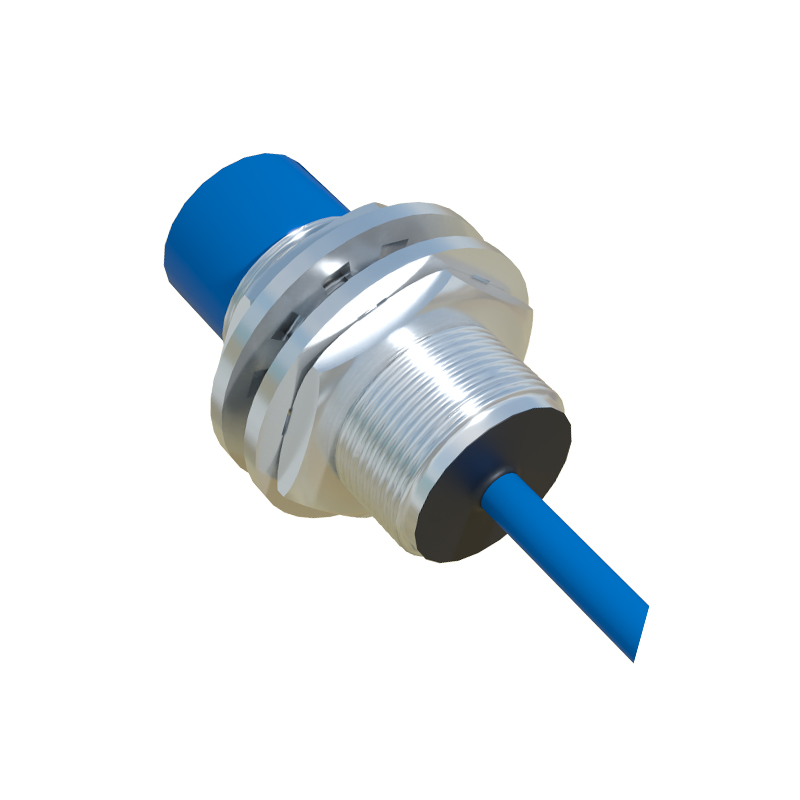
The primary advantage driving adoption is unparalleled chemical resistance. Teflon is virtually inert, offering exceptional protection against a vast array of aggressive substances including strong acids, bases, solvents, oils, and fuels. In chemical processing plants, pharmaceutical manufacturing, and plating facilities, this resistance prevents sensor corrosion and degradation, ensuring long-term reliability where other materials would quickly deteriorate.
Equally critical is the coating's non-stick property. In food and beverage processing, dairy operations, and packaging lines, sticky substances like syrups, dough, cheese, or adhesives can accumulate on standard sensors, leading to false triggers or complete failure. The slick, low-friction surface of Teflon prevents materials from adhering. This facilitates easy cleaning and is essential for maintaining hygienic conditions, often meeting requirements for USDA, FDA, and 3-A sanitary standards in food-grade applications. The sensors can withstand frequent, high-pressure, high-temperature washdowns with caustic cleaning agents without damage.
Furthermore, Teflon exhibits excellent performance across a wide temperature range and provides good dielectric properties. The coating protects against moisture ingress and electrical interference in wet environments. Its durability also resists abrasion from particulate matter in industries like mining or bulk material handling.
When selecting a Teflon-coated proximity sensor, several specifications require careful consideration. The sensing range is a key parameter; the PTFE layer creates a slight reduction in effective range compared to an uncoated equivalent, typically in the range of a 10-25% decrease. This must be factored into the mechanical design to ensure reliable detection. The thickness and quality of the coating are also paramount. A pinhole-free, consistently applied layer is essential for complete protection. Inferior coatings with micro-fissures will allow corrosive agents to penetrate, leading to rapid internal failure.
Installation and maintenance practices are straightforward but must respect the sensor's design. While rugged, the Teflon surface can be scratched by sharp metal tools during mounting. Using appropriate fixtures and avoiding direct impact on the sensing face is recommended. For cleaning, while the sensor is resistant to harsh chemicals, following the manufacturer's guidelines for compatible cleaners and temperature limits ensures maximum service life. Periodic visual inspections for any physical damage to the coating are a simple yet effective predictive maintenance step.
These sensors find indispensable roles across numerous industries. In food production, they detect containers on fill lines, monitor levels in mixing vats, and control packaging machinery, surviving daily sanitation cycles. In chemical plants, they provide reliable position feedback on valve actuators and pump controls amidst corrosive vapors and spills. In automotive painting and coating lines, they resist overspray and solvents. In wastewater treatment facilities, they endure constant exposure to moisture and abrasive slurries.
The investment in a Teflon-coated sensor is justified by a significant reduction in downtime and replacement costs. While the initial unit cost is higher than a standard industrial sensor, the total cost of ownership is often lower. Preventing a single production line stoppage due to a failed sensor can cover the price premium many times over. The extended mean time between failures (MTBF) translates to less maintenance labor, fewer spare parts in inventory, and greater overall equipment effectiveness (OEE).
In conclusion, Teflon-coated proximity sensors are not merely incremental improvements but purpose-built components for survivability. They bridge the gap between the need for precise, non-contact automation and the punishing realities of modern industrial environments. By specifying these sensors for applications involving corrosive chemicals, stringent hygiene protocols, or persistent moisture, engineers and plant managers achieve a higher level of process reliability, safety, and operational efficiency. Their continued evolution, including integration with IO-Link for advanced diagnostics and condition monitoring, ensures they will remain a cornerstone of robust industrial automation systems.