In the world of industrial automation and machinery safety, proximity limit switch sensors, often referred to as "knife-gate" or "guillotine" proximity sensors, play a critical yet often understated role. These devices are engineered to detect the presence or position of a metal target, typically a moving blade, gate, or door, without any physical contact. This non-contact detection capability is fundamental to ensuring operational reliability, preventing equipment damage, and, most importantly, safeguarding personnel.
Unlike traditional mechanical limit switches that require physical actuation, proximity sensors operate on electromagnetic principles. The most common type used for these applications is the inductive proximity sensor. It generates an oscillating electromagnetic field from its sensing face. When a conductive metal target, such as a steel gate or blade, enters this field, eddy currents are induced within the target. This causes a change in the oscillation amplitude within the sensor, which is detected by its internal circuitry. This detection triggers a solid-state output signal, switching the state of the sensor from "off" to "on" or vice versa. This entire process happens instantaneously and with no wear and tear on the sensor itself, leading to exceptionally long service life.
The application of these sensors in "knife-gate" or guillotine-style mechanisms is particularly vital. Consider a large industrial paper cutter, a metal shearing machine, or a hydraulic press with a safety gate. The precise moment when the cutting blade or the safety barrier reaches its fully closed or fully open position must be known with absolute certainty. A proximity sensor mounted strategically can provide this exact positional feedback. For instance, a sensor can be positioned to confirm that a safety guard is completely lowered and locked before the potentially dangerous machine cycle is allowed to initiate. This interlock is a cornerstone of modern machine safety standards like ISO 13849.
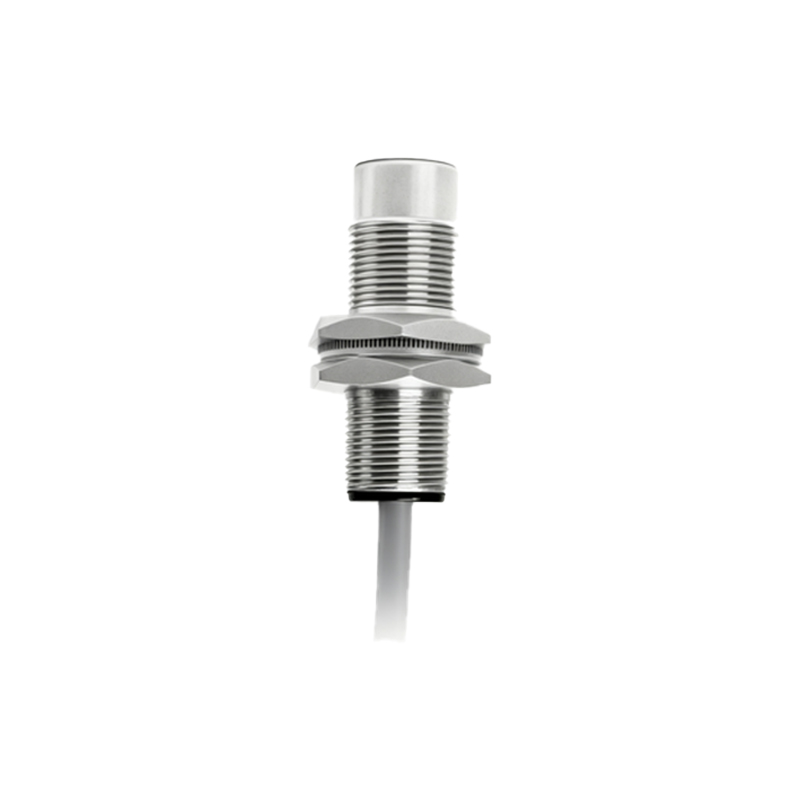
The benefits of using proximity limit switches over mechanical alternatives are substantial. First is durability. With no moving parts to jam, break, or wear out from repeated impact, they excel in harsh environments with high vibration, dust, or moisture (many are rated IP67 or higher). Second is speed. They can detect targets at very high frequencies, making them suitable for fast-moving machinery. Third is precision. They offer highly repeatable switching points, ensuring consistent machine operation cycle after cycle.
When selecting a proximity sensor for such a duty, several technical specifications must be carefully evaluated. The sensing distance, or "range," must be appropriate for the application, allowing for reliable detection while accounting for mechanical tolerances and potential target wear. The housing material is also crucial; stainless steel housings are preferred for corrosive environments or washdown areas in food and pharmaceutical industries. The output type (e.g., NPN or PNP, normally open or normally closed) must be compatible with the machine's programmable logic controller (PLC) or safety relay system. Furthermore, for safety-critical applications, specifically designed "safe" proximity sensors with redundant outputs and monitoring circuits are employed to achieve higher Safety Integrity Levels (SIL) or Performance Levels (PL).
Installation and alignment are key to optimal performance. The sensor must be securely mounted to prevent movement from vibration. The target must approach the sensing face correctly, typically in a perpendicular fashion, and must be large enough and made of the correct material (usually mild steel) to trigger the sensor reliably at the specified distance. Regular maintenance, though minimal, should include checking for physical damage, buildup of debris on the sensing face, and verifying the electrical connection.
In conclusion, proximity limit switch sensors are indispensable components in automated and safe industrial systems. Their ability to provide reliable, non-contact detection of metal targets like blades and gates forms the backbone of precise positional control and critical safety interlocks. By understanding their operating principle, key selection criteria, and application best practices, engineers and maintenance professionals can ensure these silent sentinels continue to enhance both productivity and safety on the factory floor for years to come.