In modern industrial automation and precision engineering, laser sensor rods have emerged as critical components for accurate measurement, alignment, and detection tasks. These devices, often cylindrical or rod-shaped, integrate laser emission and reception systems to perform non-contact sensing with high repeatability and speed. Unlike traditional mechanical probes or ultrasonic sensors, laser sensor rods utilize focused light beams—typically from laser diodes—to detect minute changes in distance, position, or surface characteristics. The core principle involves emitting a laser beam toward a target; the reflected light is then captured by a receiver within the rod. By analyzing parameters such as time-of-flight, triangulation, or phase shift, the sensor calculates precise measurements, often with micron-level accuracy.
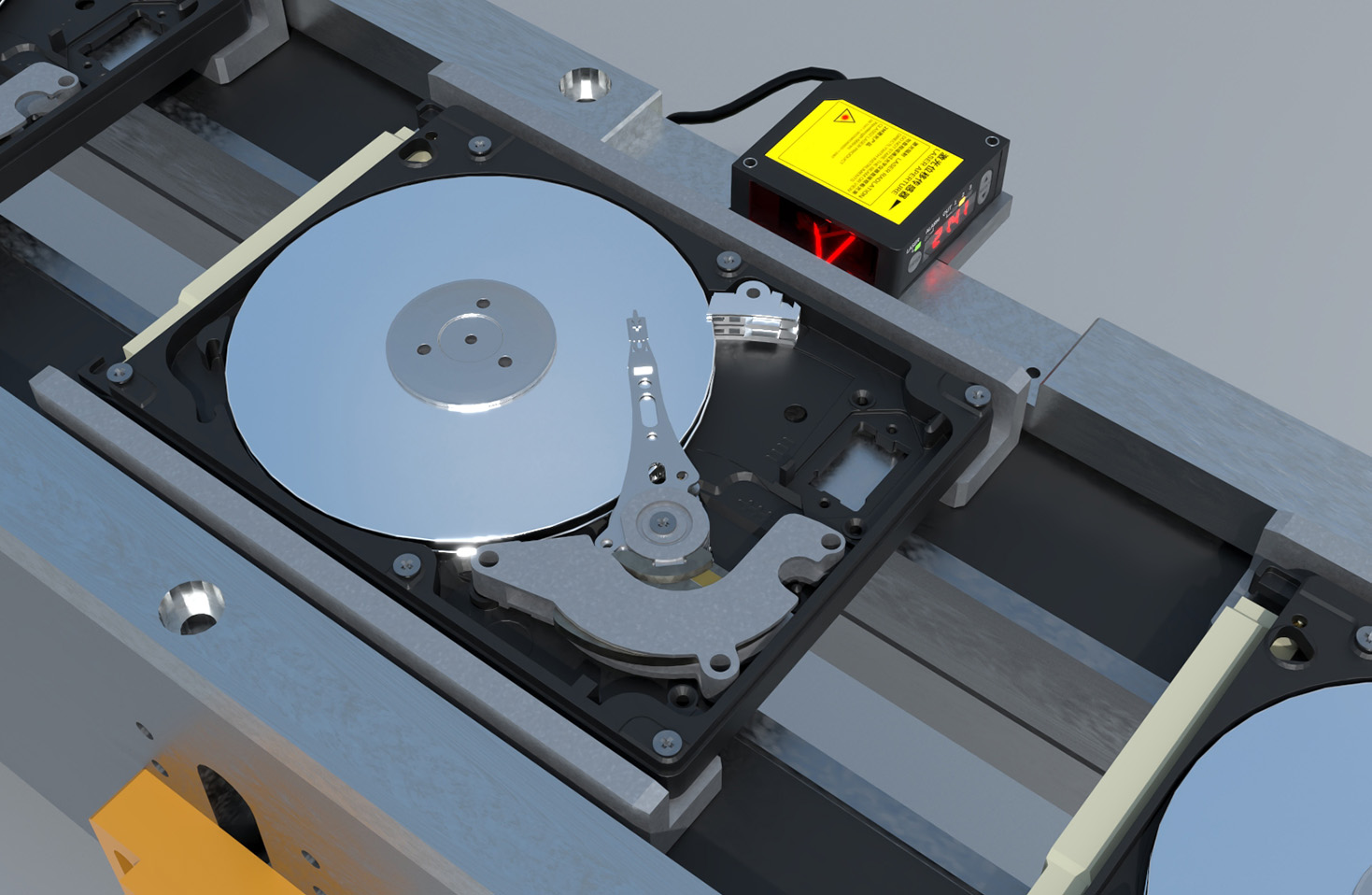
One of the standout features of laser sensor rods is their adaptability across diverse environments. In manufacturing assembly lines, they are deployed for real-time inspection of component dimensions, verifying tolerances in automotive parts, electronics, or precision machinery. For instance, in automotive welding robots, laser sensor rods ensure seam tracking accuracy, while in semiconductor fabrication, they monitor wafer thickness and alignment without physical contact that could cause contamination. Their robust housings, often made from stainless steel or hardened polymers, provide resistance to dust, coolant splashes, and vibrations—common challenges in industrial settings. Additionally, many models incorporate IP67 or higher ingress protection ratings, enabling reliable operation in harsh conditions like metalworking shops or outdoor installations.
The integration of laser sensor rods with digital systems has further expanded their utility. Through interfaces such as IO-Link, Ethernet/IP, or PROFINET, these sensors transmit data directly to programmable logic controllers (PLCs) or supervisory control systems. This connectivity facilitates predictive maintenance, where continuous monitoring of equipment wear or misalignment can trigger alerts before failures occur. In logistics and warehousing, laser sensor rods assist in automated guided vehicle (AGV) navigation, pallet detection, and inventory management by measuring object heights or positions on conveyor belts. Their fast response times, often in the millisecond range, support high-speed sorting and packaging applications without bottlenecking production throughput.
Selecting an appropriate laser sensor rod involves evaluating several technical specifications. Key factors include measurement range, which can vary from a few millimeters to several meters; spot size, affecting resolution for small targets; and linearity, indicating consistency across the sensing field. Environmental considerations like ambient light interference or temperature fluctuations also influence performance. For example, red laser variants are cost-effective for indoor use, while blue lasers offer better visibility in bright settings. Advanced models feature background suppression algorithms to ignore irrelevant reflections, ensuring stable readings on reflective or dark surfaces.
Despite their advantages, users must address certain limitations. Laser sensor rods may struggle with transparent materials like glass or clear plastics, requiring specialized diffusive models. Regular calibration is necessary to maintain accuracy, especially after mechanical shocks or thermal cycling. However, ongoing advancements in miniaturization and smart sensor technology are mitigating these issues. Emerging trends include the incorporation of artificial intelligence for adaptive threshold setting and the development of multi-function rods that combine distance sensing with barcode reading or color detection.
In summary, laser sensor rods represent a fusion of optical engineering and industrial pragmatism. Their ability to deliver precise, non-invasive measurements enhances quality control, safety, and efficiency across sectors from aerospace to pharmaceuticals. As Industry 4.0 drives demand for interconnected, data-driven solutions, these sensors will continue to evolve, offering even greater integration capabilities and resilience. For engineers and system integrators, understanding their operational principles and application scenarios is essential for leveraging their full potential in automated systems.
