In the realm of automation, consumer electronics, and industrial safety, proximity sensor components play a pivotal role. These devices detect the presence or absence of an object within a specific range without any physical contact. The core principle involves emitting an electromagnetic field, beam, or acoustic wave and then looking for changes in the field or return signal. The absence of mechanical contact ensures high reliability, long operational life, and the ability to detect even fragile or freshly painted objects.
The technology behind these sensors is diverse, leading to several primary types. Inductive proximity sensors are among the most common. They generate an oscillating electromagnetic field and detect the eddy current losses caused when a metallic target enters this field. Consequently, they are ideal for detecting metals like steel, aluminum, or copper and are extensively used in machine automation for position sensing, counting, and speed detection. Their robustness makes them suitable for harsh industrial environments.
Capacitive proximity sensors, on the other hand, can detect both metallic and non-metallic materials. They function by generating an electrostatic field. Any object with a dielectric constant different from air (such as liquids, plastics, wood, or granules) will change the capacitance of the sensing circuit, triggering detection. This versatility makes them perfect for level detection in tanks, material handling, and presence detection of non-metallic products on conveyor belts.
For longer-range detection and applications involving non-metallic objects, photoelectric sensors are the go-to choice. These components consist of a light emitter (usually an LED) and a receiver. They detect objects by interpreting changes in the received light signal. There are three main configurations: through-beam (where the object breaks a beam between separate emitter and receiver), retro-reflective (using a reflector), and diffuse (reflective), where the sensor detects light reflected from the object itself. They are crucial in packaging, material handling, and security systems.
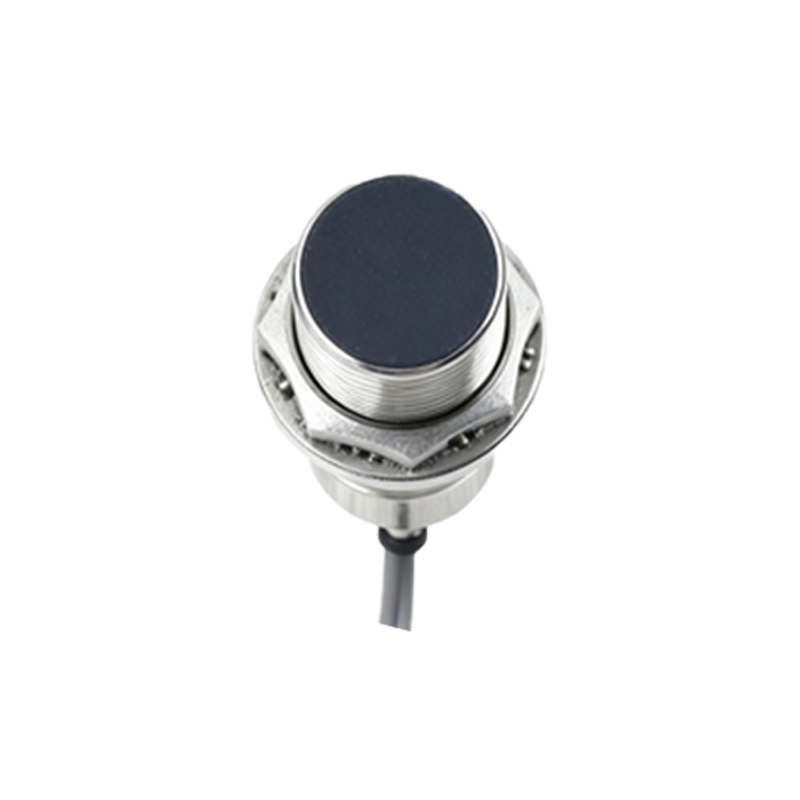
Ultrasonic proximity sensors use sound waves beyond the human hearing range. They measure the time it takes for an emitted sound pulse to bounce back from a target object. This time-of-flight principle allows them to detect objects regardless of color, transparency, or material, and they are excellent for distance measurement and level sensing of liquids or bulk solids, even in dusty or foggy conditions where optical sensors might fail.
Magnetic proximity sensors, often reed switches or Hall-effect sensors, detect the presence of a permanent magnet. They are simple, cost-effective, and used in applications like door/window security sensors, detecting the position of cylinders in pneumatic systems, or in low-speed rotational sensing.
Selecting the right proximity sensor component requires careful consideration of several factors. The nature of the target material is paramount—whether it's metallic, non-metallic, liquid, or transparent. The required sensing distance, or range, must be specified, noting that manufacturers define this under standardized conditions which real-world factors like target size and material can affect. The operating environment introduces constraints such as temperature extremes, presence of chemicals, washdown requirements, or electrical noise, which dictate the sensor's housing material (e.g., stainless steel, PBT plastic) and ingress protection (IP) rating.
Electrical characteristics are equally critical. This includes the operating voltage (commonly 10-30V DC or 90-250V AC), output type (PNP/NPN transistor, NO/NC contacts), and whether a 2-wire, 3-wire, or 4-wire configuration is needed for integration into the control system. Physical characteristics like size, shape (barrel, rectangular), and mounting style (flush or non-flush for inductive sensors) must align with the installation space.
In application, these components are the silent workhorses. On a modern assembly line, inductive sensors verify the correct positioning of metal components. Capacitive sensors ensure a bottle-filling machine stops when the liquid reaches the correct level. Photoelectric sensors count boxes on a high-speed conveyor, while ultrasonic sensors monitor the fill level of a grain silo. In a smartphone, a miniature infrared proximity sensor detects when the phone is held to the ear, turning off the display to save power and prevent accidental touch inputs.
The evolution of proximity sensors continues towards miniaturization, increased intelligence, and enhanced connectivity. Modern sensors often feature IO-Link communication, allowing for parameter setting, advanced diagnostics, and process data reporting directly to controllers, paving the way for predictive maintenance and Industry 4.0 applications. Understanding the fundamental components, their operating principles, and selection criteria is essential for engineers and technicians to build efficient, reliable, and safe automated systems across countless industries.