In the realm of industrial automation, precision measurement is paramount. Among the various technologies enabling this, DF laser sensors have emerged as a critical tool. These sensors utilize laser technology to perform non-contact, high-accuracy measurements of distance, displacement, and presence. Unlike conventional sensors, DF laser sensors offer exceptional resolution and speed, making them indispensable in environments where reliability and precision are non-negotiable.
The core operating principle of a DF (often referring to Digital Focus or specific model series) laser sensor is based on optical triangulation or time-of-flight measurement. In the triangulation method, a laser diode projects a focused beam onto the target surface. The reflected light is captured by a receiving lens at a specific angle and focused onto a position-sensitive detector, such as a CCD or PSD array. The position of the light spot on the detector changes proportionally with the target's distance. This analog signal is then processed by sophisticated internal circuitry to output a precise digital distance value. Time-of-flight variants measure the phase shift or the direct time delay of a pulsed laser beam to calculate distance. This technology excels in longer ranges. The "DF" designation typically indicates a design optimized for digital signal processing, enhancing stability and noise immunity.
The advantages of implementing DF laser sensors are substantial. Their non-contact nature eliminates mechanical wear and prevents damage to both the sensor and the target object. They provide remarkably high resolution, often down to the micrometer level, and boast fast response times suitable for high-speed production lines. Furthermore, many models are equipped with advanced features like programmable logic, multiple output options (analog, digital, IO-Link), and robust housings rated for IP67 or higher, allowing them to thrive in harsh industrial settings with dust, moisture, or vibration.
The applications of DF laser sensors span across numerous industries. In automotive manufacturing, they are used for gap and flush measurement on vehicle body panels, ensuring perfect alignment. In electronics assembly, they verify component placement height and coplanarity. Within the packaging industry, these sensors control fill levels, check label presence, and measure package dimensions. Robotics heavily relies on them for precise positioning and object detection for pick-and-place operations. Additionally, they play a vital role in quality control for thickness measurement of materials like metal sheets, glass, and plastics.
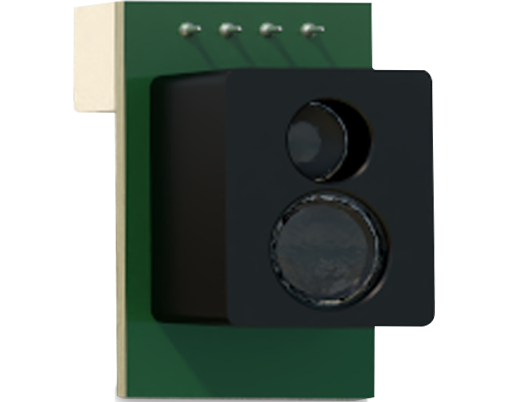
Selecting the appropriate DF laser sensor requires careful consideration of several key parameters. The measuring range is the first criterion; it must encompass the minimum and maximum distances expected in the application. Resolution and linearity define the sensor's accuracy and must meet the tolerance requirements of the task. The spot size of the laser is crucial, as a smaller spot allows for measurement on small features or edges. The material, color, and surface texture of the target significantly affect performance; shiny or transparent materials may require sensors with specialized algorithms or diffuse reflection models. Environmental factors such as ambient light, temperature extremes, and potential contaminants dictate the necessary ingress protection and thermal stability ratings. Finally, the required output interface and any need for programmability or networking capabilities should align with the existing control system architecture.
Installation and alignment are critical for optimal performance. The sensor should be mounted securely to minimize vibration. It is essential to ensure the laser beam is perpendicular to the target surface within the sensor's specified tolerance to avoid cosine error. For challenging surfaces, using a manufacturer-recommended reflector or adjusting the sensor's sensitivity settings may be necessary. Regular maintenance, primarily keeping the lens clean from dust and debris, ensures long-term reliability and consistent readings.

Looking ahead, the evolution of DF laser sensor technology continues. Trends include miniaturization, enabling integration into tighter spaces, and enhanced intelligence with built-in data processing for edge computing applications. The integration of multi-point measurement and profile scanning capabilities within a single compact unit is expanding their utility. Furthermore, improved connectivity through Industrial Ethernet protocols facilitates seamless data integration into Industry 4.0 and smart factory ecosystems.

In conclusion, DF laser sensors represent a sophisticated and versatile solution for precision measurement challenges. By understanding their working principles, recognizing their broad applicability, and following a meticulous selection and installation process, engineers and technicians can leverage their full potential to enhance automation, improve product quality, and boost operational efficiency across countless industrial sectors.