In the world of industrial automation and electronic control, a small yet incredibly powerful component plays a crucial role in countless applications: the proximity switch, also commonly referred to as a proximity sensor. This device, fundamental to modern machinery, operates on a simple but brilliant principle—it detects the presence or absence of an object within a specific range without any physical contact. This non-contact method of detection is the cornerstone of its reliability, durability, and widespread adoption across various sectors.
The core function of a proximity sensor is to sense a nearby target and convert this detection into an electrical signal. This signal is then used to trigger a specific action within a control system, such as counting objects on a conveyor belt, determining the position of a machine part, initiating a safety shutdown, or activating a robotic arm. The absence of mechanical contact means there is no wear and tear from physical interaction, leading to significantly longer operational lifespans and minimal maintenance requirements compared to traditional mechanical limit switches. This characteristic makes them ideal for harsh environments where dust, moisture, or constant use would quickly degrade other components.
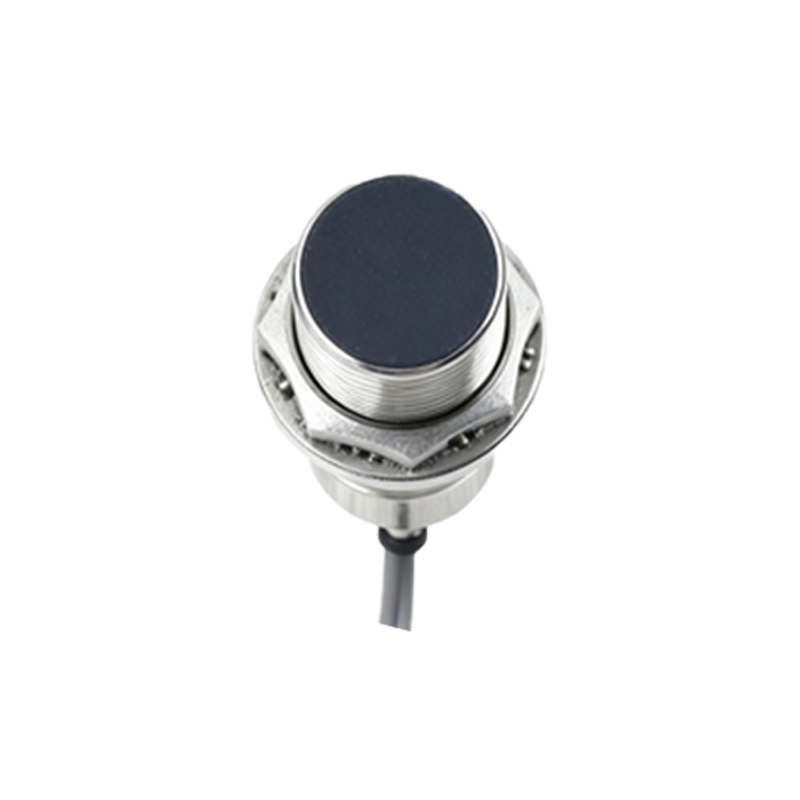
Several distinct technologies empower proximity sensors, each suited to different materials and applications. The most prevalent type is the inductive proximity sensor. This sensor generates an electromagnetic field. When a metallic object, typically ferrous metals like steel or iron, enters this field, it causes a change in the oscillation amplitude within the sensor. The sensor's circuitry detects this change and switches its output state. Inductive sensors are workhorses in manufacturing, perfect for detecting metal parts in machinery, automotive assembly lines, and metal fabrication.
For detecting non-metallic objects, capacitive proximity sensors are the tool of choice. They function by generating an electrostatic field. Any object that enters this field, whether it's plastic, wood, liquid, paper, or even a human hand, alters the capacitance of the circuit. This alteration is detected, prompting an output switch. You'll find capacitive sensors in applications like liquid level detection in tanks, material handling for plastics, and touch-sensitive controls.
Another important category is the ultrasonic proximity sensor. These devices emit high-frequency sound waves and measure the time it takes for the echo to return after bouncing off a target. By calculating this time-of-flight, the sensor can determine both the presence and the distance of an object. Ultrasonic sensors are excellent for detecting objects of virtually any material, shape, or color, and are commonly used in parking assistance systems, bulk material level sensing, and collision avoidance for automated guided vehicles (AGVs).
Photoelectric sensors, while sometimes categorized separately, also serve as proximity detectors. They use a beam of light, often infrared, to detect an object. The object either interrupts the beam (through-beam mode) or reflects it back to the receiver (retro-reflective or diffuse mode). They offer very long sensing ranges and are ideal for detecting small or clear objects where other technologies might struggle.
The advantages of using proximity switches are manifold. Their non-contact nature ensures no damage to either the sensor or the target. They provide high-speed response, capable of detecting objects at rates far exceeding human or mechanical switch capabilities. They are highly reliable and consistent, with no moving parts to fail. Furthermore, modern sensors are designed to be robust, with many offering ingress protection (IP) ratings for use in wet, oily, or dusty conditions.
When selecting a proximity sensor for an application, several key specifications must be considered. The sensing range, or the maximum distance at which the sensor can reliably detect a standard target, is primary. The type of output (e.g., NPN or PNP transistor, analog, or digital) must be compatible with the programmable logic controller (PLC) or other control device. The housing material and size are also critical, depending on the installation space and environmental factors.
From packaging machines that count bottles to CNC machines that verify tool position, from elevator door safety systems to smartphone screens that turn off when held to the ear, proximity sensors are ubiquitous but often invisible. They are the silent sentinels of automation, providing the essential feedback that allows systems to operate intelligently, efficiently, and safely. Their evolution continues, with trends leaning towards miniaturization, increased sensing ranges, enhanced intelligence with IO-Link communication for diagnostics and parameter setting, and greater resilience in extreme industrial environments. Understanding their function and variety is the first step in leveraging their capability to optimize and innovate in any field that requires precise, reliable, and contactless detection.