In modern industrial automation, sensors play a critical role in ensuring precision, efficiency, and safety. Among the various types of sensors, proximity sensors and displacement sensors are two fundamental technologies that enable machines to interact with their environment intelligently. While both are used for detection and measurement, they serve distinct purposes and operate on different principles. Understanding their differences, applications, and selection criteria is essential for engineers and system designers.
Proximity sensors are devices that detect the presence or absence of an object within a specific range without physical contact. They are commonly used to determine if an object is nearby, triggering actions such as starting a process, counting items, or ensuring safety barriers. These sensors can be categorized based on their sensing technology, including inductive, capacitive, ultrasonic, and optical types. Inductive proximity sensors, for instance, are ideal for detecting metallic objects, while capacitive sensors can handle non-metallic materials like plastics or liquids. Ultrasonic and optical variants offer longer detection ranges and are suitable for challenging environments with dust or moisture. The key advantage of proximity sensors is their non-contact operation, which minimizes wear and tear and allows for high-speed detection in manufacturing lines, robotics, and automotive assembly.
Displacement sensors, on the other hand, are designed to measure the exact distance or position of an object relative to a reference point. They provide continuous, precise data on linear or angular movement, making them indispensable for applications requiring accurate dimensional control. Common technologies include linear variable differential transformers (LVDTs), eddy current sensors, laser triangulation sensors, and capacitive displacement sensors. For example, LVDTs offer high resolution and reliability in harsh industrial settings, while laser-based sensors deliver micron-level accuracy for quality inspection tasks. Displacement sensors are widely used in metrology, machine tool positioning, vibration analysis, and semiconductor manufacturing, where even minor deviations can impact product quality.
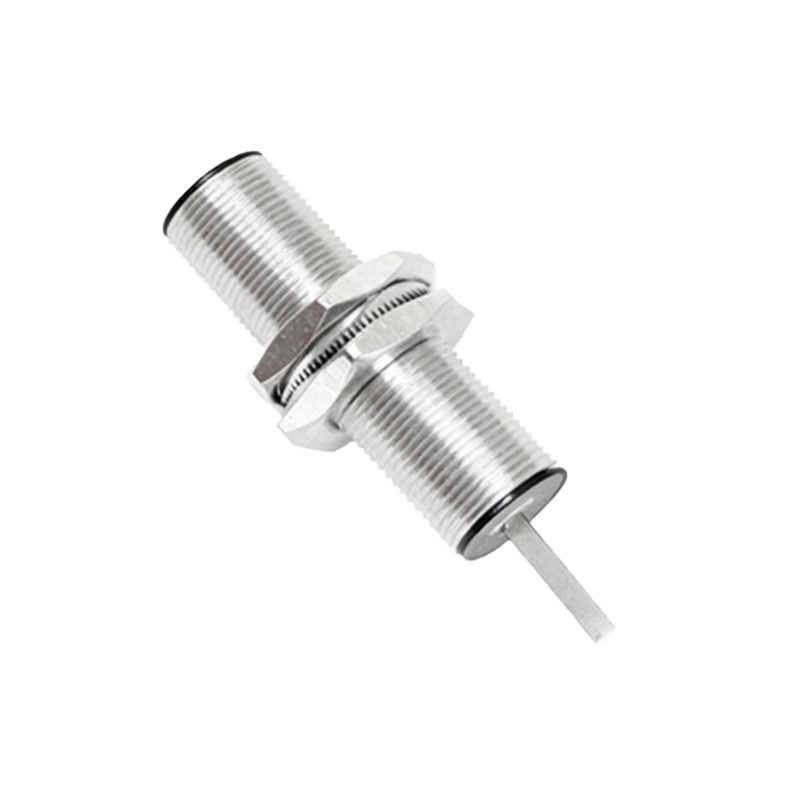
The choice between a proximity sensor and a displacement sensor depends on the specific requirements of the application. If the goal is simply to detect an object's presence within a set threshold, a proximity sensor is often sufficient and cost-effective. However, if precise measurement of distance, thickness, or alignment is needed, a displacement sensor is the appropriate tool. In many complex systems, both sensors are integrated to achieve comprehensive monitoring. For instance, in automated packaging machinery, proximity sensors might detect the arrival of a product on a conveyor, while displacement sensors ensure the sealing mechanism applies consistent pressure.
When selecting these sensors, factors such as environmental conditions, target material, required accuracy, response time, and installation constraints must be considered. Industrial environments with high temperatures, electromagnetic interference, or corrosive substances may necessitate specialized sensor housings or technologies. Regular calibration and maintenance are also crucial to sustain long-term performance, as sensor drift or contamination can lead to errors.
Advancements in sensor technology continue to expand their capabilities. Smart sensors with integrated digital interfaces, such as IO-Link or Ethernet connectivity, enable real-time data exchange and predictive maintenance. Miniaturization has allowed sensors to fit into compact spaces, while improved durability enhances their lifespan in demanding applications. As Industry 4.0 and the Internet of Things (IoT) evolve, the integration of proximity and displacement sensors with cloud-based analytics is driving smarter, more adaptive automation systems.
In summary, proximity sensors and displacement sensors are vital components in industrial automation, each addressing unique detection and measurement challenges. By leveraging their strengths appropriately, businesses can optimize processes, reduce downtime, and improve product quality. As technology progresses, these sensors will undoubtedly become even more sophisticated, further transforming manufacturing and beyond.