Blue laser sensors represent a significant advancement in optical sensing technology, offering unique advantages over traditional red and infrared lasers. Operating at wavelengths around 450 nanometers, blue lasers provide higher resolution and improved visibility on various surfaces, including metallic, organic, and dark materials that often scatter or absorb longer wavelengths. This makes them indispensable in industries requiring micron-level accuracy, such as semiconductor manufacturing, precision engineering, and medical device production.
The core principle behind blue laser sensors involves emitting a focused beam of coherent blue light onto a target surface. The reflected light is captured by a high-sensitivity receiver, and precise measurements are derived through triangulation or time-of-flight methods. Due to the shorter wavelength, blue light generates a smaller spot size with less diffraction, enabling detection of minute features and edges that red lasers might miss. This characteristic is particularly valuable in applications like wafer alignment, micro-component inspection, and 3D scanning of intricate geometries.

In automotive and aerospace manufacturing, blue laser sensors enhance quality control processes. They reliably measure weld seams, coating thicknesses, and surface defects on dark or reflective materials like carbon fiber and polished metals. The sensors' ability to maintain accuracy despite ambient light interference—thanks to specialized optical filters—ensures consistent performance in factory environments. Additionally, blue lasers exhibit lower penetration into translucent materials, allowing for precise surface profiling without subsurface scattering errors common with infrared sensors.
Beyond industrial settings, blue laser technology is revolutionizing biomedical research and diagnostics. In flow cytometry and DNA sequencing instruments, blue lasers excite fluorescent markers with higher efficiency, improving signal-to-noise ratios and data accuracy. Their use in confocal microscopy enables detailed imaging of cellular structures, aiding in pathological studies and drug development. The sensors' compact design and low power consumption further facilitate integration into portable medical devices.
The evolution of blue laser diodes, driven by advancements in gallium nitride (GaN) semiconductor materials, has reduced costs while increasing output stability and lifespan. Modern sensors incorporate intelligent features such as automatic calibration, real-time temperature compensation, and Ethernet/IP connectivity for Industry 4.0 compatibility. These developments allow seamless integration into automated production lines and IoT-enabled monitoring systems.
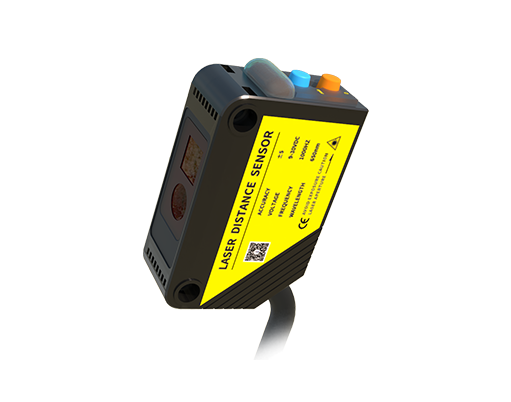
Despite their benefits, selecting blue laser sensors requires consideration of factors like target material properties, environmental conditions, and required measurement ranges. For instance, highly transparent or glossy surfaces may need complementary sensor fusion techniques. Ongoing research aims to expand applications into fields like underwater LiDAR and agricultural sorting, where blue light's water penetration and contrast advantages offer new possibilities.

As industries increasingly demand higher precision and reliability, blue laser sensors are poised to become a standard tool in metrology and automation. Their synergy with AI-driven analytics and machine vision systems will further unlock potential in smart manufacturing and scientific exploration, solidifying their role as a cornerstone of modern measurement technology.