Laser tracking sensors represent a significant advancement in precision measurement and object detection technology. These devices operate by emitting a focused beam of laser light towards a target and then analyzing the reflected light to determine the target's position, distance, or movement with exceptional accuracy. The core principle relies on either triangulation, time-of-flight (ToF), or interferometry, depending on the required precision and application range. Triangulation-based sensors are common for short-range, high-accuracy tasks, using a known angle between the emitter and a receiver to calculate distance. Time-of-flight sensors measure the round-trip time of a laser pulse for longer distances, while interferometric sensors provide nanometer-level precision for scientific and industrial metrology.
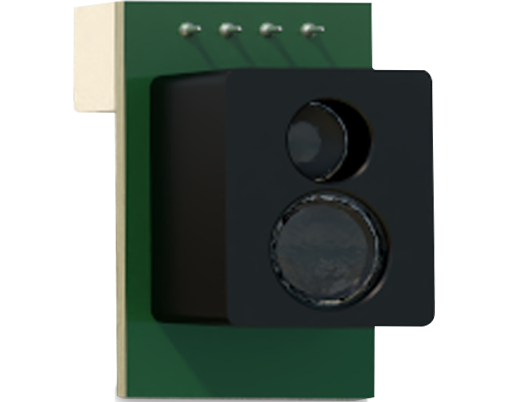
The internal components typically include a laser diode, optics for beam shaping, a photodetector (like a CCD or CMOS sensor or a position-sensitive device), and sophisticated signal processing electronics. The laser diode generates a coherent, monochromatic light beam, often in the visible red or infrared spectrum. This beam is focused and projected onto the target surface. The reflected light, which may be diffuse or specular, is collected by a lens and directed onto the photodetector. Any change in the target's position causes a shift in the location of the light spot on the detector. The sensor's processor analyzes this shift in real-time, converting it into precise digital coordinates or distance measurements.

One of the defining characteristics of laser tracking sensors is their non-contact nature. This allows for measurement of delicate, hot, fast-moving, or otherwise inaccessible objects without causing wear or interference. Their high sampling rates, often in the kilohertz range, enable dynamic tracking of rapid movements. Furthermore, they are largely immune to ambient visible light interference, especially when using modulated laser signals and narrow-band optical filters.

The applications of laser tracking sensors are vast and transformative across multiple sectors. In industrial automation and robotics, they are indispensable for guidance, alignment, and quality control. Robotic arms use them for precise pick-and-place operations, seam tracking in welding, and contour following. In manufacturing, they perform critical 3D part inspection, verifying dimensions and detecting defects on production lines with speed and repeatability unmatched by manual methods.
In the realm of metrology and large-scale assembly, laser trackers are the gold standard for measuring the geometry of large structures like aircraft fuselages, ship hulls, and wind turbine blades. They create a portable coordinate measurement machine (CMM), tracking a reflective target held by an operator to build a precise 3D model of the object. The automotive industry relies on them for aligning vehicle frames and calibrating advanced driver-assistance systems (ADAS) such as lidar and camera modules.
Emerging fields are also adopting this technology. In virtual and augmented reality (VR/AR), laser tracking provides low-latency, high-precision positional data for headsets and controllers, creating immersive experiences. Logistics and warehouse automation employ them for inventory management, parcel dimensioning, and guiding autonomous mobile robots (AMRs). Even in scientific research, they track particle motion, monitor structural deformations, and assist in telescope alignment.
Selecting the right laser tracking sensor involves careful consideration of several parameters. Key specifications include measurement range, stand-off distance, resolution, accuracy, spot size, and sampling speed. Environmental factors like target surface properties (color, reflectivity, material), ambient light, temperature, and vibrations must also be evaluated. For instance, a dark, matte surface absorbs more light, potentially requiring a sensor with higher output power, while a shiny surface might need a sensor designed for specular reflections.
Despite their advantages, challenges exist. Specular reflections from glossy surfaces can cause measurement errors. Environmental contaminants like dust, smoke, or fog can scatter or attenuate the laser beam. The initial cost of high-precision systems can be significant, though the return on investment through improved quality and efficiency is often substantial. Ongoing developments aim to make sensors more robust, compact, affordable, and intelligent through integration with machine learning algorithms for adaptive performance.
In conclusion, laser tracking sensors are a cornerstone of modern precision engineering. By harnessing the properties of coherent light, they deliver fast, accurate, and reliable spatial data that drives automation, ensures quality, and enables innovation. As technology progresses, their role is set to expand further, becoming even more integrated into the intelligent systems that shape our industrial and digital future.