In the world of industrial automation and machine safety, the ability to detect the presence or absence of an object without physical contact is paramount. Among the various technologies available, the O-type proximity sensor, often referred to as a through-beam or fork sensor, stands out for its reliability and specific application advantages. This article delves into the operational principles, key benefits, common applications, and critical factors for selecting the right O-type sensor for your needs.
At its core, an O-type proximity sensor consists of two separate components housed in a U-shaped or fork-like casing: an emitter and a receiver facing each other across a defined gap. The emitter continuously transmits a beam of light—typically infrared or laser—which is received by the opposing component. The fundamental principle is straightforward: when an object passes through the gap, it interrupts this light beam. The receiver detects this interruption and triggers an electrical output signal, indicating the object's presence. This through-beam design is what gives it the "O-type" moniker, as the object passes through the sensing field.
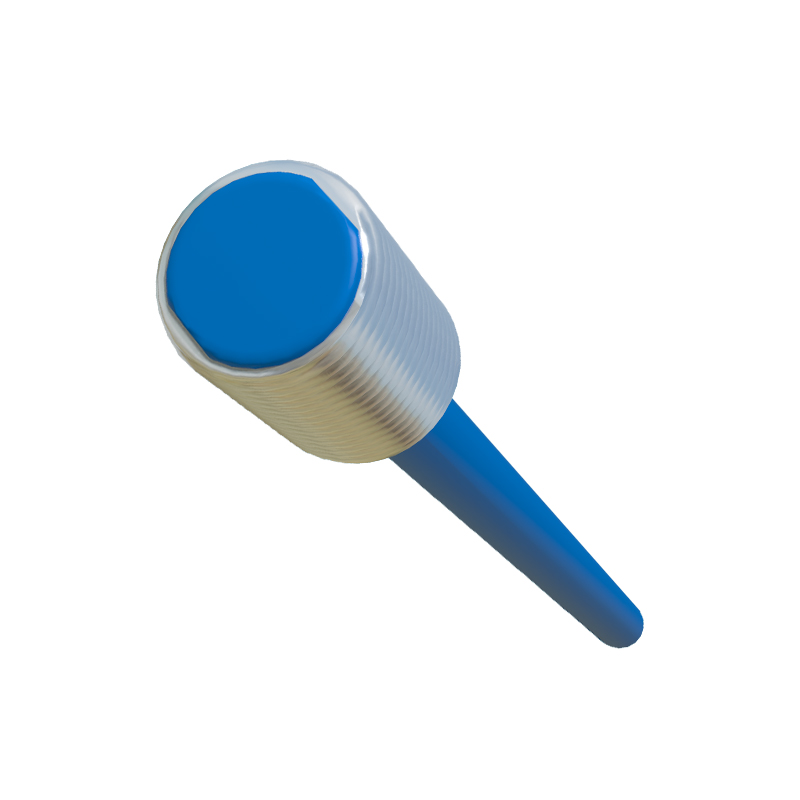
This method of detection offers several distinct advantages over other sensing technologies like diffuse or retro-reflective sensors. First and foremost is its exceptional sensing range and accuracy relative to its size. Because the emitter and receiver are perfectly aligned, the sensor can reliably detect very small objects or precise edges. The effective sensing distance is essentially the width of the gap, allowing for consistent performance. Secondly, O-type sensors are largely immune to the color, surface finish, or material of the target object. Whether the object is black, white, shiny, or matte, if it is opaque enough to break the beam, it will be detected. This makes them incredibly versatile. Furthermore, they offer high switching speeds and are less susceptible to environmental interference like ambient light, making them suitable for high-speed and demanding industrial environments.
The applications for O-type proximity sensors are vast and varied across multiple industries. In packaging and material handling, they are indispensable for precise object counting, detecting missing labels on bottles, or verifying the presence of items on a conveyor belt. Within the automotive manufacturing sector, they are used for part positioning, checking for the presence of components in assembly jigs, and monitoring robotic arm movements. The electronics industry relies on them for verifying chip placement on circuit boards or detecting lead tape on reels. They are also crucial in printing and paper processing for edge detection, tear detection, and sheet counting, where their insensitivity to paper color is a major benefit. Any application requiring high-speed, non-contact detection of objects passing a specific point is a potential candidate for an O-type sensor.
Selecting the appropriate O-type sensor requires careful consideration of several parameters. The most obvious is the slot width or gap size, which must accommodate the physical dimensions of the target object. The slot depth is also important, determining how far into the fork an object can be reliably detected. The minimum detectable object specification is critical; it defines the smallest opaque object that will consistently interrupt the beam. Output type (e.g., NPN, PNP, analog) must match the control system's input requirements. Environmental factors cannot be overlooked: sensors with higher Ingress Protection (IP) ratings are necessary for dusty, damp, or washdown environments. For applications involving very high speeds, the sensor's response time is a key performance metric.
Installation and alignment, while simpler than setting up two separate through-beam components, still require attention. The sensor must be mounted securely to prevent vibration from misaligning the internal emitter and receiver. Regular maintenance, primarily keeping the optical lenses clean from dust, oil, or debris, is essential for long-term, trouble-free operation. A dirty lens can attenuate the light beam, leading to unreliable detection or complete failure.
In conclusion, the O-type proximity sensor is a robust, accurate, and versatile solution for non-contact object detection in automated systems. Its through-beam principle provides reliability that is often superior to other optical methods in challenging conditions. By understanding its working principles, recognizing its ideal applications, and carefully matching its specifications to the task at hand, engineers and technicians can leverage this powerful tool to enhance efficiency, ensure quality control, and improve safety in countless industrial processes. As automation continues to evolve, the fundamental reliability of the O-type sensor ensures it will remain a cornerstone of sensing technology.