In the realm of industrial process control and environmental monitoring, the accurate measurement of fluid flow—be it gas or liquid—is paramount. Among the sophisticated technologies enabling this precision, laser flow sensors stand out for their non-contact, high-accuracy capabilities. Unlike traditional mechanical or pressure-based sensors, these devices utilize the principles of light to measure velocity without intruding into the flow stream, offering significant advantages in applications where contamination, pressure drop, or maintenance access are critical concerns.
The core operating principle of most laser flow sensors is Laser Doppler Velocimetry (LDV) or its variations. In essence, a laser beam is directed at the moving fluid. Particles or naturally occurring inhomogeneities within the fluid scatter the light. A second beam or a reference system is used to create an interference pattern. The frequency of the light scattered back to a detector is shifted relative to the original laser frequency—a phenomenon known as the Doppler shift. This shift is directly proportional to the velocity of the particles, and by extension, the flow velocity of the fluid itself. By analyzing this frequency shift with high-speed photodetectors and signal processors, the sensor calculates the instantaneous flow rate with remarkable resolution.
The benefits of this approach are substantial. First and foremost is the non-invasive nature. The sensor does not contact the fluid, eliminating risks of corrosion, clogging, or altering the flow profile. This makes laser sensors ideal for measuring aggressive chemicals, sterile pharmaceuticals, or high-purity gases. Secondly, they offer exceptionally high accuracy and fast response times, capable of detecting rapid flow fluctuations and turbulence. There is no mechanical inertia to overcome. Furthermore, they have a wide dynamic range, effectively measuring very low to very high velocities within a single device.
Applications for laser flow sensors are diverse and growing. In industrial settings, they are used to monitor and control air flow in HVAC systems, combustion gas flow in power plants, and coolant flow in manufacturing processes. The automotive industry employs them in engine research and development to map intake and exhaust flows with high precision. In aerospace, they are crucial for wind tunnel testing and analyzing fuel flow. Environmental scientists deploy portable laser anemometers to measure wind speed and water current velocities in field studies. Perhaps one of the most critical applications is in medical research for measuring blood flow dynamics in vitro or in detailed anatomical models, where minimal interference is essential.
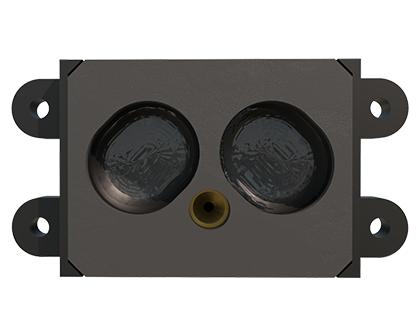
Selecting the right laser flow sensor requires careful consideration of several parameters. The primary factor is the medium: Is it a gas or a liquid? Are there sufficient natural scattering particles (like dust in air or microbubbles in water), or does the application require seeding the flow with tracer particles? The required measurement range and accuracy are next. For instance, measuring low-speed laminar flow in a cleanroom differs vastly from measuring turbulent exhaust fumes. The physical installation environment is also key: available optical access, ambient light conditions, vibration levels, and temperature ranges all influence sensor choice. Users must decide between a compact, integrated system for permanent installation or a more flexible, probe-based system for diagnostic purposes.
While the advantages are clear, potential limitations exist. The technology relies on optical access; the fluid must be in a transparent section of pipe or conduit, or the sensor must be placed directly in an open flow. Measurements can be challenging in extremely clean fluids devoid of scattering centers. Furthermore, the initial cost of a laser Doppler system is typically higher than that of conventional flow meters, though this can be offset by lower lifetime maintenance costs and reduced downtime. Calibration and alignment are also more specialized tasks.
Looking ahead, advancements in laser diode technology, miniaturized optics, and digital signal processing are making laser flow sensors more robust, affordable, and easier to integrate. The integration with Industrial Internet of Things (IIoT) platforms allows for continuous remote monitoring and data analytics, predictive maintenance, and tighter closed-loop control. Emerging techniques like Particle Image Velocimetry (PIV), which uses lasers to illuminate a plane of particles and cameras to capture their motion, are extending the capabilities from single-point measurements to full-field flow mapping.
In conclusion, laser flow sensors represent a powerful and versatile tool for demanding flow measurement tasks. Their non-contact operation, high accuracy, and fast response make them indispensable in research, development, and critical industrial processes where traditional methods fall short. By understanding their operating principles, key benefits, and application requirements, engineers and technicians can effectively harness this advanced technology to optimize system performance, ensure product quality, and advance scientific understanding of fluid dynamics.