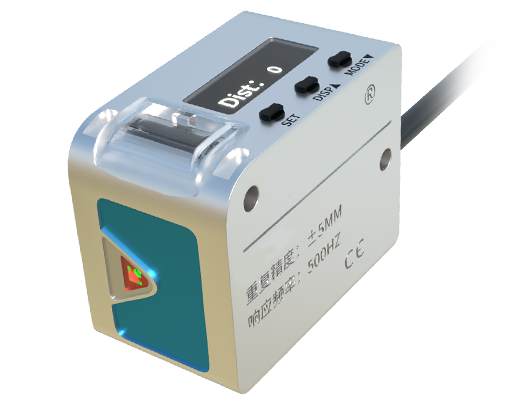
In the realm of precision engineering and advanced sensing, the integrity of a sensor is paramount. Sensor laser sealing has emerged as a critical technology for ensuring the long-term reliability, stability, and performance of sensitive electronic and optical components housed within sensor packages. Unlike traditional sealing methods such as epoxy bonding, soldering, or mechanical crimping, laser sealing offers a non-contact, highly localized, and exceptionally clean process that creates hermetic seals capable of withstanding extreme environments.
The core principle of laser sealing involves using a focused, high-energy laser beam to melt and fuse materials at the interface of a sensor's housing (typically a metal or ceramic base) and its transparent window (often glass or sapphire). The laser's energy is absorbed by the materials, generating intense localized heat. This heat causes the materials to melt within a precisely controlled zone, forming a molten pool. As the laser beam moves along the seam, this pool solidifies almost instantaneously, creating a continuous, monolithic, and hermetic bond. The process parameters—laser power, pulse duration, scanning speed, and spot size—are meticulously calibrated based on the thermal properties of the materials involved. This precision minimizes the Heat-Affected Zone (HAZ), preventing thermal damage to the delicate internal components of the sensor, such as MEMS (Micro-Electro-Mechanical Systems) structures, ASICs (Application-Specific Integrated Circuits), or optical fibers.
The advantages of this technology are manifold. First and foremost is the achievement of true hermeticity, which is the ability to prevent the ingress of moisture, gases, and particulate contaminants. This is vital for sensors operating in harsh conditions, including underwater applications, aerospace, automotive engine compartments, and industrial process control where corrosive atmospheres are present. The seal's strength and durability are superior, offering excellent resistance to mechanical shock, vibration, and thermal cycling. Furthermore, the process is highly automatable and repeatable, ensuring consistent quality in high-volume manufacturing. The clean, flux-free nature of laser welding eliminates the risk of outgassing or chemical contamination that can plague adhesive-based seals, which is especially crucial for optical sensors and those used in vacuum or high-purity systems.
Applications for laser-sealed sensors are vast and growing. In the automotive industry, they are essential for LiDAR (Light Detection and Ranging) modules in autonomous vehicles, where the optical window must remain perfectly clear and sealed against road spray, dust, and temperature fluctuations. In medical devices, implantable sensors and diagnostic equipment rely on laser seals for biocompatibility and long-term reliability within the human body. The aerospace and defense sectors utilize this technology for sensors in avionics, navigation systems, and monitoring equipment that must perform reliably from the vacuum of space to high-pressure, high-vibration environments. Industrial IoT and condition monitoring sensors deployed in remote or aggressive settings also depend on robust laser sealing for maintenance-free operation.

Recent advancements continue to push the boundaries of sensor laser sealing. The integration of real-time monitoring systems, using techniques like pyrometry or coaxial cameras, allows for closed-loop control of the welding process, detecting defects such as cracks or porosity as they form. The development of new laser sources, like ultrafast picosecond lasers, enables the welding of dissimilar materials—such as glass to metal—with even lower thermal stress, opening new design possibilities. Additionally, research into novel joint geometries and beam shaping techniques aims to enhance seal strength and reduce overall package size, supporting the ongoing trend of sensor miniaturization.
In conclusion, sensor laser sealing is not merely a manufacturing step but a foundational technology enabling the next generation of high-performance sensing systems. Its ability to provide robust, reliable, and clean hermetic seals makes it indispensable across industries where sensor failure is not an option. As sensors become more sophisticated and their operating environments more demanding, the evolution of laser sealing technology will remain tightly coupled with the advancement of sensing capabilities themselves, ensuring that these critical electronic "senses" remain protected and precise throughout their operational life.