In the rapidly evolving landscape of industrial automation, autonomous systems, and smart technology, laser sensors have emerged as a critical component. These devices, which utilize laser light to detect, measure, or profile objects with exceptional precision, are the backbone of modern manufacturing, robotics, and safety systems. The market for these sophisticated components is dominated by a handful of established industry giants, whose relentless innovation and rigorous quality standards set the pace for global technological advancement. These leading laser sensor manufacturers are not merely component suppliers; they are pivotal enablers of the Fourth Industrial Revolution.
One of the foremost names in this sector is Keyence Corporation. Hailing from Japan, Keyence has built a formidable reputation for its high-performance, user-friendly sensor solutions. The company's laser displacement sensors and micrometers are renowned for their sub-micron accuracy and stability, even in challenging industrial environments. Keyence invests heavily in direct sales and application engineering, providing hands-on support to clients in sectors ranging from semiconductor fabrication to automotive assembly. Their philosophy centers on creating products that solve complex measurement problems with simplicity and reliability, making advanced sensing accessible to a broad range of engineers.
From Germany, SICK AG stands as a global powerhouse in sensor intelligence. With a deep heritage in factory and logistics automation, SICK's portfolio of laser sensors is vast and versatile. It includes everything from long-range distance sensors for crane positioning and safety laser scanners for protecting human workers around robots, to sophisticated LiDAR sensors for autonomous guided vehicles (AGVs). SICK's strength lies in its system integration capabilities and its commitment to safety standards. Their devices are often integral to creating "cobotic" environments where humans and machines collaborate safely and efficiently, a cornerstone of future smart factories.
Another German titan, ifm electronic, emphasizes the principle of simplicity and connectivity. ifm's laser sensors are designed for seamless integration into Industrial Internet of Things (IIoT) ecosystems. Their devices frequently feature integrated IO-Link communication, which allows for detailed parameter setting, continuous process data monitoring, and predictive maintenance alerts. This focus on digitalization and data transparency means that ifm's laser sensors do more than just detect an object; they provide valuable insights into the production process, helping to minimize downtime and optimize efficiency. Their solutions are particularly prominent in packaging, material handling, and automotive industries.

The Swiss precision of Baumer Group is legendary. Specializing in high-end applications that demand uncompromising accuracy and robustness, Baumer's laser sensors are often found in precision engineering, medical device manufacturing, and laboratory automation. The company excels in developing customized solutions for niche, demanding applications where standard products fall short. Baumer’s expertise in optics, electronics, and software allows them to create sensors that perform reliably under extreme conditions, such as high temperatures, intense vibrations, or exposure to harsh chemicals. Their commitment to quality makes them a preferred partner for mission-critical applications.
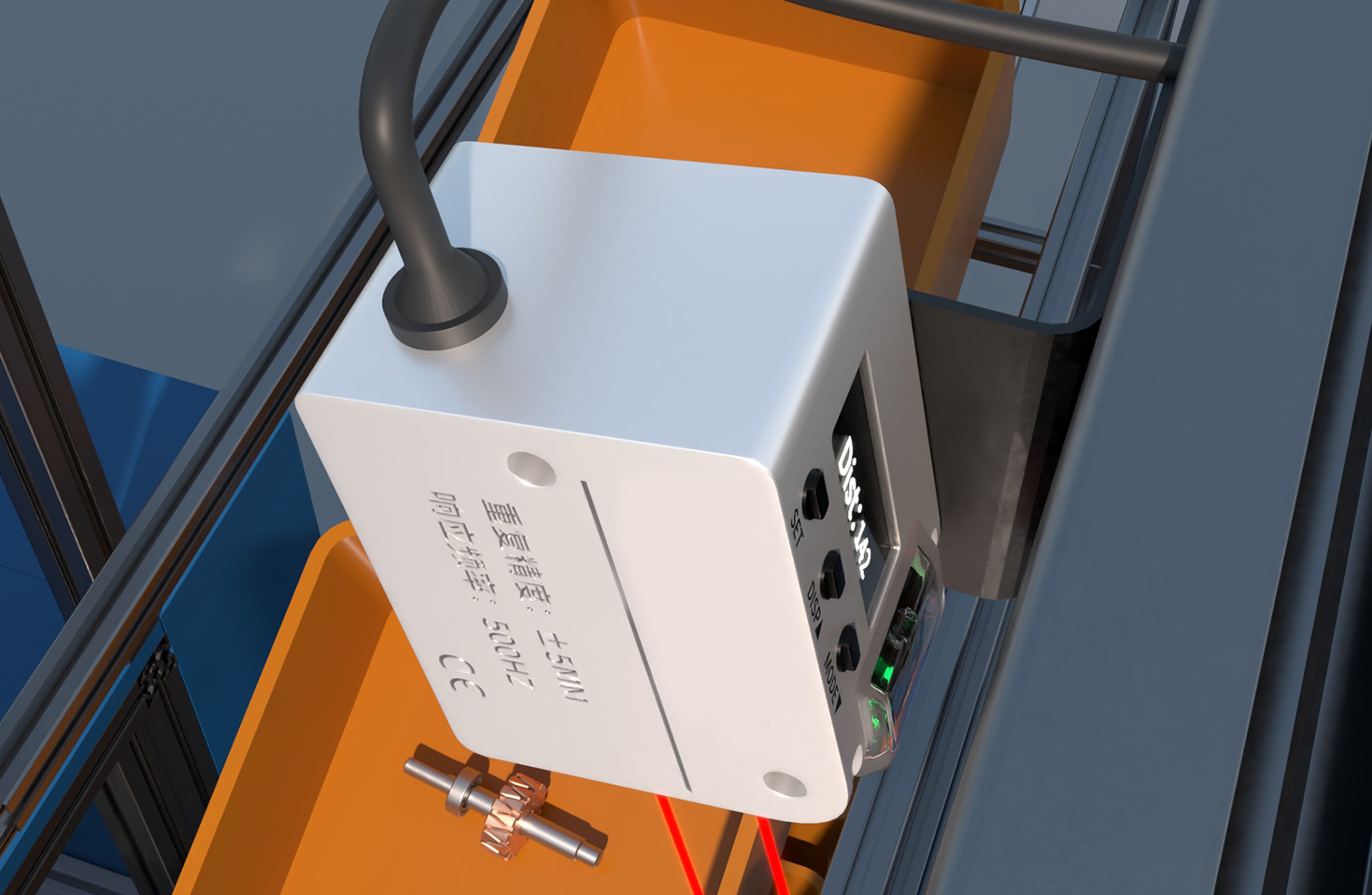
While the landscape is dominated by these established players, innovation also thrives in specialized and emerging domains. Companies like Omron from Japan offer comprehensive automation portfolios where laser sensors play a key role in quality inspection and robot guidance. Banner Engineering in the United States is celebrated for its rugged, reliable sensors tailored for the North American industrial market. Furthermore, the rise of autonomous vehicles has propelled LiDAR specialists like Velodyne Lidar (USA) and Hesai Technology (China) into the spotlight, focusing on high-resolution 3D environmental perception.
The competition among these manufacturers drives continuous improvement. Key trends include the miniaturization of sensors, the integration of artificial intelligence for smarter data interpretation, enhanced connectivity for Industry 4.0, and the development of more cost-effective solutions to broaden adoption. The choice of a laser sensor supplier is a strategic decision for any organization. Factors such as required precision, measurement range, environmental durability, communication protocols, and the level of technical support are paramount.

Ultimately, the major laser sensor manufacturers are the unsung architects of modern automation. Their components enable robots to see and navigate, production lines to maintain micron-level tolerances, and warehouses to operate with unprecedented speed and safety. As industries worldwide push towards greater autonomy, intelligence, and efficiency, the role of these leading laser sensor providers will only become more central, illuminating the path forward with every beam of light they emit.