In the realm of industrial automation and smart systems, photoelectric proximity sensors stand as critical components for non-contact detection. These devices operate by emitting a beam of light, typically infrared, visible red, or laser, and detecting changes in the received light signal caused by the presence or absence of a target object. Unlike mechanical limit switches or inductive sensors that require physical contact or metallic targets, photoelectric sensors offer versatility in detecting a vast array of materials—be it plastic, wood, glass, or liquid—based on optical properties. The fundamental principle hinges on the modulation of light. An emitter diode sends out a modulated light pulse to minimize interference from ambient light. The receiver then processes this signal. Detection occurs when the target object either reflects the light beam back to the receiver (in reflective models) or interrupts the beam path (in through-beam models).
Three primary configurations define photoelectric sensor technology, each suited for specific application challenges. Through-beam sensors, also known as opposed-mode sensors, consist of separate emitter and receiver units placed opposite each other. The object is detected when it breaks the light beam traveling from emitter to receiver. This type offers the longest sensing ranges and highest reliability, as it is less affected by the object's color, reflectivity, or surface angle. However, installation requires precise alignment of two separate components. Retro-reflective sensors house both emitter and receiver in a single housing. They rely on a reflector, typically a corner-cube reflector, to bounce the light beam back to the receiver. Detection happens when the target object obstructs this reflected beam. These provide a good balance of range and ease of installation, though highly reflective objects can sometimes cause false triggers. Diffuse reflective sensors, or proximity-mode sensors, are self-contained units where the emitted light reflects directly off the target object back to the receiver. The sensing distance depends heavily on the target's size, color, and surface texture. While easiest to install as only one unit is needed, their range is shortest and performance can vary with target properties. Advanced versions, like background suppression and convergent beam sensors, use triangulation or focused beams to precisely define the sensing field, ignoring objects beyond a set distance.
The selection of a photoelectric sensor extends beyond just the operating mode. Key specifications include sensing range, response time, light source type, and output configuration. Sensing range can vary from a few centimeters for diffuse models to several hundred meters for high-power through-beam lasers. Response time, often in the microsecond range, determines how fast a sensor can detect objects on high-speed production lines. Light source choice involves trade-offs: Infrared LEDs are common for their power and invisibility, red visible LEDs aid in setup alignment, and laser diodes enable precise detection at long ranges. Outputs can be discrete (PNP/NPN digital switches) or analog (4-20 mA, 0-10 V) for distance proportionality, with many modern sensors featuring IO-Link for digital communication and parameterization.
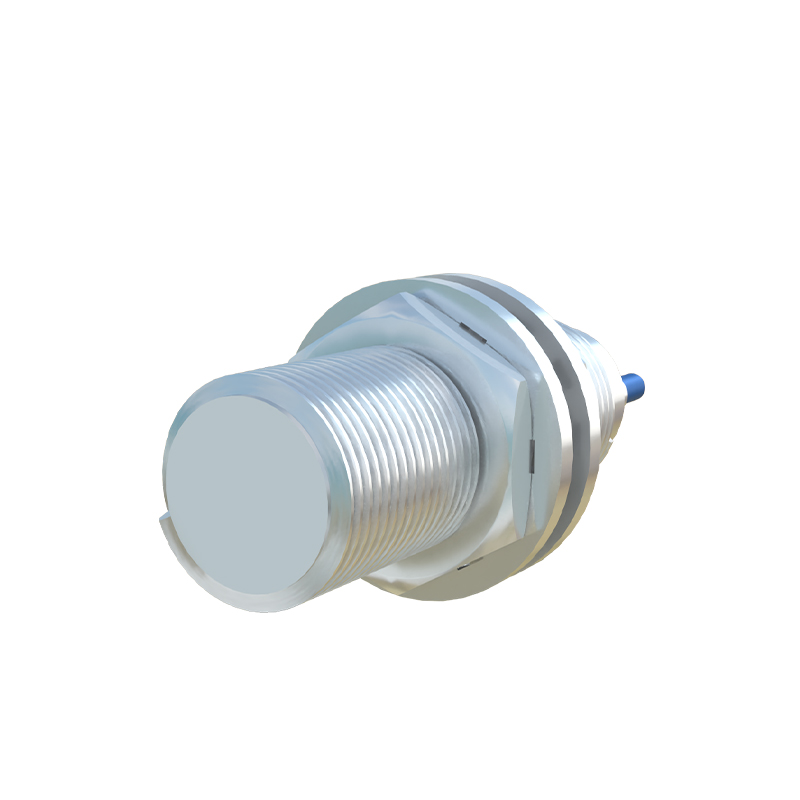
Industrial applications are vast and demanding. In packaging and material handling, these sensors count bottles, detect label positions, and monitor fill levels. Their ability to see transparent films or clear bottles makes them indispensable. In automotive assembly, they ensure robotic welders have correctly positioned panels or verify the presence of tiny components. On conveyor systems, through-beam sensors act as safety curtains or precise break-beam detectors for object positioning. In the food and beverage industry, diffuse sensors with stainless-steel housings withstand washdown environments to detect containers regardless of color. Furthermore, in logistics and warehousing, they facilitate automated guided vehicle (AGV) navigation and pallet dimensioning.
Environmental robustness is a non-negotiable requirement. Industrial sensors are built with enclosures rated IP67 or higher, protecting against dust and water immersion. They must endure temperature extremes, vibration, and exposure to chemicals. Electrical noise immunity is also critical in plants filled with motors and drives. Modern advancements integrate smart diagnostics—like built-in amplifiers with LED status indicators showing signal strength or contamination levels—predicting maintenance needs before failure.
In conclusion, photoelectric proximity sensors provide a flexible, reliable, and non-intrusive solution for object detection across countless industries. Their evolution continues with miniaturization, enhanced connectivity for Industry 4.0, and smarter algorithms that simplify setup and boost performance in complex scenarios. Understanding their operating principles, types, and key selection criteria is essential for engineers and technicians to optimize automation processes, improve efficiency, and ensure system reliability.