Laser sensor technology has revolutionized numerous industries by providing unparalleled precision, speed, and reliability in measurement and detection. The development of a laser sensor is a multidisciplinary endeavor, merging principles from optics, electronics, and software engineering. This guide outlines the core components, development process, and key considerations for creating effective laser sensor systems.
At its heart, a laser sensor operates by emitting a focused beam of coherent light and analyzing the reflected signal. The core components include the laser diode, which generates the light; optics (lenses and mirrors) to shape and direct the beam; a photodetector to capture the returning light; and sophisticated signal processing electronics. The choice of laser type—such as infrared, visible red, or blue—depends heavily on the application, target material, required range, and environmental conditions. For instance, infrared lasers are often used in industrial settings for their robustness, while specialized applications might require specific wavelengths for material penetration or safety.
The development lifecycle begins with a clear definition of requirements. Engineers must specify critical parameters: measurement range, accuracy, resolution, response time, and operating environment (including factors like ambient light, dust, temperature, and vibration). This phase dictates the selection of all subsequent components. Following this, the optical design phase focuses on creating a system that delivers a stable, well-defined beam. This involves designing lenses to collimate or focus the laser and ensuring the photodetector has a clear field of view. Even minor misalignments can lead to significant measurement errors, making precision assembly paramount.
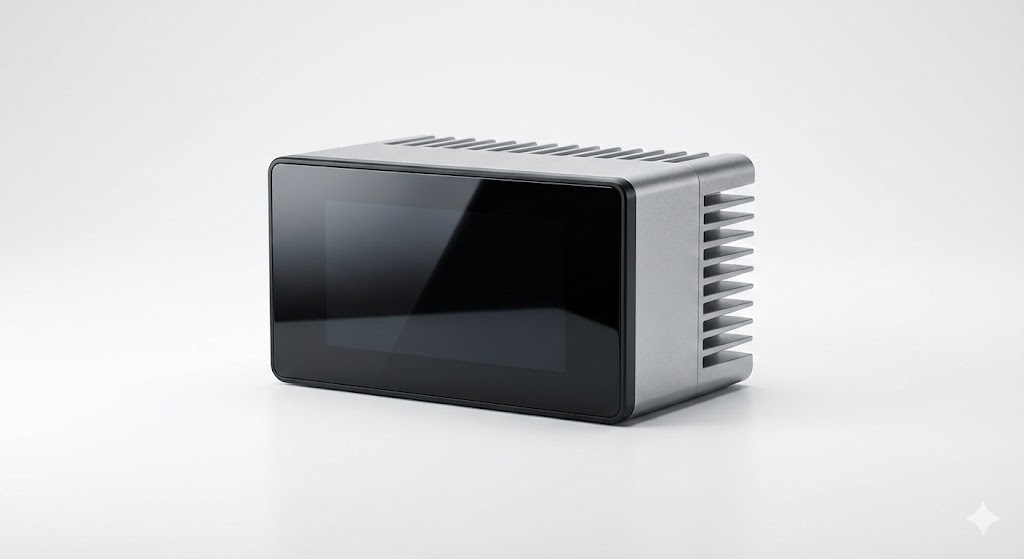
The electronic subsystem is equally crucial. The driver circuit must provide a stable current to the laser diode to maintain consistent output power. The photodetector's signal, often extremely weak, requires amplification and filtering to distinguish it from electrical noise. This is where analog-to-digital converters (ADCs) and microprocessors come into play. The development of algorithms for digital signal processing (DSP) is a critical step. These algorithms calculate distance via time-of-flight (ToF) principles, triangulation, or phase-shift measurement. They must also compensate for environmental interference and calibrate the sensor for different surface properties, as a shiny metal surface reflects light very differently than a dark, matte fabric.
Software development extends beyond DSP to include communication protocols (like IO-Link, Ethernet/IP, or simple analog outputs), user interfaces for configuration, and diagnostic tools. Robust firmware ensures stable operation and allows for remote monitoring and updates. Prototyping involves assembling these components into a functional unit. Rigorous testing follows, not just in controlled lab conditions but in environments that simulate real-world use. Tests evaluate performance against the initial requirements, checking for drift over time, susceptibility to electrical noise, and durability under stress.

A significant challenge in laser sensor development is ensuring reliability. Components must be selected and assembled to withstand industrial shocks, wide temperature swings, and contamination. The housing design must protect delicate optics while allowing for a clean exit and entry path for the laser beam. Furthermore, laser safety is a non-negotiable aspect. Developers must comply with international standards (like IEC 60825) to classify the laser's hazard level and incorporate necessary safety features, such as interlocks or visible warning indicators, especially for higher-power classes.
The applications for developed laser sensors are vast and growing. In factory automation, they are indispensable for precise positioning, object detection on conveyor belts, and robotic guidance. In logistics, they measure parcel dimensions for automated sorting and storage. Automotive applications include advanced driver-assistance systems (ADAS) like LiDAR for collision avoidance. Emerging fields like agriculture use laser sensors for crop monitoring and yield estimation, while in consumer electronics, they enable features like facial recognition and gesture control.
Future trends point towards miniaturization, reduced power consumption, and increased intelligence at the edge. The integration of machine learning directly onto the sensor's microprocessor can enable adaptive behavior, allowing the sensor to classify objects or identify anomalies in real-time without sending raw data to a central computer. The development of vertical-cavity surface-emitting lasers (VCSELs) is also pushing the boundaries, allowing for the creation of compact, efficient laser arrays used in state-of-the-art 3D sensing.
In conclusion, developing a laser sensor is a complex but rewarding engineering challenge. It requires a deep understanding of optical physics, electronic circuit design, and embedded software programming. Success hinges on meticulous attention to detail from the initial design specifications through to rigorous environmental testing. By mastering these elements, developers can create sensors that provide the critical eyes for machines, driving efficiency, safety, and innovation across countless sectors of the modern world.