In the rapidly evolving landscape of industrial automation, consumer electronics, and automotive safety, proximity sensor companies play a pivotal role. These firms develop and supply the critical components that enable machines and devices to detect the presence or absence of nearby objects without physical contact. The technology, primarily based on electromagnetic fields, infrared light, or capacitive sensing, has become indispensable. From ensuring a smartphone screen turns off when held to the ear to preventing robotic arms from colliding on a factory floor, the applications are vast and growing.
The market for proximity sensors is driven by several key trends. The relentless push towards Industry 4.0 and smart manufacturing demands higher precision, reliability, and data integration from sensor systems. Leading companies are responding with sensors that offer not just detection but also condition monitoring and predictive maintenance capabilities, communicating seamlessly with Industrial Internet of Things (IIoT) platforms. In the automotive sector, the surge in advanced driver-assistance systems (ADAS) and autonomous vehicle development has created a massive demand for robust, accurate sensors for functions like parking assistance, blind-spot detection, and automatic emergency braking. Furthermore, the proliferation of smart home devices and wearable technology continues to open new frontiers for miniaturized, low-power sensor solutions.
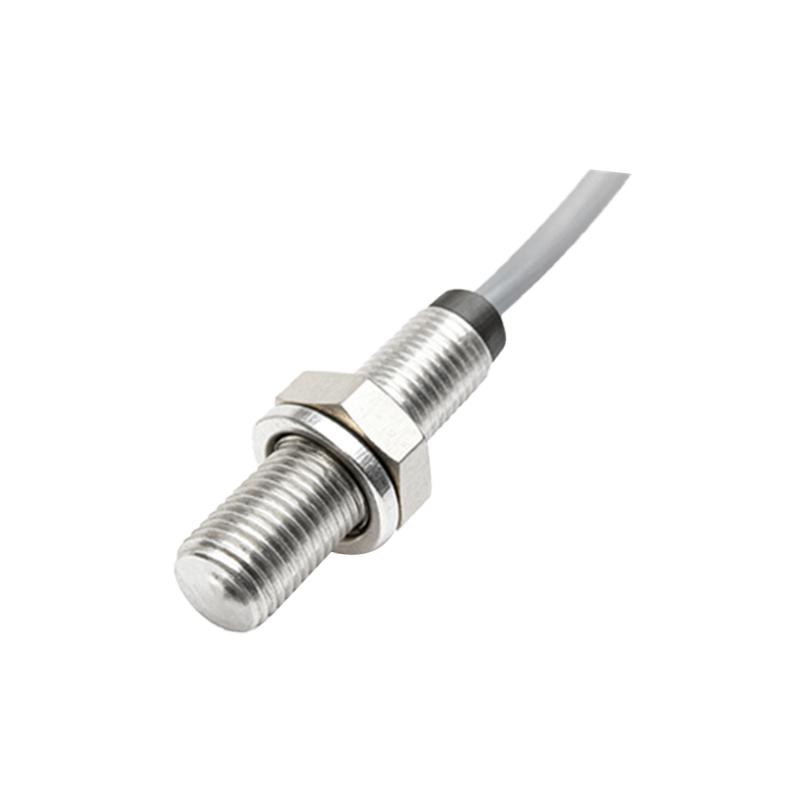
Several companies stand out as innovators and market leaders in this specialized field. Established giants like Sick AG and Keyence Corporation have long set the standard for industrial-grade sensors, offering extensive portfolios that cater to harsh environments and complex applications. Their focus on durability, high switching frequencies, and resistance to interference is unmatched. Omron Corporation is another powerhouse, renowned for its expertise in both factory automation and electronic components, providing everything from basic inductive sensors to sophisticated vision sensors that combine proximity detection with imaging.
Balluff GmbH has carved a significant niche with its innovative designs and strong focus on IO-Link communication, which turns standard sensors into intelligent data points. Pepperl+Fuchs is a global leader in intrinsic safety and explosion-proof sensors, making them the go-to choice for hazardous areas in chemical, oil, and gas industries. For capacitive sensors, which excel at detecting non-metallic objects like liquids or plastics, ifm electronic offers a highly regarded range known for ease of use and diagnostic features.
The competitive landscape also includes prominent semiconductor companies like Texas Instruments and STMicroelectronics, which supply the essential integrated circuits and development kits that enable other manufacturers to build sensor modules. This ecosystem approach accelerates innovation and allows for customization. Meanwhile, newer entrants and specialized firms are pushing boundaries with technologies like time-of-flight (ToF) sensors, which provide accurate distance measurement and are crucial for gesture recognition in consumer electronics and robotics.
Choosing the right proximity sensor company depends heavily on the application's specific requirements. Factors such as sensing range, target material, environmental conditions (temperature, dust, moisture), required output type, and connectivity are paramount. A company strong in rugged inductive sensors for metal detection in a welding shop may not be the optimal provider for a delicate capacitive sensor needed in a medical device. Therefore, technical support, application engineering expertise, and global supply chain reliability are as important as the product specifications themselves.
Looking ahead, the trajectory for proximity sensor companies points toward greater intelligence, integration, and miniaturization. The fusion of sensing with edge computing, where data is processed locally on the sensor itself, is an emerging trend. This reduces latency and bandwidth needs for cloud systems. Additionally, the development of multi-technology sensors that combine proximity, vision, and environmental sensing in a single package will provide more comprehensive situational awareness for machines. As the world becomes more automated and interconnected, the companies that innovate in sensing technology will continue to be fundamental enablers of progress, making the invisible detection of objects a cornerstone of modern engineering.