Tunable Diode Laser Absorption Spectroscopy (TDLAS) sensors represent a significant advancement in the field of gas sensing and process analytics. Unlike traditional sensing methods, TDLAS technology utilizes the unique absorption spectra of gas molecules. A tunable diode laser emits a beam of light at a specific wavelength that corresponds to an absorption line of the target gas. As this laser light passes through a measurement area, the target gas molecules absorb a portion of the light energy. A photodetector on the opposite side measures the intensity of the transmitted light. By precisely tuning the laser's wavelength and analyzing the degree of absorption, the sensor can determine the concentration of the target gas with exceptional accuracy and selectivity.
The core principle behind TDLAS is based on Beer-Lambert law, which relates the attenuation of light to the properties of the material through which the light is traveling. The high spectral resolution of diode lasers allows them to target a specific absorption line, making the measurement highly immune to interference from other gases present in the sample. This selectivity is a key advantage. Furthermore, modern TDLAS systems often employ wavelength modulation spectroscopy (WMS) techniques. By modulating the laser wavelength at a high frequency, the system can lock onto the absorption feature and dramatically reduce noise, enabling the detection of extremely low gas concentrations, often in the parts-per-billion (ppb) range.
The applications of TDLAS laser sensors are vast and critical across numerous industries. In environmental monitoring, they are deployed for continuous emissions monitoring (CEM) from industrial stacks, measuring pollutants like methane (CH4), carbon dioxide (CO2), ammonia (NH3), and nitrogen oxides (NOx). In the energy sector, TDLAS sensors play a vital role in safety and efficiency. They are used for leak detection of natural gas along pipelines, in refineries, and at LNG terminals. In combustion processes, such as in power plants and industrial heaters, they provide real-time, in-situ measurements of oxygen (O2) and carbon monoxide (CO), allowing for precise control of the combustion process to maximize fuel efficiency and minimize harmful emissions.

The semiconductor and manufacturing industries rely on TDLAS for process control. During the fabrication of semiconductors, photovoltaic cells, and flat-panel displays, ultra-pure process gases are essential. TDLAS sensors can monitor trace moisture (H2O) and oxygen levels in these gas lines, ensuring the integrity of the manufacturing process. In the medical and pharmaceutical fields, TDLAS is used to monitor anesthetic gases in operating rooms and to control critical atmospheric conditions in research and production facilities.
The advantages of TDLAS technology are compelling. First is its high sensitivity and selectivity, allowing for precise measurement of a specific gas even in complex mixtures. Second, it offers fast response times, providing real-time data crucial for process control and safety alarms. Third, TDLAS sensors are known for their stability and require minimal calibration compared to electrochemical or catalytic bead sensors, which can drift over time. This leads to lower long-term maintenance costs. Fourth, the non-contact, in-situ measurement capability is a major benefit. The laser beam can be sent across a duct or pipe, measuring the gas concentration directly within the process stream without the need for sample extraction, which can alter the gas composition or cause delays.
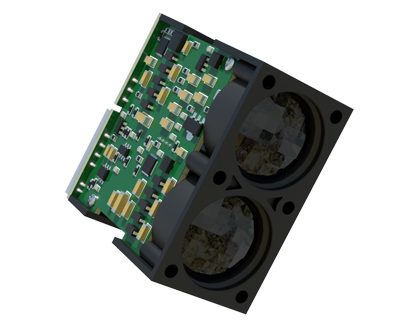
Another significant advantage is robustness. With no moving parts in the optical measurement path and no consumables, TDLAS sensors are highly reliable and suitable for harsh industrial environments. They can operate in high-temperature, high-pressure, and corrosive atmospheres where other sensor technologies would fail. This durability ensures continuous operation and reduces downtime.
Looking forward, the evolution of TDLAS technology continues. The development of new laser sources, such as quantum cascade lasers (QCLs) and interband cascade lasers (ICLs), is expanding the range of detectable gases further into the mid-infrared spectrum, where molecules have stronger absorption features. Advances in photonic integration and fiber-optic configurations are making TDLAS systems more compact, cost-effective, and suitable for distributed sensing networks. As industries worldwide face increasing pressure to improve safety, optimize processes, and reduce environmental impact, TDLAS laser sensors stand out as a powerful, reliable, and versatile tool for meeting these critical challenges.