Lidar, an acronym for Light Detection and Ranging, represents a pivotal sensing technology that is fundamentally reshaping industries from automotive to robotics. At its core, a lidar sensor is a sophisticated device that measures distance by illuminating a target with laser light and analyzing the reflected light. Unlike cameras that capture 2D images, lidar generates precise, three-dimensional point cloud maps of the surrounding environment. This capability to perceive depth and shape with high accuracy makes it indispensable for systems requiring real-time spatial awareness.
The operational principle of lidar is elegantly rooted in time-of-flight measurement. The sensor emits rapid pulses of laser light—often invisible to the human eye—towards objects. A high-speed receiver then detects the light that bounces back. By calculating the time difference between the emission and the detection of each pulse, and knowing the constant speed of light, the sensor can determine the exact distance to the point of reflection. By scanning the laser beam across a field of view, either mechanically or through solid-state methods, the sensor builds up a detailed 3D map, point by point.

Modern lidar systems are categorized primarily by their scanning mechanism. Mechanical spinning lidars, often seen on early autonomous vehicle prototypes, use rotating mirrors or the entire assembly to achieve a 360-degree horizontal field of view. While offering excellent coverage, their moving parts can raise concerns about durability and cost. In contrast, solid-state lidar is a transformative advancement. With no macroscopic moving parts, it uses technologies like Micro-Electro-Mechanical Systems (MEMS) mirrors, optical phased arrays, or flash illumination to steer the laser beam. This design leads to greater robustness, smaller form factors, and the potential for mass production at lower costs, making it highly attractive for automotive integration.

The wavelength of the laser is a critical specification. Most terrestrial lidar systems operate at 905 nanometers or 1550 nanometers. The 905nm wavelength is more cost-effective as it can use silicon-based detectors, but it has limitations in eye safety at higher power levels. The 1550nm wavelength is considered safer for human eyes, allowing for higher power emission and, consequently, longer detection ranges and better performance in adverse weather like light fog or rain, though it typically involves more expensive indium gallium arsenide detectors.
The applications of lidar laser sensors are vast and growing. In the automotive sector, they are a cornerstone for Advanced Driver-Assistance Systems (ADAS) and autonomous driving. They provide the critical depth perception needed for object detection, classification, and free-space mapping, complementing the strengths of cameras and radar. Beyond vehicles, lidar is essential for robotics, enabling autonomous mobile robots in warehouses and last-mile delivery bots to navigate complex, dynamic environments safely. In surveying, mapping, and archaeology, airborne lidar (LiDAR) can penetrate forest canopies to reveal topographic details and ancient structures hidden for centuries. Emerging uses include smart infrastructure, where lidar monitors traffic flow and pedestrian safety at intersections, and in industrial automation for volume measurement and collision avoidance.
Despite its strengths, lidar technology faces challenges. Performance can degrade in heavy rain, fog, or snow, as particles scatter and absorb the laser light. The cost, though decreasing rapidly, remains a barrier for widespread consumer adoption. Furthermore, processing the massive streams of high-resolution point cloud data in real-time demands significant computational power. Engineers and researchers are actively working on solutions: sensor fusion algorithms that combine lidar data with radar and camera inputs for all-weather reliability, advanced signal processing to filter noise, and the continued evolution of cost-effective solid-state designs.
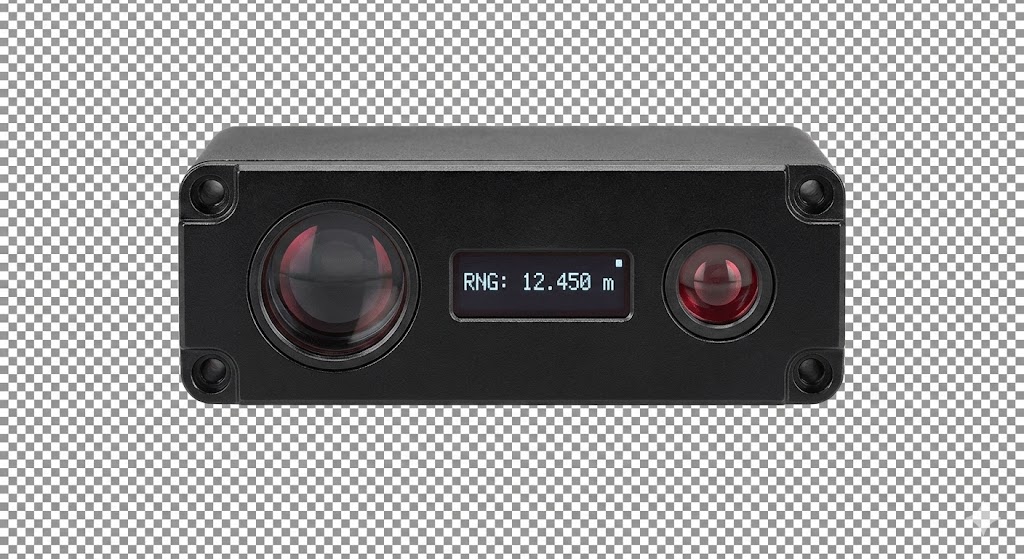
Looking ahead, the trajectory for lidar laser sensors is one of miniaturization, integration, and cost reduction. The future points towards chip-scale lidar, where key components are integrated onto a single semiconductor chip, promising to deliver high-performance sensing in a package as small as a consumer camera module. This evolution will unlock new possibilities, embedding precise 3D sensing into a broader array of devices and applications, from consumer electronics to ubiquitous environmental monitoring systems. As the technology matures, lidar will continue to serve as the primary eyes for autonomous systems, providing the reliable, detailed environmental understanding that machines need to operate intelligently and safely in our world.