Proximity sensor switches represent a critical category of non-contact detection devices widely employed across industrial automation, consumer electronics, and automotive systems. Their core function is to detect the presence or absence of a target object within a specific sensing range without physical contact, subsequently triggering an electrical switch signal. The design of these sensors hinges on several fundamental principles, primarily electromagnetic, capacitive, and optical methodologies.
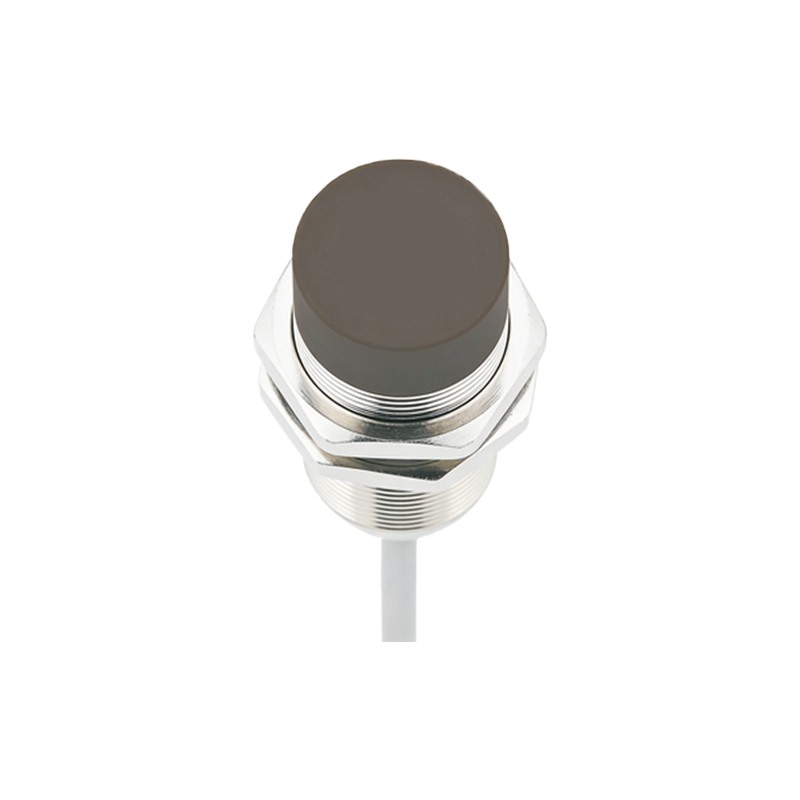
Electromagnetic inductive proximity switches, perhaps the most common type for metallic object detection, operate based on the principle of electromagnetic induction. A high-frequency oscillator generates an alternating electromagnetic field from a coil housed within the sensor head. When a conductive metal target enters this field, eddy currents are induced on the target's surface. These currents draw energy from the oscillator, causing a measurable change in its amplitude or frequency. This change is detected by a threshold circuit, which then commands the output switching element—typically a solid-state transistor or a relay—to change state. Key design considerations for inductive models include the selection of oscillator frequency, coil geometry for the desired sensing range, and immunity to external electromagnetic interference. Shielding is often crucial to ensure stable operation near other metal objects or motors.
Capacitive proximity sensors, in contrast, can detect both metallic and non-metallic materials such as plastics, liquids, or wood. They function by generating an electrostatic field. The sensor forms one plate of a capacitor, with the target object acting as the other plate. As the target approaches, the capacitance between the sensor and the target increases. An internal circuit monitors this capacitance, and once it surpasses a preset threshold, the output switches. Design challenges here involve compensating for environmental factors like humidity or dust that can alter dielectric constants, and carefully shaping the field to avoid unwanted detection of background objects. The sensing face design and the use of guard electrodes are critical to focus the field.
Optical proximity switches utilize a light emitter (usually an LED or laser diode) and a photodetector. In the diffuse reflection model, both components are housed in the same unit. The emitted light reflects off the target and returns to the detector. The switch triggers when the reflected intensity exceeds a threshold. Through-beam models have separate emitter and receiver units, detecting an object when it interrupts the light beam. Design focuses include selecting the appropriate light wavelength (infrared for immunity to ambient light, or visible for alignment purposes), lens design for beam shaping and range, and sophisticated circuitry to filter out ambient light noise through modulation/demodulation techniques.
Beyond the core sensing principle, the overall switch design integrates several universal subsystems. The housing must provide appropriate ingress protection (IP rating) for the operational environment, whether it's a dusty factory floor or a washdown area. Output configuration is a major decision point; designers choose between NPN (sinking) or PNP (sourcing) transistor outputs, analog voltage/current outputs for distance proportionality, or relay contacts for high-power switching. The choice depends on the compatibility with the programmable logic controller (PLC) or other control system. Power supply design must ensure stable operation within a specified voltage range, often 10-30V DC, with reverse polarity and surge protection.
Furthermore, modern designs incorporate advanced features like programmability via push-buttons or IO-Link digital communication. Programmability allows field adjustment of sensing range, output delay timers, and switching mode (light/dark operate). IO-Link enables detailed diagnostics, parameter setting from a controller, and process data transmission, integrating the simple switch into Industry 4.0 smart factory networks.
Application dictates design specifics. In automotive assembly, robust inductive sensors with high switching frequencies count gears or confirm part placement. In food packaging, capacitive sensors detect liquid levels in non-metallic containers. Optical sensors ensure precise positioning in electronic component pick-and-place machines. Each environment imposes constraints—temperature extremes, mechanical vibration, chemical exposure—that directly influence material selection, sealing methods, and circuit board conformal coating.
In conclusion, designing an effective proximity sensor switch is a multidisciplinary exercise in physics, electronic circuit design, materials science, and mechanical engineering. It requires a deep understanding of the target detection principle, a meticulous approach to signal conditioning and noise immunity, and a practical focus on environmental robustness and electrical interface standards. The end goal is a reliable, maintenance-free component that provides a crucial binary signal—object present or absent—forming the sensory foundation of automated systems worldwide.