In the realm of industrial automation and precision engineering, laser sensor probes have emerged as indispensable tools. These devices utilize focused laser beams to perform non-contact measurement, inspection, and alignment tasks with exceptional accuracy. Unlike traditional tactile probes that physically touch a surface, laser probes capture data by analyzing the reflection or scattering of light, making them ideal for delicate, hot, moving, or otherwise inaccessible targets.
The core technology behind a laser sensor probe typically involves triangulation or time-of-flight principles. In triangulation sensors, a laser diode projects a spot onto the target surface. The reflected light is focused onto a position-sensitive detector, such as a CCD or CMOS array. Any change in the target's distance causes the reflected spot to shift position on the detector. By calculating this shift, the sensor determines the precise distance or profile of the object. This method offers high resolution for short to medium ranges. Time-of-flight probes, on the other hand, measure the round-trip time for a laser pulse to travel to the target and back, excelling in longer-range applications.
The applications for laser sensor probes are vast and transformative. In manufacturing, they are crucial for dimensional gauging, ensuring parts like engine components or semiconductor wafers meet strict tolerances. They perform real-time inspection on assembly lines, detecting defects in products from electronics to food packaging. In robotics, laser probes provide the "eyes" for guidance, allowing robotic arms to precisely locate and handle objects. The field of reverse engineering and 3D scanning heavily relies on laser probes to digitize complex physical objects into accurate CAD models. Furthermore, in sectors like aerospace and automotive, they are used for alignment tasks, such as verifying the straightness of rails or the profile of a wing.
Several key advantages drive their widespread adoption. The non-contact nature eliminates probe wear and prevents damage to soft or finished surfaces. It allows for extremely high-speed data acquisition, essential for dynamic processes or high-throughput production. Laser probes can achieve micron-level or even sub-micron resolution, providing the detail needed for quality control in advanced industries. Their ability to measure a wide variety of materials, including metals, plastics, glass, and liquids, adds to their versatility. Modern probes are also becoming more robust, with integrated processors for onboard data analysis and connectivity for Industry 4.0 integration.
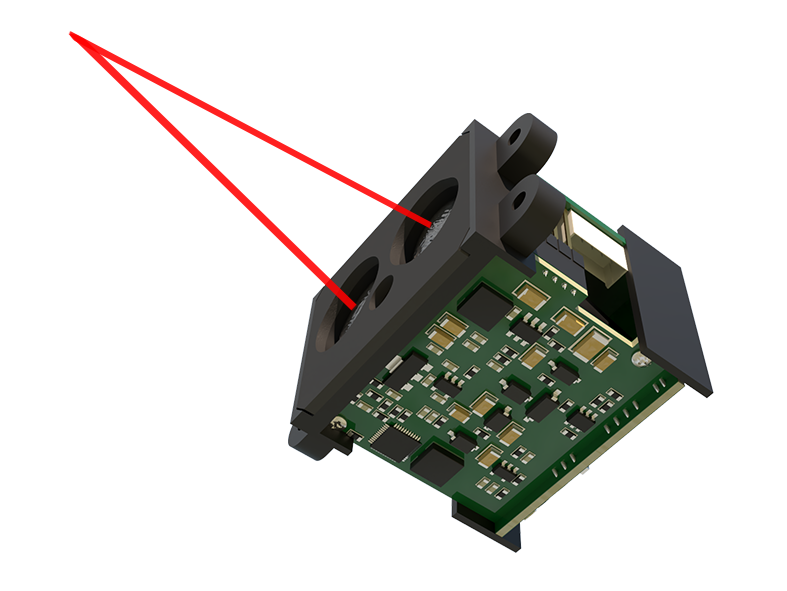
Selecting the right laser sensor probe requires careful consideration of specifications. Key parameters include measuring range, spot size, resolution, repeatability, and linearity. The required speed of measurement and the environmental conditions—such as ambient light, dust, vibration, and temperature—also heavily influence the choice. For instance, a blue laser probe may be selected for measuring shiny metals, as its shorter wavelength reduces interference from specular reflections compared to a standard red laser.
Despite their strengths, challenges exist. Highly reflective, transparent, or deeply colored surfaces can sometimes scatter light unpredictably, requiring special surface preparation or sensor settings. Environmental factors like airborne particles or strong ambient light can also affect performance, though many modern probes incorporate filters and advanced algorithms to compensate.
The future of laser sensor probe technology points toward greater miniaturization, higher speeds, and enhanced intelligence. The integration of artificial intelligence for adaptive measurement and automatic defect recognition is on the rise. Furthermore, the development of multi-sensor systems that combine laser probes with vision cameras or spectral analyzers is creating more comprehensive inspection solutions. As industries continue to demand higher precision, efficiency, and data integration, the role of the laser sensor probe will only become more central to smart manufacturing and quality assurance processes worldwide.