In modern industrial automation and scientific research, achieving high-precision, non-contact measurement is a critical requirement. Laser spot sensors have emerged as a vital technology in this domain, offering unparalleled accuracy for distance, position, and displacement measurements. Unlike conventional sensors that may require physical contact or rely on less focused methods, these devices utilize a concentrated laser beam to target a specific point on an object's surface. The core principle involves projecting a laser spot onto the target and analyzing the reflected light. By employing techniques such as triangulation or time-of-flight calculations, the sensor calculates the exact distance to the point with micron-level resolution. This method ensures minimal interference from ambient light or surface textures, providing stable and reliable data even in challenging environments.
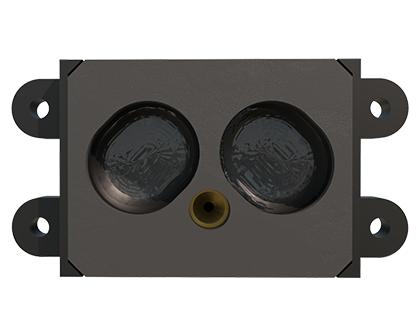
The construction of a typical laser spot sensor integrates several advanced components. A laser diode emits a coherent, focused beam, which is directed through precision optics. The reflected light from the target spot is captured by a high-sensitivity receiver, such as a CCD or PSD (Position Sensitive Device). An onboard processor then analyzes the light pattern or time delay to determine the distance. Key performance parameters include measuring range, spot size, sampling speed, and linearity. Modern sensors often feature compact designs, robust housings for industrial use, and interfaces like analog outputs or digital communication protocols (e.g., Ethernet, IO-Link) for seamless integration into control systems. Calibration is typically straightforward, allowing users to set reference points quickly for various applications.
Applications of laser spot sensors span numerous industries due to their versatility and precision. In manufacturing, they are indispensable for quality control tasks such as measuring component thickness, checking part presence on assembly lines, or monitoring weld seam profiles. Robotics relies on these sensors for precise positioning and guidance, enabling automated arms to handle objects with accuracy. The electronics industry uses them for inspecting circuit board flatness or component placement. Beyond industrial settings, they contribute to scientific instruments, medical devices for non-invasive diagnostics, and even automotive systems for adaptive cruise control or parking assistance. Their ability to perform in real-time without physical contact prevents damage to delicate surfaces and reduces maintenance needs compared to tactile probes.
Selecting the right laser spot sensor requires careful consideration of the operational environment and measurement goals. Factors such as the target material's reflectivity, color, and surface finish can influence performance; some sensors include automatic gain adjustment to compensate for varying reflectivity. Environmental conditions like temperature fluctuations, dust, or vibrations should be accounted for, with many models offering IP-rated enclosures for protection. Integration involves aligning the sensor correctly, ensuring stable mounting, and configuring software parameters to match the application's speed and accuracy demands. Regular maintenance, such as lens cleaning and verification checks, helps sustain long-term accuracy. As technology advances, trends include miniaturization, enhanced connectivity for Industry 4.0, and improved algorithms for handling complex surfaces.
In summary, laser spot sensors represent a cornerstone of precision measurement, combining optical innovation with electronic processing to deliver reliable, non-contact data. Their role in enhancing automation, quality, and efficiency continues to grow, making them essential tools across diverse fields. By understanding their principles and applications, engineers and technicians can leverage these sensors to solve intricate measurement challenges, driving progress in technology and industry.