In the realm of industrial automation, precision measurement is not just a requirement; it's the cornerstone of quality, efficiency, and innovation. Among the myriad of sensing technologies available, the 3010 laser sensor stands out as a versatile and reliable solution for a wide range of applications. This guide delves into the core principles, key features, and practical uses of this advanced sensor, providing a clear understanding of its capabilities.
At its heart, the 3010 laser sensor operates on the principle of triangulation. It emits a focused, coherent beam of laser light onto a target surface. The light reflected from the surface is then captured by a receiving lens at a specific angle and projected onto a position-sensitive detector, typically a CCD or CMOS array. By precisely calculating the position of the light spot on this detector, the sensor can determine the exact distance to the target with remarkable accuracy. This non-contact method ensures there is no physical wear on the sensor or the object being measured, leading to long-term stability and reliability.
The designation "3010" often refers to a specific model or series characterized by its compact design and robust performance. Key specifications that define its utility include its measuring range, resolution, repeatability, and response time. For instance, a typical 3010 laser displacement sensor might offer a measuring range of several millimeters to tens of millimeters, with a resolution in the micron or sub-micron range. This high resolution makes it indispensable for tasks requiring extreme precision, such as checking the thickness of materials, monitoring vibration, or inspecting surface profiles.

One of the most significant advantages of the 3010 laser sensor is its ability to perform reliably in challenging environments. Many models are built with rugged housings rated for IP67 or higher, protecting them from dust, water jets, and oil splashes commonly found on factory floors. Furthermore, advanced models incorporate features like background suppression, which allows them to ignore irrelevant background objects, and automatic exposure control to adapt to different surface colors and reflectivities—from shiny metals to dark, absorbent materials. This adaptability minimizes setup time and ensures consistent readings across varied production lines.
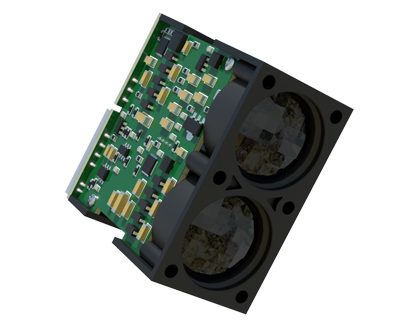
The applications for the 3010 laser sensor are vast and span multiple industries. In automotive manufacturing, these sensors are used for gap and flush measurement between body panels, ensuring a perfect fit and finish. In electronics, they verify the coplanarity of component leads on circuit boards or measure the thickness of silicon wafers. The packaging industry relies on them to control fill levels in bottles and check the seal integrity of containers. In metal processing, they monitor the thickness of rolled sheets or the position of robotic arms for precise welding and assembly. Their speed and accuracy also make them ideal for sorting and inspection on high-speed production lines.
Integrating a 3010 laser sensor into a system is generally straightforward. Most models offer both analog (e.g., 0-10V, 4-20mA) and digital (e.g., RS-232, Ethernet, IO-Link) output options, allowing for seamless connection to PLCs (Programmable Logic Controllers), data acquisition systems, or industrial PCs. Configuration is often done via intuitive software or a built-in teach-in function, enabling users to set measurement windows, thresholds, and filtering parameters quickly. Proper installation is crucial; factors such as mounting stability, avoidance of ambient light interference, and correct alignment with the target must be considered to achieve optimal performance.
When selecting a 3010 laser sensor for a specific task, several factors must be evaluated. The required measuring range and resolution are primary concerns. The nature of the target surface—its color, texture, and material—will influence the choice of sensor model with appropriate light source characteristics. Environmental conditions like temperature extremes, humidity, and potential exposure to contaminants dictate the necessary ingress protection rating. Finally, the required output signal type and communication protocol must match the existing control architecture.

In conclusion, the 3010 laser sensor represents a mature yet continually evolving technology that addresses the growing demand for non-contact, high-precision measurement. Its combination of accuracy, robustness, and flexibility makes it a critical tool for engineers and technicians aiming to enhance product quality, optimize processes, and drive automation forward. By understanding its operating principles and application potential, industries can leverage this powerful sensing technology to achieve new levels of operational excellence and innovation in an increasingly competitive market.