In the world of automation, robotics, and smart systems, the ability to perceive and interpret the environment is paramount. Two critical technologies enabling this perception are color sensors and laser sensors. While both operate on principles involving light, they serve distinct purposes, function differently, and are suited to unique applications. Understanding the fundamental differences between them is essential for engineers, designers, and hobbyists to select the right tool for the job.
A color sensor is a type of photodetector designed to identify and differentiate colors. At its core, it works by analyzing the reflected light from an object. Most modern color sensors use a combination of photodiodes and color filters—typically red, green, and blue (RGB)—to mimic the human eye's trichromatic vision. An integrated light source, often a white LED, illuminates the target. The sensor then measures the intensity of light reflected in each of the RGB channels. By comparing these values, either internally with an onboard processor or by sending raw data to a microcontroller, the sensor can determine the precise hue, saturation, and brightness of the object. Advanced color sensors can also provide color temperature and ambient light sensing capabilities.
The primary strength of color sensors lies in their ability to make qualitative judgments. They are indispensable in applications where color is a critical identifier. For instance, in automated sorting systems, they can distinguish between ripe and unripe fruit, separate recycled plastics by polymer type (which are often color-coded), or verify the correct color of pharmaceutical pills. In printing and textile industries, they ensure color consistency and quality control. Consumer electronics use them to adjust screen brightness and color balance based on ambient light. Their operation is generally non-contact and can be very fast, but they are highly dependent on consistent, controlled lighting conditions. Stray ambient light, surface gloss, and texture can significantly affect accuracy.

In contrast, a laser sensor is fundamentally a device for precise distance, displacement, or profile measurement. It operates on the principle of emitting a highly focused, coherent beam of laser light—often a visible red laser or an invisible infrared laser—towards a target. The sensor then detects the interaction of this beam with the target. The most common types are based on triangulation or time-of-flight (ToF) principles. In a triangulation sensor, the emitted laser dot is viewed from an angle by a position-sensitive detector. As the target's distance changes, the position of the dot on the detector shifts, allowing for extremely high-resolution distance measurement. Time-of-flight sensors measure the time it takes for a laser pulse to travel to the target and back, calculating distance based on the speed of light.
The key advantage of laser sensors is their exceptional precision, speed, and ability to work over longer ranges. They excel in quantitative, geometric measurements. Common applications include precise height profiling in manufacturing, detecting minute defects on surfaces, guiding autonomous vehicles (LiDAR), level monitoring in silos, and as safety curtains in hazardous areas. They are less affected by ambient light and surface color than color sensors, though extremely dark or reflective surfaces can pose challenges. Their output is typically a distance value, a set of profile coordinates, or a simple presence/absence signal based on a set threshold.
Choosing between a color sensor and a laser sensor boils down to the question: "What information do I need?" If the requirement is to identify, match, or grade a color, a color sensor is the unambiguous choice. It answers "what color is this?" If the requirement is to measure a distance, detect a precise edge, profile a 3D shape, or detect an object's presence with millimeter accuracy, a laser sensor is the appropriate tool. It answers "where is this, or how far away is it?"
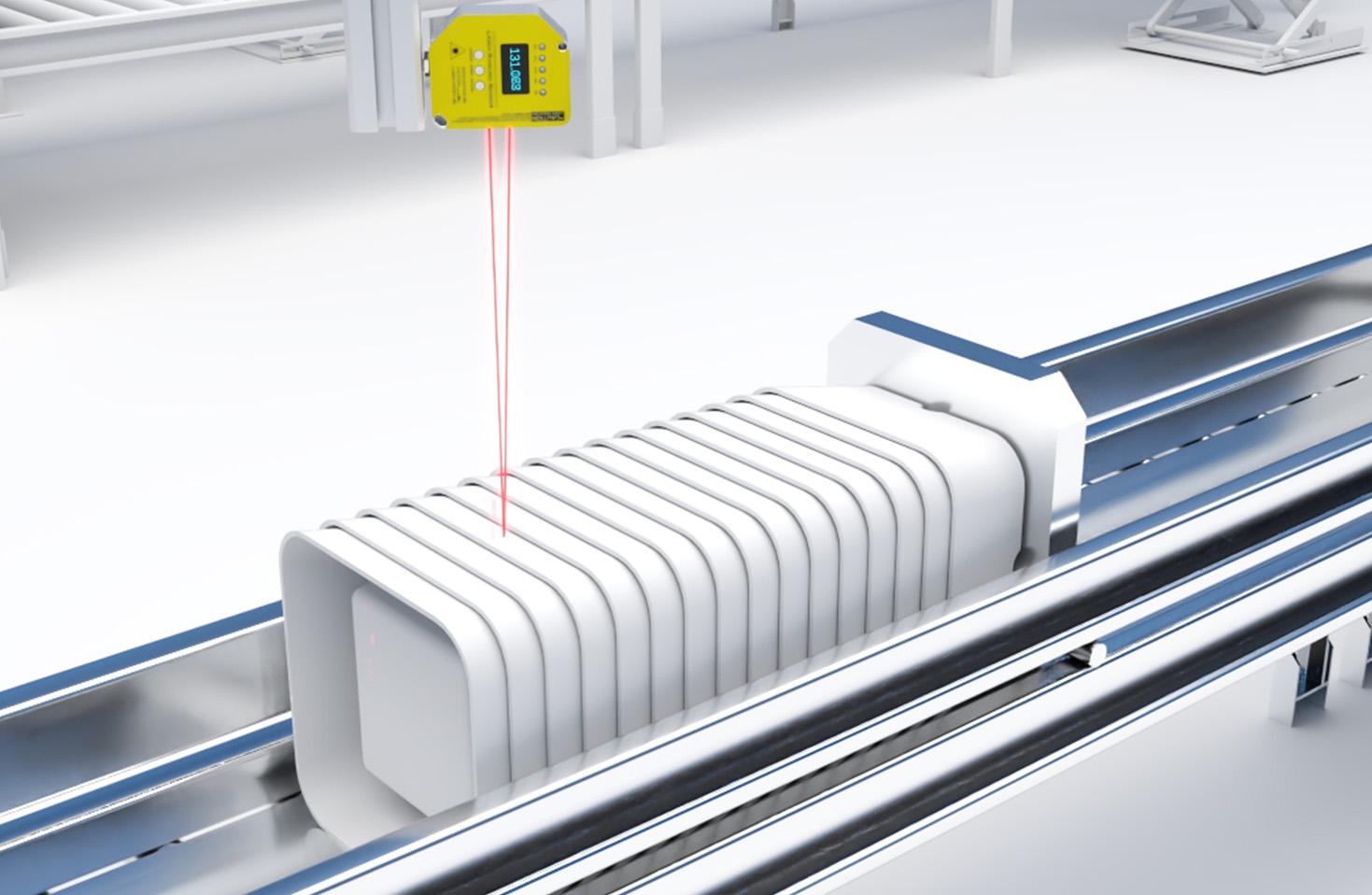
In some advanced systems, these sensors are used in tandem. A robotic vision system, for example, might use a laser profiler to map the 3D contours of a scene and a color sensor to identify specific components within that scene. This combination provides a richer, more comprehensive understanding of the environment than either sensor could alone.
In summary, color sensors and laser sensors are both powerful emissaries of light-based sensing, but they speak different languages. One interprets the spectral quality of reflected light to discern color identity. The other analyzes the geometric interaction of a coherent beam to determine spatial properties. By recognizing their distinct operational paradigms—color for qualitative identification, laser for quantitative measurement—technologists can harness their respective strengths to build more intelligent, responsive, and accurate automated systems across countless industries.