In the world of industrial automation and precision measurement, the demand for reliable and accurate line laser sensors is ever-growing. These devices project a sharp, thin line of laser light onto a target surface, enabling high-precision 2D profiling, edge detection, and dimensional inspection. When it comes to selecting equipment, many engineers and procurement specialists face a critical question: which manufacturer truly provides the best original line laser sensors? The answer isn't straightforward, as "best" depends heavily on specific application requirements, environmental conditions, and budget constraints. However, by examining key industry leaders and their core technologies, we can navigate this complex landscape.
Several established brands dominate the market for high-quality original line laser sensors. Companies like Keyence, Cognex, and SICK have built formidable reputations over decades. Keyence, for instance, is often praised for its user-friendly interfaces, exceptional out-of-the-box accuracy, and robust customer support. Their LJ-V series is renowned for achieving stable measurements even on challenging surfaces, such as shiny metals or translucent materials, thanks to advanced patented algorithms. For applications demanding ultra-high speed and resolution in electronics or semiconductor manufacturing, Keyence frequently emerges as a top contender.
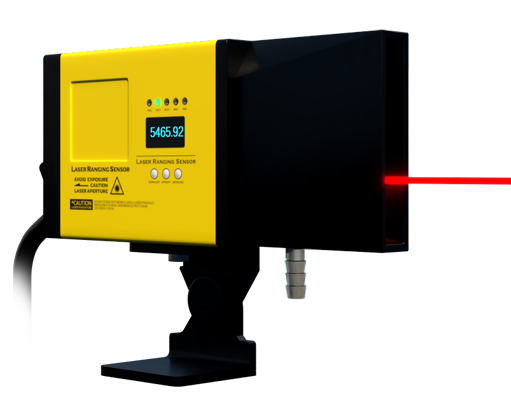
On the other hand, Cognex brings immense strength in deep integration with machine vision systems. Their DSMax series line laser sensors are part of a broader ecosystem, making them an ideal choice for factories heavily invested in Cognex's vision software and hardware. The sensors excel in complex inspection tasks where laser profiling data must be seamlessly correlated with 2D image data. For companies seeking a unified, powerful platform for multifaceted quality control, Cognex offers a compelling, integrated solution.
SICK, a stalwart in sensor technology, emphasizes durability and versatility. Their OD series of line laser sensors is designed to withstand harsh industrial environments—resistant to dust, moisture, and vibration. This makes them a preferred choice in automotive, logistics, and heavy machinery sectors. SICK sensors are often lauded for their long-term stability and minimal drift over time, a critical factor for continuous production lines where calibration downtime is costly.
Beyond these giants, other noteworthy players include Omron and Panasonic, which offer competitive sensors with strong value propositions. Omron's ZX series provides excellent cost-performance ratios for standard applications, while Panasonic focuses on compact designs suitable for space-constrained robotic cells.
Choosing the "best" brand ultimately requires a meticulous evaluation process. First, clearly define the measurement task: required resolution (micrometer level?), measurement range (field of view), profile acquisition speed (kHz rate), and the material/color of the target objects. Second, consider the operating environment. Will the sensor face extreme temperatures, coolant splashes, or intense ambient light? Third, evaluate the total cost of ownership, which includes not just the initial purchase price but also integration effort, software licensing, maintenance, and support availability.
A common pitfall is focusing solely on hardware specifications. The accompanying software for profile analysis, data export, and connectivity (Ethernet/IP, PROFINET, etc.) is equally crucial. A sensor with superb optics but clunky, proprietary software can become a bottleneck. The best manufacturers provide intuitive, powerful software tools that reduce development time and empower users to extract meaningful data easily.
Furthermore, the concept of "original" is vital. Opting for genuine sensors from the manufacturer, rather than compatible or refurbished units, guarantees access to full calibration certificates, firmware updates, and technical support. It ensures the sensor performs exactly as specified in its datasheet, a non-negotiable aspect for quality-critical applications.
In conclusion, there is no single universal "best" brand for original line laser sensors. Keyence stands out for high-precision, user-centric applications. Cognex is superior for integrated vision-laser systems. SICK excels in rugged, demanding environments. The optimal choice emerges from a careful match between the sensor's technological strengths and the project's specific demands. Engaging with technical sales representatives, requesting sample testing on actual parts, and reviewing detailed case studies from your industry are the most reliable steps toward making an informed, successful investment in line laser sensor technology.