Introduction to Measurement Photoelectric Sensors
Measurement photoelectric sensors are critical components in modern industrial automation, enabling precise detection, positioning, and measurement of objects without physical contact. As an electrical engineer, understanding their operational principles and application nuances is essential for designing robust systems. These sensors use light beams—typically infrared, visible red, or laser—to detect changes in target position, size, or presence. Unlike standard photoelectric sensors, measurement variants offer high accuracy, often resolving sub-millimeter displacements, making them ideal for quality control, robotics, and packaging lines. Key parameters include sensing range, response time, and output type (analog or digital). Proper selection depends on environmental factors like ambient light, dust, and target surface reflectivity.
Operating Principles and Technologies

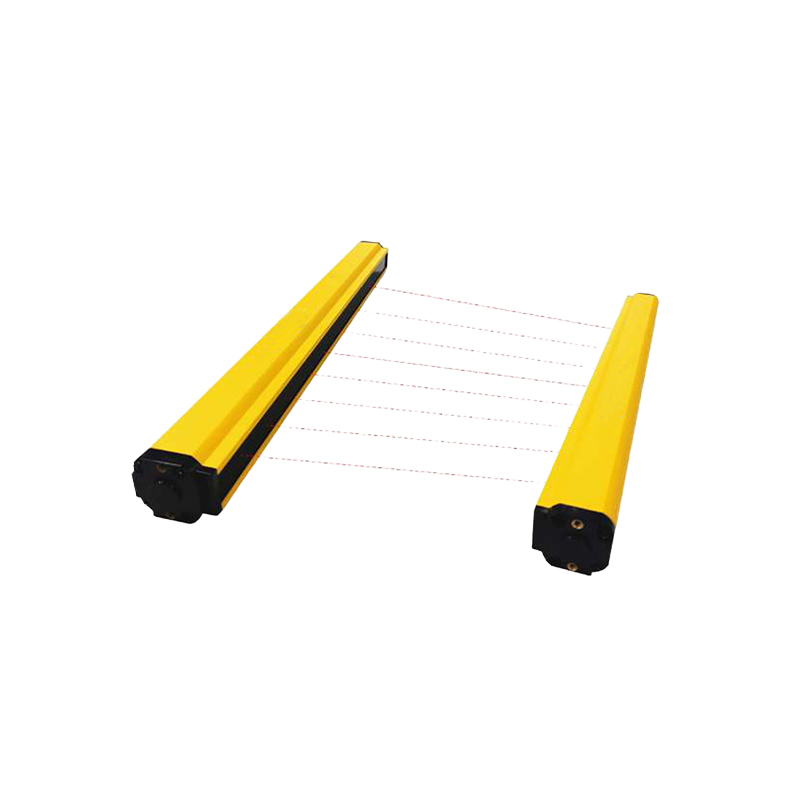
Measurement photoelectric sensors employ three primary technologies: through-beam, retro-reflective, and diffuse reflective. Through-beam sensors consist of separate emitter and receiver units, offering the longest range and highest immunity to contamination, but requiring alignment. Retro-reflective sensors use a reflector to bounce the beam back, simplifying installation while maintaining good range. Diffuse reflective sensors rely on the target’s surface to reflect light, ideal for short-range detection of objects with varying colors or materials. For precise measurement, time-of-flight (ToF) and triangulation methods are common. ToF sensors measure the time light takes to travel to the target and back, providing absolute distance data. Triangulation sensors use the angle of reflected light to compute distance, offering high accuracy for small ranges. Engineers must assess trade-offs between resolution, speed, and cost when choosing between these technologies.
Key Specifications and Selection Criteria
When selecting a measurement photoelectric sensor, consider specifications such as sensing distance, resolution, repeatability, and output signal. Sensing distance ranges from a few millimeters to over 100 meters for laser-based models. Resolution, often in the micrometer range, dictates the smallest detectable change. Repeatability ensures consistent results under identical conditions, critical for high-speed applications. Output options include analog voltage (e.g., 0-10V), current (4-20 mA), or digital protocols like IO-Link, which provides diagnostic data. Environmental ratings (IP67 or higher) protect against dust and moisture. Additionally, evaluate the sensor’s response time—typically microseconds to milliseconds—to match application speed. For example, in a conveyor belt system detecting bottle heights, a fast-response laser triangulation sensor with IO-Link output would be optimal.
Installation and Calibration Best Practices
Proper installation is vital for reliable measurement. Begin by ensuring the sensor’s optical path is free from obstructions like dust, oil, or vibration. For through-beam and retro-reflective types, align the emitter, receiver, and reflector precisely using mounting brackets with fine adjustment screws. Calibration involves setting the threshold level to distinguish between target and background, often using a teach-in button or software. In diffuse reflective sensors, adjust sensitivity based on target color and reflectivity—dark or matte surfaces require higher gain. For analog outputs, calibrate zero and span points to correspond with the measurement range. Use shielded cables and proper grounding to minimize electromagnetic interference (EMI), especially in industrial environments with motors and drives. Regular cleaning of lenses and reflectors with a lint-free cloth and isopropyl alcohol maintains performance over time.
Common Applications and Troubleshooting
Measurement photoelectric sensors excel in applications like object counting, position verification, and thickness measurement. In automotive assembly, they ensure components are correctly placed before welding. In food processing, they detect package fill levels without contact, meeting hygiene standards. Troubleshooting common issues: false triggering often results from ambient light interference—use modulated light or hoods to block stray sources. Loss of signal may indicate misalignment or dirty optics—re-align and clean. If output fluctuates, check for vibration or temperature drift, and consider sensors with temperature compensation. For digital IO-Link systems, verify cable integrity and master configuration. When sensors fail in harsh environments with heavy dust or fog, upgrade to laser-based models with longer wavelengths for better penetration.
Future Trends and Innovations
The evolution of measurement photoelectric sensors is driven by Industry 4.0 demands for smarter, connected devices. Integrated intelligence allows sensors to perform onboard data processing, reducing load on central controllers. Multispectral sensors now combine visible and infrared light to handle complex targets. Miniaturization enables integration into tight spaces, while wireless IO-Link wireless reduces cabling costs. Advances in 3D vision sensing are blurring the line between traditional photoelectric and imaging systems, offering simultaneous measurement of multiple points. As an engineer, staying updated with these trends will help you design more adaptive and efficient automation systems. For instance, a smart sensor with predictive maintenance alerts can reduce downtime in critical production lines.