In industrial automation, proximity sensors are indispensable components that detect the presence or absence of objects without physical contact. These devices enhance efficiency, safety, and reliability in manufacturing and processing environments. Various types of proximity sensors are available, each suited to specific applications based on their operating principles and environmental conditions.
Inductive proximity sensors are widely used for detecting metallic objects. They generate an electromagnetic field and sense changes caused by conductive materials. Common applications include position sensing of machine parts, counting metallic items on conveyor belts, and detecting the presence of tools in CNC machines. These sensors are robust, resistant to dust and moisture, and ideal for harsh industrial settings.
Capacitive proximity sensors can detect both metallic and non-metallic materials, such as plastics, liquids, and granular substances. They operate by measuring changes in capacitance when an object enters their electrostatic field. Industries use capacitive sensors for level detection in tanks, presence sensing of packaging materials, and monitoring liquid or powder flows. Their versatility makes them valuable in food processing, chemical plants, and packaging lines.
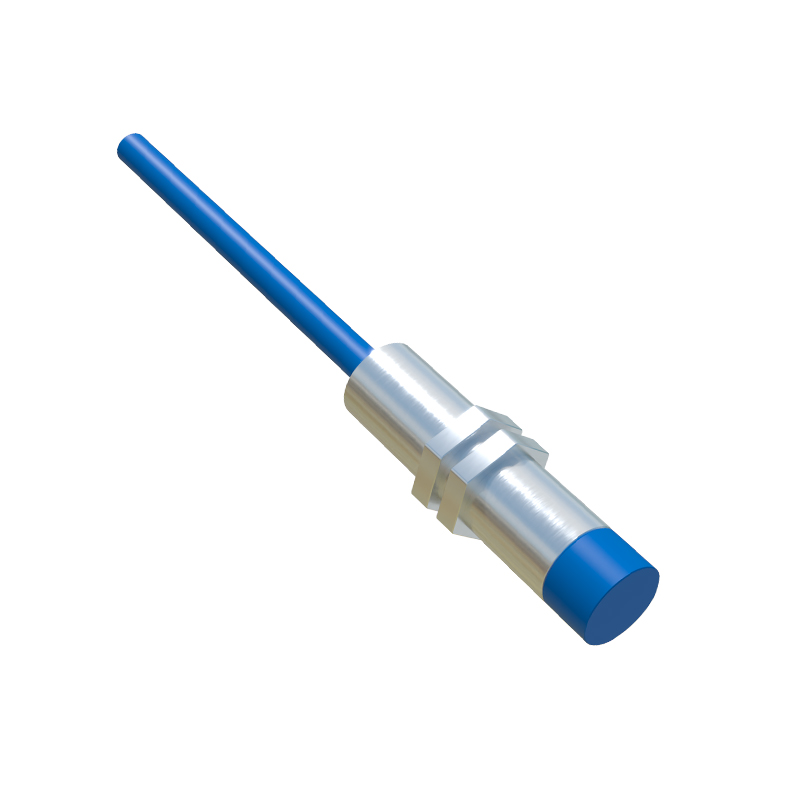
Magnetic proximity sensors rely on magnetic fields to detect permanent magnets or ferromagnetic objects. They are often employed in applications where extreme conditions, like high temperatures or pressures, exist. Typical uses include position sensing in hydraulic cylinders, door closure detection in safety systems, and monitoring moving parts in automotive assembly. Their sealed designs allow operation in wet or corrosive environments.
Ultrasonic proximity sensors use sound waves to detect objects, regardless of material composition. They emit high-frequency pulses and measure the time taken for echoes to return. These sensors excel in distance measurement, object profiling, and transparent material detection. Industries leverage ultrasonic sensors for fill-level control in bottles, collision avoidance in automated guided vehicles (AGVs), and height monitoring in stacking systems.
Photoelectric proximity sensors utilize light beams to sense objects. They come in through-beam, retro-reflective, and diffuse reflection types. Through-beam sensors offer long-range detection, while diffuse models are compact for close-range applications. Photoelectric sensors are common in packaging machinery for detecting labels, in logistics for sorting parcels, and in electronics assembly for component verification.
Selection criteria for proximity sensors include sensing range, environmental factors (temperature, humidity), response time, and output type (digital or analog). Proper installation and maintenance ensure longevity and accuracy. For instance, keeping sensor surfaces clean prevents false triggers, while shielding from electrical noise minimizes interference.
In summary, industrial proximity sensors—inductive, capacitive, magnetic, ultrasonic, and photoelectric—serve diverse roles across sectors like automotive, pharmaceuticals, and material handling. Understanding their principles helps optimize automation systems for productivity and safety. As technology advances, smart sensors with IoT connectivity are emerging, enabling predictive maintenance and real-time data analytics in Industry 4.0 frameworks.