Introduction to Photoelectric Sensors
Photoelectric sensors are essential components in modern industrial automation, converting light signals into electrical signals for detecting objects, measuring distances, and monitoring processes. Among the various types, photoresistors—also known as light-dependent resistors (LDRs)—play a critical role due to their sensitivity to light intensity variations. Engineers often rely on these sensors for cost-effective and reliable solutions in environments where precise light detection is required.
What is a Photoresistor?
A photoresistor is a passive electronic component whose resistance decreases as the incident light intensity increases. This property, known as photoconductivity, makes it ideal for light-sensing applications. Unlike photodiodes or phototransistors, photoresistors do not require a PN junction, offering simpler construction and lower cost. However, they exhibit slower response times, which limits their use in high-speed switching applications. In practice, photoresistors are commonly made from cadmium sulfide (CdS) or other semiconductor materials, enabling them to operate across a broad spectrum of visible and near-infrared light.
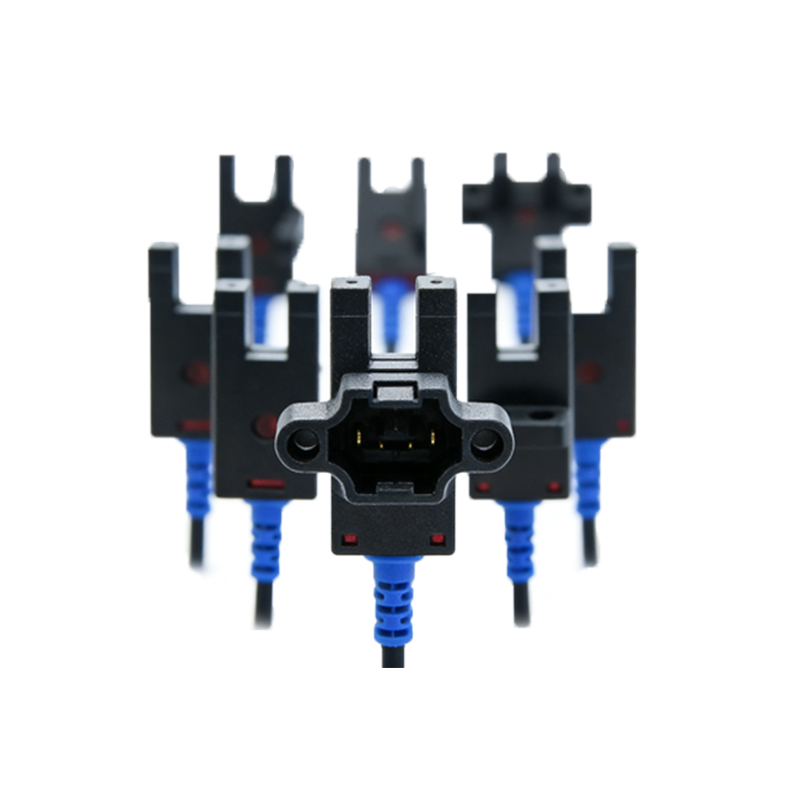
Working Principle of Photoresistors in Sensing
When light photons strike the photoresistor surface, they excite electrons within the semiconductor material, increasing conductivity. This change in resistance can be measured using a simple voltage divider circuit. For example, in a typical photoelectric sensor setup, a constant voltage is applied across the photoresistor and a fixed resistor. The output voltage varies with light intensity, which is then interpreted by a microcontroller or logic circuit. Engineers must consider factors such as ambient light levels, temperature drift, and the sensor's spectral response to ensure accurate detection.
Key Applications in Industry
Photoresistors are widely used in industrial automation for tasks like object detection in conveyor systems, light-level monitoring in warehouses, and safety interlocks in machinery. In outdoor environments, they help control street lighting or solar panel alignment. Their robustness and low power consumption make them suitable for harsh conditions, though they are less effective in environments with high vibration or extreme temperature fluctuations. For critical applications, engineers often pair photoresistors with filters or lenses to improve sensitivity and reduce false triggers.
Design Considerations for Engineers
When integrating photoresistors into a system, engineers must evaluate several parameters: dark resistance (resistance in complete darkness), light resistance (resistance under full illumination), response time (typically tens of milliseconds), and spectral peak (usually around 540 nm for CdS types). To mitigate noise, a low-pass filter can be added to the output signal. Additionally, calibration is necessary to account for aging effects and environmental variations. For high-precision tasks, such as color sorting or laser alignment, photodiodes or phototransistors may be preferred over photoresistors.
Comparison with Other Photoelectric Sensors
Compared to photodiodes, photoresistors offer lower sensitivity but simpler interface circuits. Phototransistors provide higher gain but require more complex biasing. For applications demanding fast response, like fiber-optic communication, photodiodes are superior. However, for ambient light detection and gradual light changes, photoresistors remain a cost-effective choice. Engineers should select the sensor type based on the specific trade-offs between speed, sensitivity, and cost in their design.
Conclusion: Practical Advice for Implementation
To maximize the reliability of photoresistor-based photoelectric sensors, engineers should shield them from stray light, use stable voltage references, and perform periodic recalibration. In dusty or wet environments, protective enclosures are recommended. While photoresistors may not suit high-speed industrial lines, their simplicity and affordability make them invaluable for many automation tasks. Understanding these strengths and limitations ensures optimal performance in diverse industrial settings.