Introduction to Photoelectric Smoke Sensing
Photoelectric sensors are widely utilized in industrial environments for detecting smoke concentration, leveraging the principle of light scattering or light obscuration. In the context of fire detection or air quality monitoring, these sensors offer high sensitivity and rapid response times. The core mechanism involves an infrared or visible light emitter paired with a photodetector. When smoke particles enter the sensor chamber, they scatter or absorb the light beam, altering the electrical signal received by the detector. This change is directly correlated to smoke concentration levels, enabling precise measurement for safety and control systems.
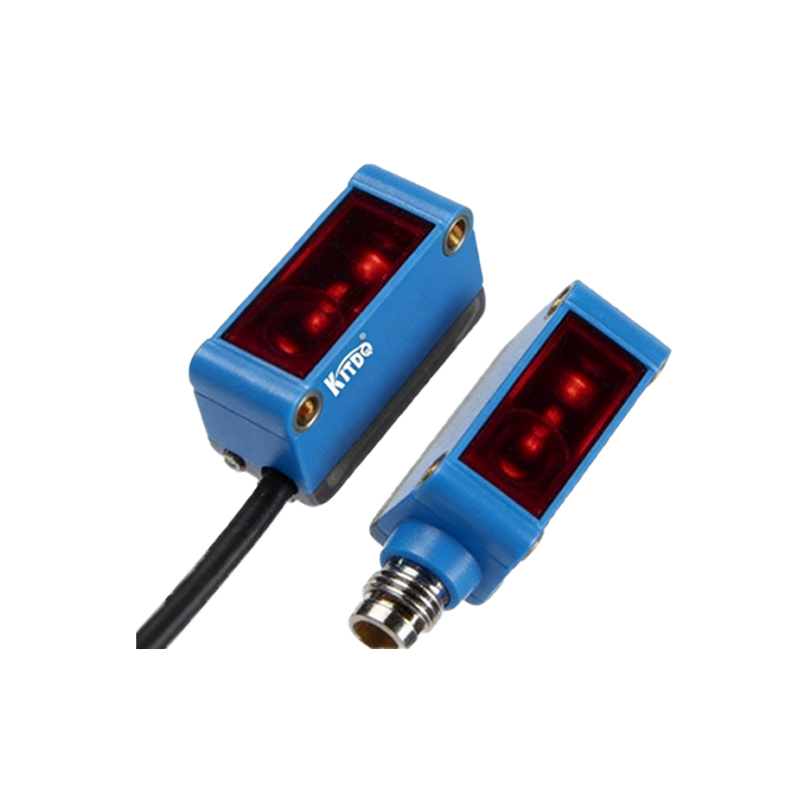
Operating Principle: Light Scattering versus Obscuration
Two primary methods govern photoelectric smoke measurement: light scattering and light obscuration. In the scattering method, the emitter and detector are positioned at an angle (typically 90 degrees). Under clean air conditions, the detector receives minimal light. When smoke particles are present, they scatter light toward the detector, increasing the output signal. Conversely, the obscuration method places the emitter and detector in a direct line; smoke attenuates the light beam, reducing the signal. Engineers must select the appropriate configuration based on the expected particle size, density, and environmental interference. For industrial applications, the scattering method is often preferred for its higher sensitivity to small particles common in early-stage fires.
Key Design Considerations for Industrial Sensors
Designing a photoelectric sensor for smoke concentration measurement requires careful attention to several factors. The sensor housing must be sealed against dust and humidity to prevent false alarms. The emitter wavelength should be optimized for the target smoke type; near-infrared (e.g., 940 nm) is common for general combustion products. Additionally, the photodetector's gain and filtering circuits must be calibrated to distinguish between smoke and ambient light fluctuations. Engineers often implement automatic gain control (AGC) to maintain linearity across a wide concentration range. Temperature compensation is also critical, as electronic components drift with thermal changes, affecting measurement accuracy.
Signal Processing and Concentration Calculation
The raw output from the photodetector is an analog voltage or current proportional to smoke density. To convert this into meaningful concentration units (e.g., % obscuration per foot or particle density per cubic meter), signal processing is essential. A typical approach uses a logarithmic amplifier to linearize the response, as the light attenuation follows an exponential decay (Beer-Lambert law). The microcontroller then applies a calibration curve, stored in non-volatile memory, to translate the signal into concentration values. Digital filtering, such as moving averages, reduces noise from turbulent airflow or vibration, ensuring stable readings in harsh industrial settings.
Installation and Calibration Best Practices
Proper installation is vital for reliable smoke concentration measurement. Sensors should be mounted in areas with representative airflow, avoiding dead zones near intake vents or heat sources. Calibration must be performed using certified smoke test sources (e.g., aerosol generators with known particle size distribution) at regular intervals, as per industry standards like NFPA 72 or EN 54. Zero-point calibration in clean air and span calibration at a defined concentration (e.g., 10% obscuration) ensures accuracy. Engineers should document calibration results and adjust thresholds for alarm or control actions based on site-specific requirements.
Common Challenges and Troubleshooting
Industrial environments pose unique challenges for photoelectric sensors. Dust accumulation on the optical lens can cause false high readings or drift. Regular cleaning schedules using lint-free cloths and isopropyl alcohol are recommended. Electromagnetic interference (EMI) from nearby motors or power lines may induce noise; shielded cables and proper grounding mitigate this. Another issue is condensation on the sensor window in humid conditions. Integrating a heating element or hydrophobic coating can prevent moisture buildup. If the sensor outputs erratic readings, inspect the alignment of the emitter and detector, and verify the power supply stability.
Future Trends in Photoelectric Smoke Detection
Advancements in sensor technology are enhancing smoke concentration measurement. Multi-wavelength sensors can differentiate between types of smoke (e.g., from wood, plastics, or oil), improving fire classification. Integration with IoT platforms allows real-time data logging and remote diagnostics. Machine learning algorithms are being deployed to predict sensor drift and optimize calibration intervals. For industrial engineers, staying updated on these trends ensures that smoke detection systems remain reliable, accurate, and compliant with evolving safety regulations.