Introduction to Photoelectric Sensors in Positioning Control
Photoelectric sensors are essential components in modern industrial automation, enabling precise object detection and positioning control. These sensors use light beams to detect the presence, absence, or distance of targets, making them ideal for applications such as conveyor belt alignment, robotic pick-and-place, and packaging systems. Their non-contact nature ensures high reliability and minimal wear, even in harsh environments.

Key Working Principles for Accurate Positioning
The core principle involves emitting a light beam (infrared, visible, or laser) and measuring the reflected or interrupted signal. For positioning control, three main types are used: through-beam, retro-reflective, and diffuse sensors. Through-beam sensors offer the highest accuracy by placing emitter and receiver separately, ensuring a precise cutoff point. Retro-reflective sensors use a reflector for stable detection over medium distances. Diffuse sensors detect objects by reflected light, suitable for short-range positioning with adjustable sensitivity.
Application in Conveyor System Alignment
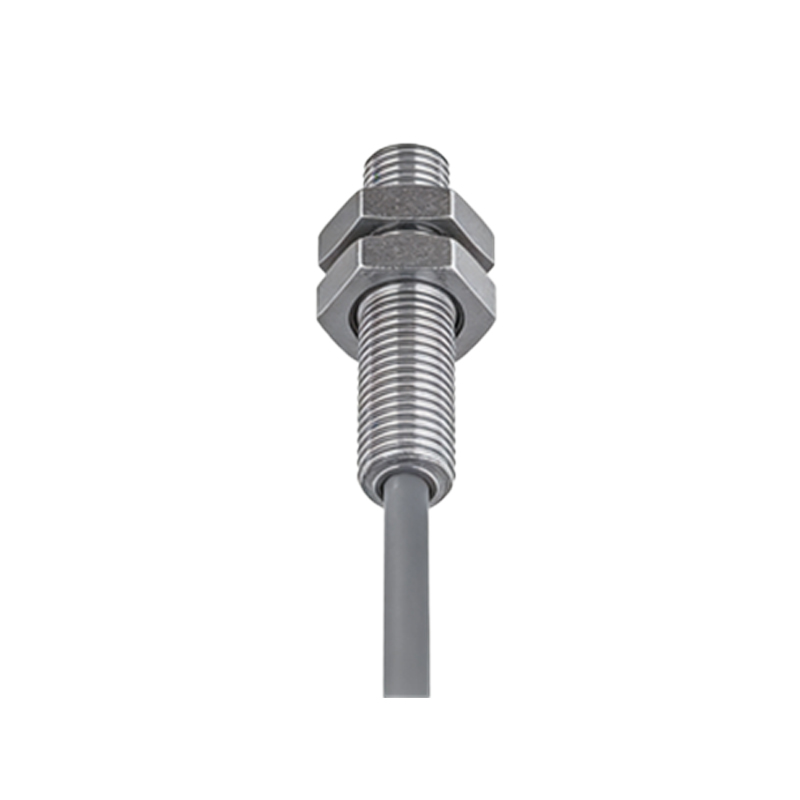
In conveyor systems, photoelectric sensors are deployed to control the exact stop position of packages or products. By mounting sensors at specific points along the track, the system can trigger braking or diverting mechanisms. For example, a retro-reflective sensor can detect a box as it passes a predefined mark, sending a signal to the PLC to adjust speed or direction. This ensures consistent spacing and prevents jams, improving throughput by up to 20%.
Integration with PLC and Feedback Loops
To achieve closed-loop positioning control, photoelectric sensors are integrated with programmable logic controllers (PLCs). The sensor output (digital or analog) is fed into the PLC, which compares it to a setpoint. Any deviation triggers corrective actions, such as adjusting motor speed or actuator position. Analog sensors with distance measurement capability (e.g., laser displacement sensors) provide real-time feedback, enabling micron-level accuracy in applications like semiconductor wafer handling.
Environmental Considerations for Reliable Operation
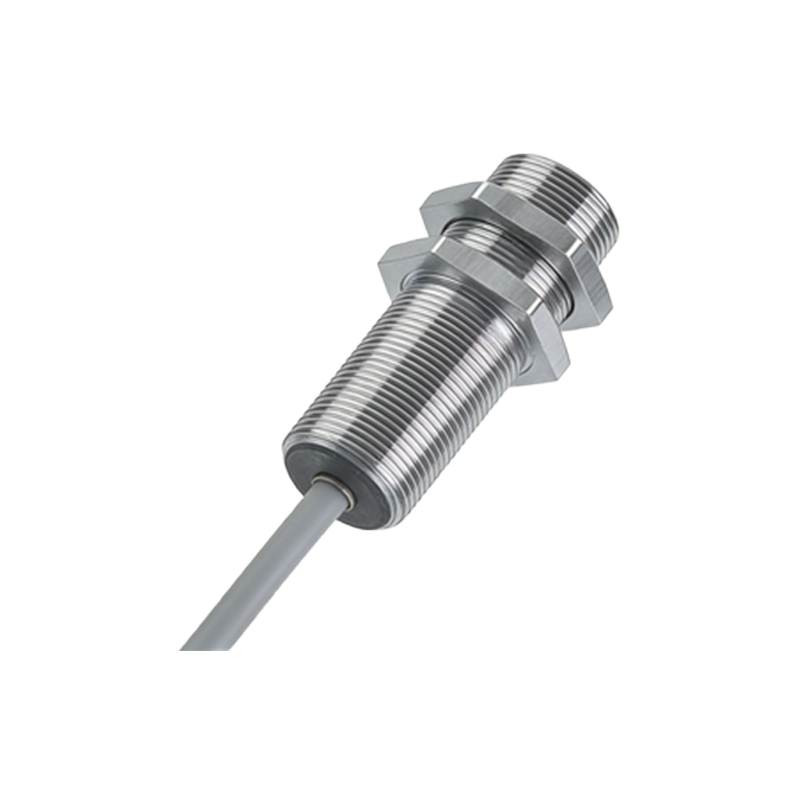
Industrial environments pose challenges like dust, moisture, and ambient light interference. For positioning control, selecting sensors with IP67 or higher ratings ensures protection. Polarized retro-reflective sensors reduce false triggers from shiny surfaces. Background suppression technology in diffuse sensors ignores distant objects, focusing only on the target within a defined range. Regular cleaning and calibration maintain performance over time.
Case Study: Robotic Arm Pick-and-Place Optimization
A manufacturing plant used through-beam sensors to improve robotic arm positioning for electronic component assembly. By placing sensor pairs at the pick and place stations, the robot accurately identified component presence and orientation. This reduced placement errors from 5% to 0.3%, increasing yield and reducing waste. The sensors also enabled rapid changeover between different product types without mechanical adjustments.
Future Trends in Photoelectric Positioning
Advancements in photoelectric technology include smart sensors with IO-Link communication, enabling remote configuration and diagnostics. Multi-point sensing arrays can track moving objects in 3D space. Integration with artificial intelligence allows predictive maintenance and adaptive positioning, adjusting to varying object shapes and colors. These innovations will drive further efficiency in smart factories.