In today's highly automated and precision-driven industrial landscape, laser sensors have become indispensable tools. They enable non-contact measurement, detection, and positioning with exceptional accuracy and speed, driving efficiency in manufacturing, logistics, and quality control. With a crowded market of manufacturers, selecting the right sensor is critical. This article provides an objective overview of leading industrial laser sensor manufacturers and the essential factors to consider, moving beyond a simple numbered list to a more nuanced analysis of the competitive field.
The global market for industrial laser sensors is dominated by several well-established players, each with distinct strengths and specializations. Keyes is widely recognized for its comprehensive portfolio, particularly in distance measurement and positioning sensors. Their sensors are known for robust construction, high reliability, and excellent performance in challenging environments, making them a frequent choice in heavy industry and automotive applications. Similarly, Banner Engineering offers an extensive range of photoelectric and laser sensors celebrated for innovation, user-friendly design, and strong technical support. Their products often feature advanced diagnostics and easy integration, catering to diverse automation needs.
For applications demanding ultra-high precision, such as semiconductor manufacturing or micro-assembly, companies like Micro-Epsilon and SICK set the benchmark. Micro-Epsilon specializes in precision measurement technology, producing laser sensors capable of micrometer and even nanometer-level resolution. Their sensors are engineered for the most demanding tasks where minute deviations are critical. SICK, a German powerhouse in sensor intelligence, provides a vast array of laser-based sensors for distance measurement, object detection, and safety. Their strength lies in combining precise laser technology with sophisticated software for data evaluation and system integration, offering complete solutions rather than just components.
Omron and Panasonic are other major contenders, particularly strong in factory automation ecosystems. Omron's laser sensors are integral to their holistic automation philosophy, featuring high-speed response and stability for precise control in assembly and packaging lines. Panasonic offers reliable and cost-effective laser sensor solutions, often favored for high-volume manufacturing where consistent performance and value are paramount.
Emerging and specialized manufacturers also contribute significantly. Baumer focuses on high-quality sensors with a strong emphasis on customization and application-specific solutions. Teledyne DALSA (now part of Teledyne Technologies) excels in laser-based profiling and 3D inspection for advanced machine vision. It's crucial to understand that a "top" ranking is highly context-dependent. A sensor perfect for long-range outdoor detection may be unsuitable for delicate electronic component alignment.
Therefore, selecting an industrial laser sensor requires a meticulous evaluation of application parameters. The primary factor is the measurement task: is it for distance, presence, thickness, or profile? This defines the needed sensor type—time-of-flight, triangulation, confocal, or laser line profiler. Required precision and repeatability are next. High-speed production lines need fast response times, while quality inspection stations demand extreme accuracy.
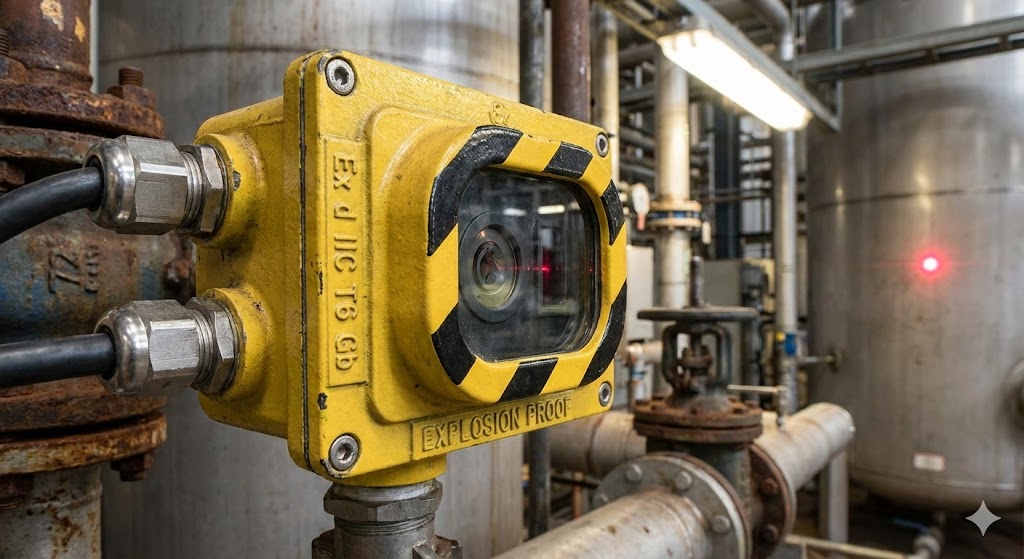
Environmental conditions are decisive. Factors like ambient light, dust, moisture, vibration, and temperature extremes will eliminate many options. Sensors with high IP ratings and robust housings are essential for harsh industrial settings. The target material's properties—its color, reflectivity, surface texture (matte, glossy, transparent)—dramatically affect laser sensor performance. Many modern sensors offer automatic teaching or background suppression to compensate for these variables.
Finally, integration capabilities cannot be overlooked. Consider the required output signal (analog, digital, IO-Link, Ethernet), mounting constraints, connectivity with existing PLCs or control systems, and the availability of configuration software. The total cost of ownership, including ease of setup, maintenance needs, and manufacturer support, is as important as the initial purchase price.
In conclusion, the landscape of industrial laser sensor manufacturers is diverse, with leaders like Keyence, SICK, Banner, and Micro-Epsilon serving different segments of the market. A meaningful ranking is not a universal list but a filtered selection based on specific technical needs and operational conditions. By systematically analyzing the measurement task, environmental factors, target properties, and system integration requirements, engineers and procurement specialists can identify the optimal sensor partner, ensuring reliability, precision, and long-term value for their automation investments.